How to Clean Vinyl Siding: Cleaners, Method, and What Not to Do
Most of what dulls vinyl siding is living growth, not dirt. Here is how to tell what you have, which cleaner kills it, and whether a pressure washer is safe.
The Peppers Journal
Guides, seasonal tips, and the hard-won lessons from 600+ Charleston homes. Keep your exterior looking sharp year round.
The Peppers Journal covers everything Lowcountry homeowners need to know about exterior cleaning, from why your driveway turns green so fast to how often you should pressure wash your Charleston house and the right way to soft wash a roof in our humidity. We write from 12+ years of cleaning more than 5,000 homes across Kiawah, Mount Pleasant, Johns Island, and the entire Tri-County area.
Browse posts on pressure washing, roof soft washing, gutter cleaning, window cleaning, and check out our seasonal exterior care calendar. Or jump straight to a free quote if you'd rather have us handle it.
Topics fall into a few repeating categories: seasonal guides that walk you through what to clean before spring pollen or after hurricane season, surface-specific tutorials like our soft wash vs. pressure wash breakdown, cost guides such as how often to pressure wash a Charleston house, and comparison posts like why driveways turn green so fast and our year-round seasonal calendar.
Generic national pressure washing advice doesn't hold up in the Lowcountry. Our humidity keeps surfaces damp long enough for algae and mildew to take hold year round, salt air pits metal fixtures and etches glass along Isle of Palms and Sullivan's Island, live-oak canopy drops pollen and leaf debris that jam gutters from Mount Pleasant to James Island, and hurricane season reshapes what's growing on your roof. Every post we publish is written with those local conditions in mind.
We aim for a new post every few weeks, usually tied to a question we just answered on a driveway, a pattern we keep seeing in a neighborhood, or a seasonal shift worth flagging before it costs homeowners money. Every article here comes from real Charleston jobs, not AI-generated filler. Bookmark this page or check back when you're planning a cleaning, and learn more about our crew on the about page or request a free quote when you're ready.
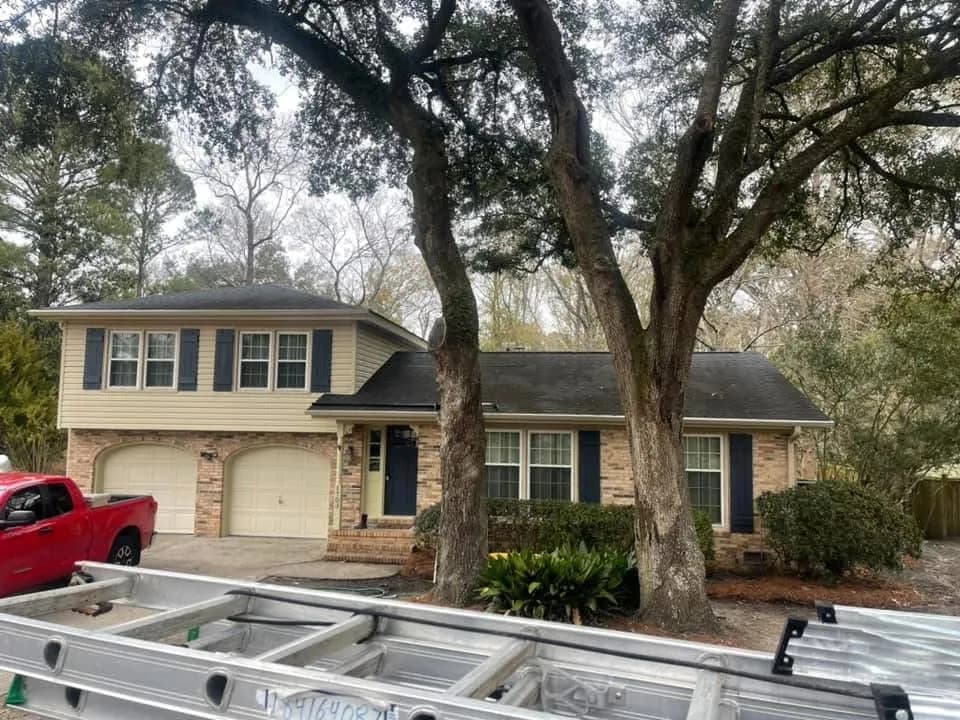
Most of what dulls vinyl siding is living growth, not dirt. Here is how to tell what you have, which cleaner kills it, and whether a pressure washer is safe.

SH stands for sodium hypochlorite, the bleach that does the real work in soft washing. Here is the plain English beginner's guide to mixing it, using it, and staying safe.

Moss, algae, and lichen look similar and matter very differently. Here is how to tell them apart, remove each safely, and keep growth from coming back.

Red, yellow, green, white, and black pressure washer tips explained, plus the safe PSI for siding, wood, concrete, brick, and roofs. Start wide, start low.

Pavers are not a concrete slab. The sand between them is structural, and a pressure washer is very good at removing it. Here is how to clean them properly.

Orange rust, black oil, and green algae are three different problems needing three different chemicals. Here is how to tell them apart and remove each one.

Black mold on vinyl siding in Charleston usually isn't mold at all. It's algae, mildew, or artillery fungus spores that love our six months of 80% humidity. You can scrub the surface streaks off with a brush and bleach water, but the stuff growing behind the siding seams won't budge without a proper soft wash.

Most Charleston homeowners ask how often they should pressure wash their house only after the siding has already turned green. The real answer depends on how much oak canopy hangs over your roof, how close you are to the marsh, and whether you'd rather pay $400 every 18 months or $1,200 every four years to repaint. Here's the honest breakdown based on twelve years of cleaning homes from Kiawah to Wagener Terrace.

Patio cleaning in Charleston isn't just dirt. You're scrubbing oak pollen, salt haze from Folly, magnolia sap, and mildew that thrives in 70°F dew points all summer. Most homeowners crank the PSI and strip their pavers instead of killing what actually grew. Here's the chemistry-first approach that keeps outdoor spaces clean past Memorial Day.

Mildew on siding in Charleston shows up every June when dew points stay above 70°F and your north walls never dry between sunset and sunrise. The real problem isn't the humidity reading at noon; it's the film that condenses at 3 a.m. while algae spores feed on spartina pollen and salt haze. I've soft washed hundreds of Lowcountry homes, and the pattern holds from Wagener Terrace to James Island: north walls under oak canopy turn green first, then covered porches, then east-facing walls.

Pool deck cleaning in Charleston means dealing with algae, mildew, and calcium buildup by April if you skipped maintenance last fall. The surface material decides everything: travertine cracks under pressure that stamped concrete laughs off, and pavers need a completely different approach than either one. I've seen homeowners wreck $15,000 travertine decks in Kiawah trying methods that work fine on their driveway.

Every pressure washing company in Mount Pleasant claims 5-star service, but most reviews mention friendliness and price while ignoring the work that actually protects your home. Real quality happens in the 15-minute pre-wash walk, the PSI adjustments for Old Village cedar versus Carolina Park Hardie plank, and the chemical ratios that keep Shem Creek salt mist from undoing everything in four months. Here's what separates cosmetic cleaning from work that lasts.
Pressure washing solar panels voids manufacturer warranties from LG, SunPower, REC, Panasonic, Canadian Solar, and Q CELLS. It damages anti-reflective coatings, cracks cell encapsulants, and forces water past junction box seals. Use soft wash only.
In Charleston and coastal SC, twice a year is the baseline, with a spring clean after pollen and a fall clean before winter. Oceanfront arrays need quarterly service. Here is why.

Pressure washing siding can drive water behind the panels, strip paint, and etch stucco. Here is why soft washing is the right call for almost every Charleston home, and how to know for sure.

Charleston fences face the same humidity, salt air, and tannin drip as your house, and most look terrible within 18 months. Here's the right way to clean wood, vinyl, and aluminum fencing without splintering wood, etching vinyl, or stripping coatings.

Charleston decks face a perfect storm: humidity, salt air, live oak tannin drip, and pollen. Composite needs one approach, pressure-treated wood needs another, and ipe or cedar needs a third. Here's how to clean each safely without damaging the surface.

Pre-1920 Charleston brick is handmade and laid with soft lime mortar, two conditions where standard pressure washing causes permanent damage. Here's the right way to clean Flemish bond, Savannah grey, and historic Charleston brick without damaging mortar joints or face brick.

From Park West to Cane Bay to Daniel Island, most Charleston-area HOAs now require annual exterior cleaning, and they send compliance letters when they don't see results. Here's what the rules actually say, what triggers a violation, and how to stay ahead of the deadline.

Black streaks, green patches, and dark mildew on Charleston siding aren't just ugly. They eat paint, shorten siding lifespan, and return within months if you clean them wrong. Here's what's actually growing on your house, why the Lowcountry makes it worse, and how to remove it without damage.

A month-by-month exterior cleaning playbook for Charleston, SC. Skip the guesswork. Here's exactly when to wash your house, clean your gutters, treat your roof, and prep for hurricane season in the Lowcountry.

After a tropical storm or hurricane, Charleston exteriors need more than just a quick rinse. Salt spray, debris, blown gutters, and post-storm mildew all need attention. Here's the order of operations and what to handle yourself vs. call a pro.

A preservation-first guide to cleaning Charleston's oldest homes without damaging lime mortar, antique brick, or historic stucco, with BAR district rules every homeowner should know.

Spring is peak house washing season in Charleston. What's included, what it costs ($350 to $650), how long it takes, and how to prep your home.

Power washing and pressure washing are used interchangeably, but there's a real technical difference, and it matters for your Charleston home.

How to vet pressure washing companies in Charleston: what to look for, 5 red flags to avoid, and the questions every homeowner should ask.

Real 2026 pressure washing prices for Charleston, SC: house washing, roof soft wash, driveways, and full-property bundles. What drives the cost.

Asphalt shingles in Charleston need soft washing, not high pressure. Here's the difference, the science, and what it costs to do it right.

Charleston driveways turn green faster than almost anywhere in the country. The real reason, and the two-step fix that actually lasts 18+ months.

Spring is the best time to reset your Charleston home's exterior. Step-by-step checklist, in the right order, so every hour pays off for a year.

Gutter guards promise maintenance-free gutters. In South Carolina, they rarely deliver. What actually works in Charleston's tree-heavy climate.

A $400 pre-listing pressure wash can add $15K+ to the sale price. The exact Charleston bundle sellers order, and the timing that matters most.

Salt and silt from Lowcountry storms can etch glass within 72 hours. What Charleston homeowners need to do, and when to call a pro.
Free Estimates
No-obligation quotes for homes and businesses across the Greater Charleston area. Most estimates returned same day.
Or try our free satellite property assessment