
If you've looked up at your Charleston roof lately and noticed dark streaks crawling down the north side, you're not alone. Those streaks are alive, and the method you use to get rid of them matters. Soft washing and pressure washing sound similar, but when it comes to roofs in the Lowcountry, choosing the wrong one can cost you thousands in shingle replacement. Here's the straight answer on which your Charleston roof actually needs.
What Those Black Streaks Actually Are
The dark streaks on Charleston roofs aren't dirt. They're a living organism called Gloeocapsa magma, a cyanobacteria that feeds on the limestone filler in asphalt shingles. Our high humidity, frequent rain, and salt-rich air give it ideal growing conditions. Left unchecked, it eats away the reflective granules on your shingles, shortening roof life by as much as 10 years.
Green patches are something different. That's usually algae or moss taking hold in shaded, constantly damp areas. Either way, they need to be killed biologically, not just blasted off.
Pressure Washing a Roof: Why It's (Usually) a Mistake
Pressure washing uses high-pressure water (typically 2,000 to 4,000 PSI) to physically blast debris off surfaces. That works great on concrete. On asphalt shingles, it's a disaster waiting to happen.
It strips the granules. Those little granules on your shingles are what reflect UV and protect the asphalt underneath. High pressure rips them off.
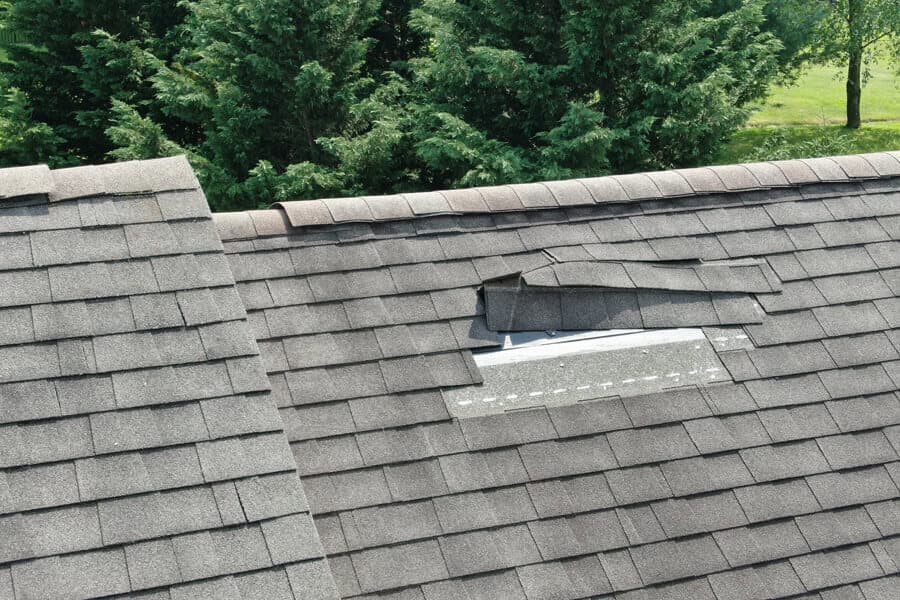
It drives water under shingles. Charleston shingles are designed to shed water going downward, not be blasted upward. Water forced under the shingle line causes leaks, usually in a bedroom ceiling about 6 months later.
It voids most shingle warranties. Every major manufacturer (GAF, CertainTeed, Owens Corning) explicitly forbids high-pressure washing. One bad wash and a $12,000 warranty claim is gone.
It only kills the surface. Gloeocapsa magma lives at the root. Blasting the streaks off doesn't kill the organism, so the streaks return in 6 to 12 months.
Every major asphalt shingle manufacturer, including GAF, CertainTeed, and Owens Corning, explicitly recommends low-pressure soft washing and void warranties damaged by high-pressure cleaning.
Soft Washing a Roof: The Right Method
A proper roof soft wash uses low pressure (under 500 PSI, lower than most garden hoses) combined with a biodegradable cleaning solution that actually kills the algae, bacteria, and moss at the root. The solution dwells on the roof, penetrates the organic growth, and breaks it down chemically. No blasting, no stripped granules, no driven water.
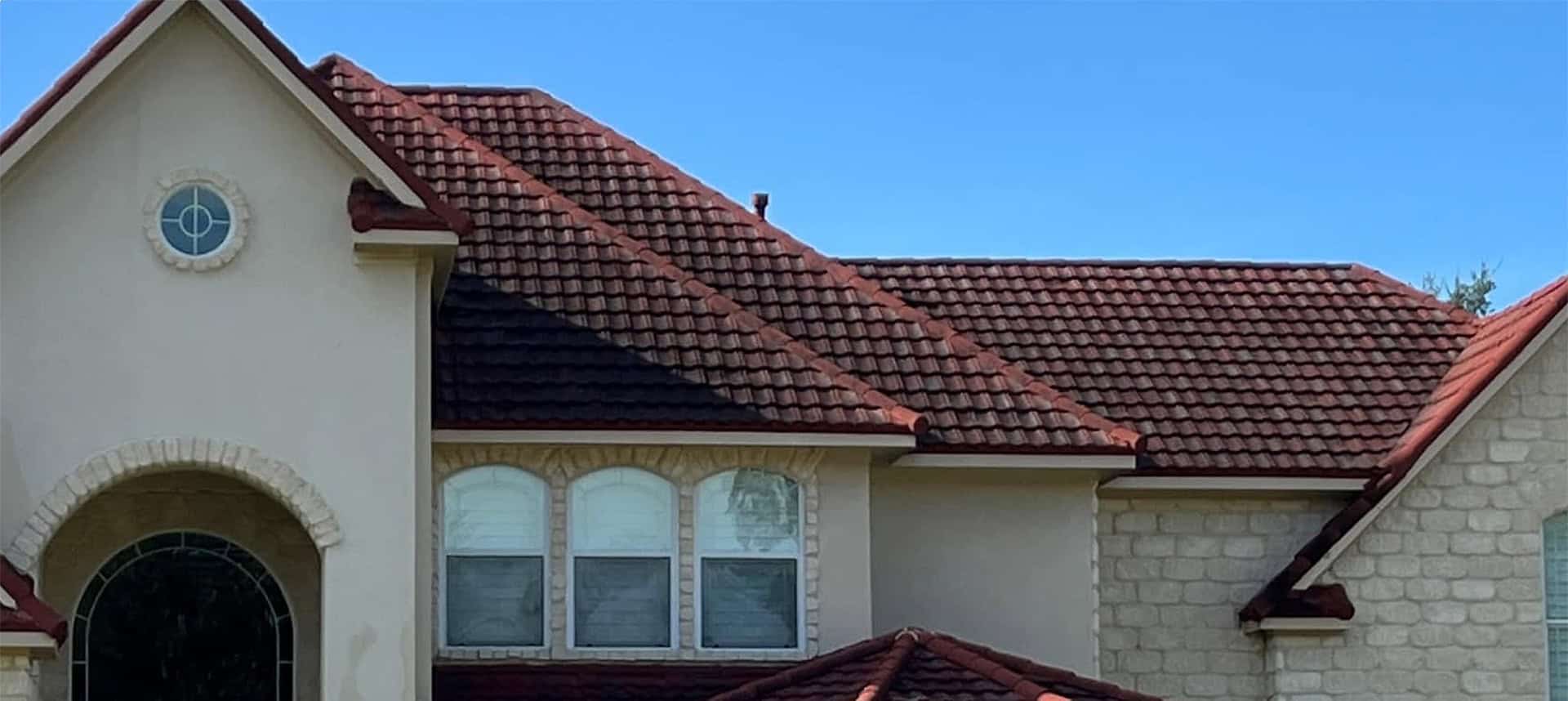
The results compound. A soft-washed Charleston roof typically stays streak-free for 4 to 6 years, versus 6 to 12 months for a pressure-wash. You get the same cosmetic win, and you dramatically extend the life of your roof.
When Is Pressure Washing on a Roof OK?
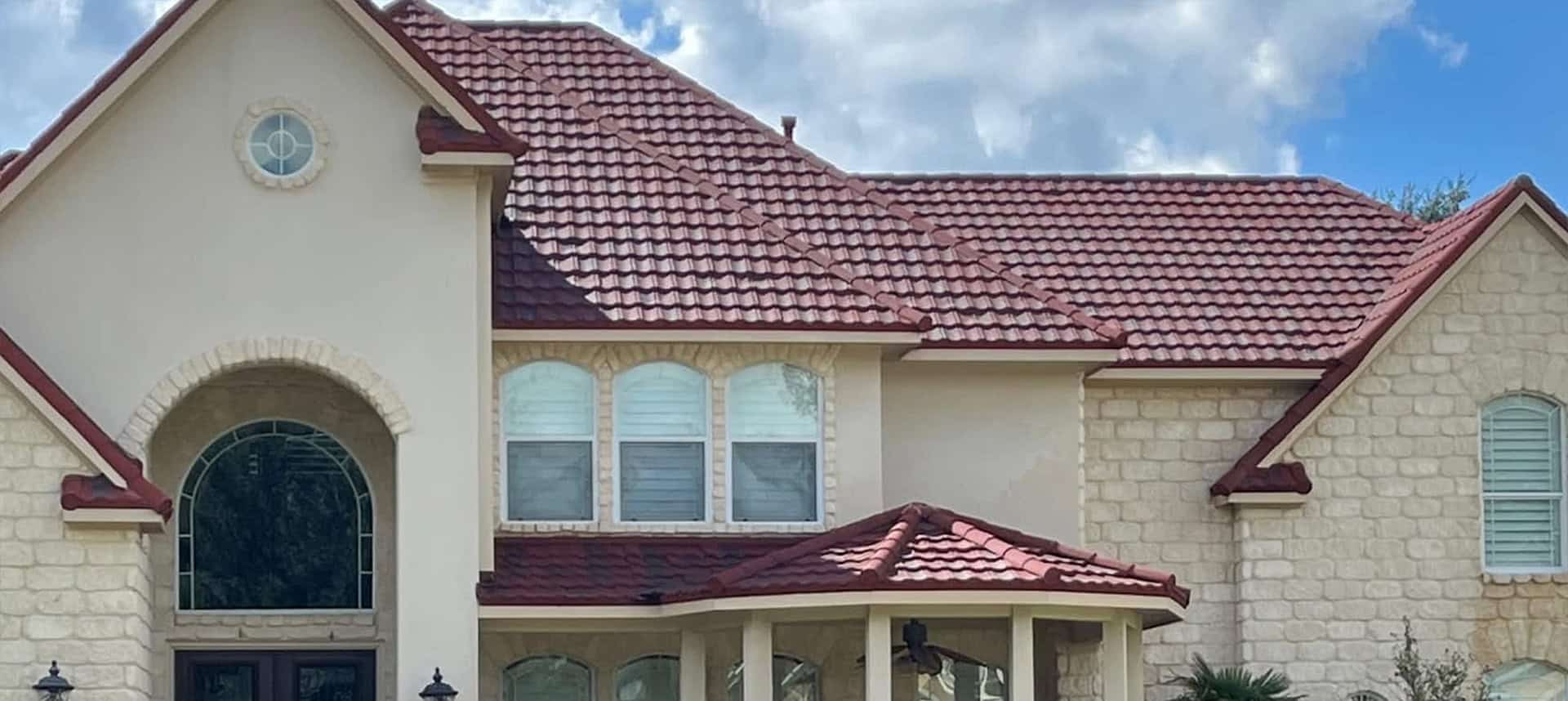
Only on specific hard surfaces: clay tile, slate, and most metal roofs can tolerate moderate pressure. Even then, a competent contractor uses softer pressure with chemistry doing most of the work. For the 95%+ of Charleston homes with asphalt shingles, soft wash is always the right call.
Roof Cleaning Costs in the Lowcountry
Expect to pay $450 to $975 for a professional soft wash roof cleaning in Charleston, depending on roof size, pitch, and access. That's a one-time investment that should last years and can extend your roof's usable life by a decade.
What to Ask Before Hiring Anyone
"What PSI will you use at the nozzle?" Should be under 500 for asphalt shingles.
"What chemical will you use?" Should be a sodium hypochlorite-based soft wash mix, not muriatic acid.
"Do you have roof-specific insurance?" Not all general pressure washing policies cover elevated work.
"What's your warranty on streak return?" Ask what the company's guarantee actually covers, and get it in writing.
Ready to get started?
We've soft-washed hundreds of Charleston-area roofs, from Mount Pleasant to Daniel Island to the historic district, without a single warranty claim. Request a free soft wash quote and we'll come inspect your roof and send photos with a firm price.