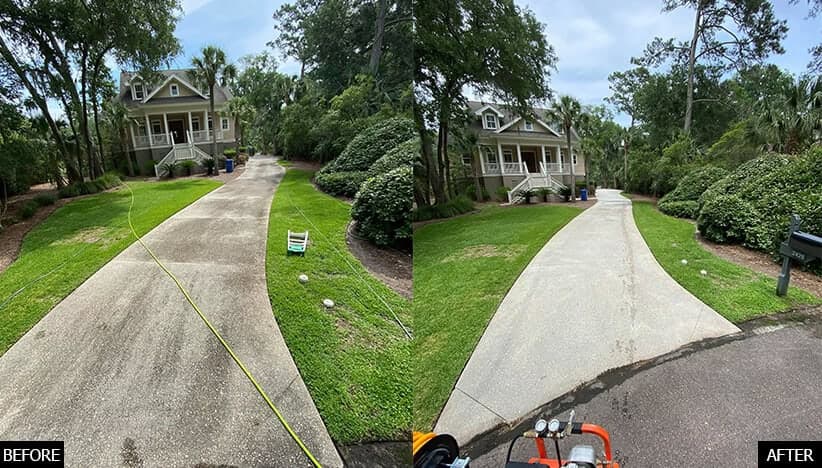
Walk around any Charleston neighborhood in July and you'll see them: black streaks running down white vinyl, green patches spreading under eaves, dark stains creeping up from the ground on painted brick. Most homeowners call it mold. Some call it mildew. A few think it's just dirt. It's none of those things, exactly. And knowing what it actually is determines whether your house wash lasts 6 weeks or 18 months.
What's actually growing on your siding
The black streaks you see on Charleston siding are rarely mold in the medical sense. They're almost always a combination of three biological organisms colonizing the exterior of your home:
Gloeocapsa magma: a cyanobacteria (not mold) that produces the dark streaks on roofs and shaded siding
Algae: green, slimy growth that prefers the shaded, wet sides of homes
Mildew: actual fungal growth, usually the lightest of the three, feeding on dirt and organic matter trapped on the surface
All three thrive on the same conditions: moisture, shade, and an organic food source. Charleston delivers all three in abundance nearly year-round.
Why the Lowcountry makes it so much worse
If you moved here from anywhere else, you've probably noticed your house gets dirty faster than it ever did before. You're not imagining it. Charleston's climate creates the perfect biological greenhouse for siding contamination, and four factors make it worse than almost anywhere else in the country.
1. Year-round humidity above 70%
Charleston's average relative humidity sits between 70% and 85% for most of the year. Siding never fully dries out. Moisture trapped in surface pores, caulk joints, and behind downspouts creates a continuous growing medium for algae and mildew. In drier climates, the same organisms exist but die off in afternoon heat. Here, they just keep spreading.
2. Live oak canopy and pollen drop
The iconic live oaks that shade Lowcountry homes deliver a steady rain of pollen, tannin, and organic debris onto your roof and siding. This organic matter becomes the food source for the biological growth. Combined with the shade those same oaks create, you have a perfect mold and algae incubator on every north-facing wall.
3. Salt aerosol from the coast
If you're within 10 miles of the Atlantic (most of Charleston County is), salt aerosol settles on every exterior surface. Salt doesn't cause biological growth directly, but it pits vinyl, corrodes aluminum, and creates microscopic surface roughness that gives algae and mildew more places to anchor. Isle of Palms, Sullivan's Island, Folly Beach, and Kiawah homes get this worst.
4. Hurricane-season rains
June through October brings tropical moisture patterns that soak every surface and leave residue. Even tropical systems that don't make landfall push enough moisture into the Lowcountry to reset the growth cycle. After every significant rain event, biological contamination accelerates.
Why pressure washing alone doesn't fix it
This is the most common mistake Charleston homeowners make. They see the mildew, rent a pressure washer from the big-box store, and blast their siding. The visible streaks disappear. Two months later, they're back, sometimes worse. Here's why:
Pressure washing removes the visible organism from the surface. It does NOT kill the root system. Gloeocapsa magma and algae anchor into siding pores with microscopic root structures (technically called holdfasts or rhizoids) that survive water pressure and immediately regrow. Worse, high-pressure water can drive moisture behind siding seams, into wall cavities, and under paint, creating exactly the moist environment the biological growth needs to re-establish.
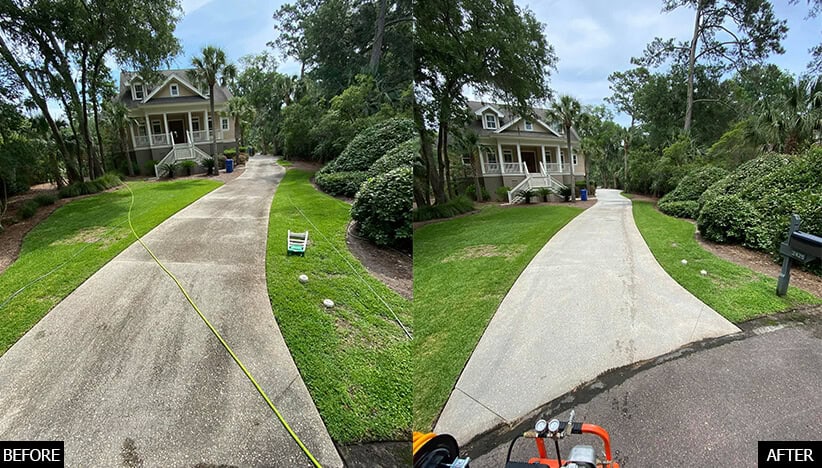
The correct approach is soft washing: low-pressure application of a surfactant-grade biocide (sodium hypochlorite-based chemistry at properly controlled concentrations) that kills the organism at the root, followed by a thorough rinse. A properly soft-washed home stays clean for 18-24 months in the Lowcountry. A pressure-washed one lasts 6-8 weeks.
How to remove black mildew safely: your options
DIY soft wash (partial solution)
A garden-hose-based soft wash kit with pre-mixed biocide can handle small, accessible sections, usually single-story ranch homes with nothing above 10 feet. The limitation is chemistry concentration: consumer-grade products are diluted for safety, so they work slowly and less thoroughly. You also risk overspray onto landscaping, the wrong ratio on different siding materials, and splash-back if you try to reach second-story walls. This approach works for small patches, not whole-house problems.
Hire a professional soft wash service
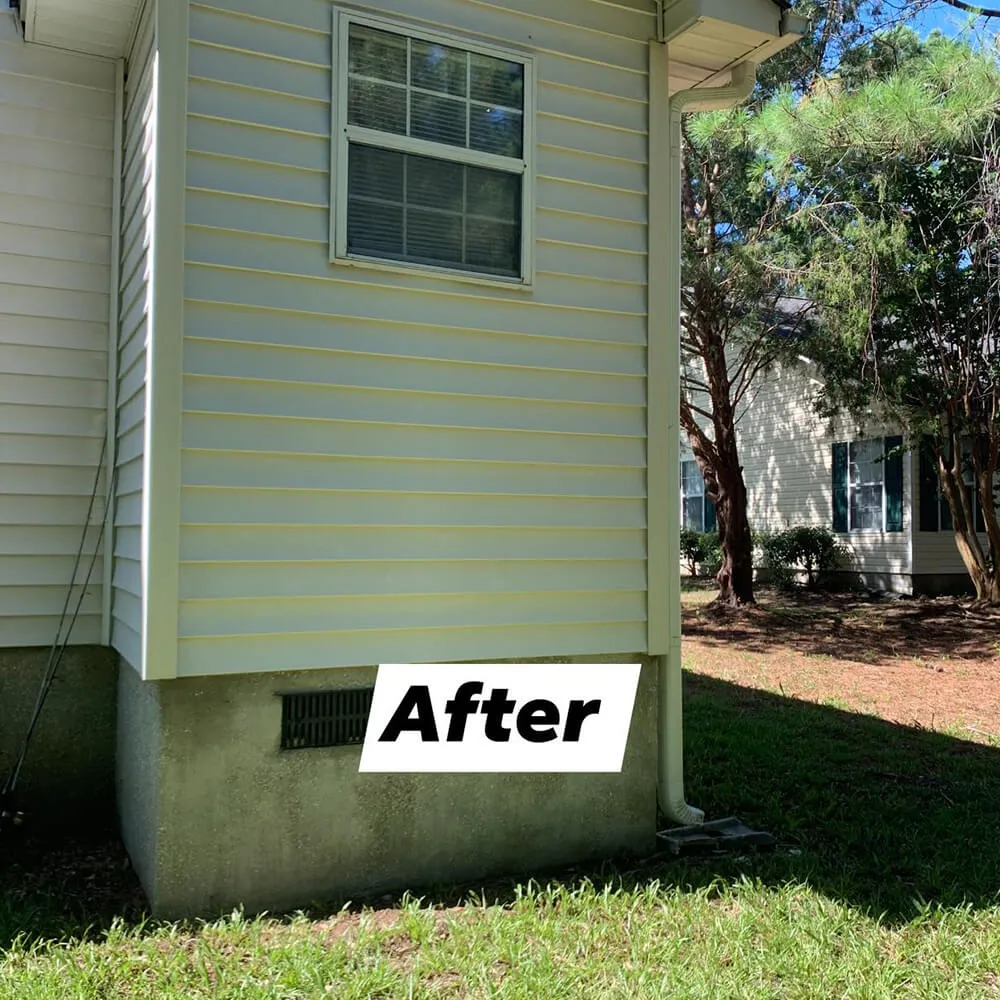
For most Charleston homes (especially two-story, painted brick, Hardie plank, or any home with live oak canopy overhead), professional soft washing is the durable fix. The right crew will calibrate pressure and chemistry for your specific siding, pre-wet and rinse all landscaping, protect windows and outlets, and provide a satisfaction guarantee. A proper soft wash covers the siding, soffits, and fascia in one visit, and the result typically lasts until the next spring season.
If you're not sure which approach is right for your property, try our free property assessment: enter your address and we'll show you what's growing on your roof and siding from satellite imagery, plus an instant cleaning score calibrated to Charleston's specific climate zone.
Prevention: keeping mold and mildew off for longer
Once you've had a proper soft wash, there are three things that extend the clean-house window:
Keep gutters clear. Overflowing gutters dump water against the siding, creating a perpetual wet line where algae thrives. Professional gutter cleaning twice a year (spring and fall) solves this.
Trim back vegetation. Shrubs, trees, and ivy touching the siding trap moisture and provide a direct pathway for organic matter. A 2-foot clearance around the entire perimeter makes a real difference.
Annual maintenance soft wash. Rather than waiting until the house is visibly streaked, schedule a lighter annual soft wash. It costs less than a full restoration and keeps the biological population below visible threshold year-round.
When to call a professional
Call a soft wash pro (not a pressure washer, the distinction matters) if you see any of these conditions:
Black streaks running down the entire side of the house
Green patches larger than a dinner plate on any wall
Mildew that has returned within 3 months of a prior cleaning
Any growth on second-story siding or under soffits you can't safely reach
Anything on painted brick, stucco, or stone: these surfaces are especially damage-prone with wrong chemistry
We've soft-washed more than 5,000 Charleston homes since 2016. If your siding is streaked, patched, or trending the wrong direction, call 843-480-8113 for a free quote. We'll walk the property, show you exactly what's growing, and recommend the right chemistry for your specific siding: vinyl, Hardie, painted brick, stucco, or cedar shake.