Why Charleston Real Estate Photos Get Re-Shot: Exterior Cleaning Before Listing in Winter
Exterior cleaning before listing in Charleston isn't optional if you want the photos to work. Three different photographers canceled the same Park Circle shoot this month because the siding had black streaks no editor could fix without making the house look fake. Winter listings move slower anyway, so agents who prep the exterior in December close faster than the ones who list dirty and drop the price in February.
Read more about our pressure washing service.
The 72-Hour Window Between Cleaning and Photography
Most real estate photographers in Charleston book 48 to 96 hours out. That timing matters more than you'd think.
If we pressure wash Monday morning and they shoot Wednesday afternoon, the house looks crisp. Push it to Friday? You're already seeing Spartina pollen settle on horizontal surfaces, even in January. By the following Monday, the windowsills and porch railings show a faint yellow-green film that reads gray in photos.
I've had listing agents call me frustrated because they scheduled the wash a week before the shoot, thinking they were being proactive. The photographer showed up to find the brick walkway already streaked again. In Mount Pleasant's Old Village, salt mist redeposits within 72 hours after any cleaning. You can't outrun Charleston's air; you can only time around it.
We tell agents: book the photographer first, then call us three days before. Not a week. Three days.
What Winter Algae Does That Summer Algae Doesn't
Summer mildew grows fast and wipes off easy. Winter algae does the opposite.
Cold-weather growth on Charleston exteriors takes three times longer to colonize a surface, but it embeds into the pores of stucco and Hardie plank in a way that August mildew never does. The spores root deeper because they're not competing with a dozen other microbial species the way they do in July heat. By the time you notice it, it's already in the substrate.
Here's the part that wrecks listing photos: winter algae holds moisture longer. It sits in the shade on north-facing walls where the sun doesn't hit until March. That retained water turns the growth black instead of green under a camera flash. I've seen Mount Pleasant homeowners look at their own exterior and say it looks "fine," then pull up the photographer's proof and ask why the siding looks charcoal. It's not the camera. It's physics.
We pressure-test this every winter. Same house, same angle, same algae colony. Shoot it at noon in natural light; it reads gray-green. Shoot it at 4 p.m. with a flash; it photographs nearly black. Real estate photographers work on tight schedules and use flash to standardize interior lighting. That flash is exactly what makes embedded winter algae look worse than it is.
Curb Appeal Charleston Buyers Actually Notice in Listings
We pulled forty recent listings in Kiawah and Mount Pleasant that closed in under two weeks. Thirty-two had driveways you could eat off, gutters without black streaks, and zero green film where the foundation meets the ground. Eight did not.
The difference wasn't landscaping or paint color. It was whether someone pressure-washed the parts buyers scan in the first three photos. Clean driveway, clean gutters, clean foundation line. That's it.
Buyers don't notice perfection. They notice dirt. A green streak under a window sill reads as deferred maintenance even if the roof was replaced last year. Algae at the base of a column suggests the seller didn't care enough to hose it down. I've watched agents lose showings over a driveway that photographed darker than the neighbor's, not because it was stained but because it hadn't been cleaned in eighteen months.
The Mount Pleasant soft wash we did in April is a good example. The house had been listed twice before with zero offers. New agent, same house, same price. We cleaned the siding, driveway, and front walkway on a Tuesday. Photos went live Friday. Under contract in nine days.
Pressure Washing Before Listing: What Agents Ask Us to Prioritize
Realtors who stage homes in Old Village or South of Broad call us with the same four surfaces: front porch brick, black shutters, the driveway approach, and any white trim around the entry. Everything else is secondary unless the house backs onto tidal marsh.
Black shutters show every water stain. Photographers love them for contrast, but that same contrast makes mineral streaks from the gutters look three times worse than they are. We get more panic calls about shutters than any other surface.
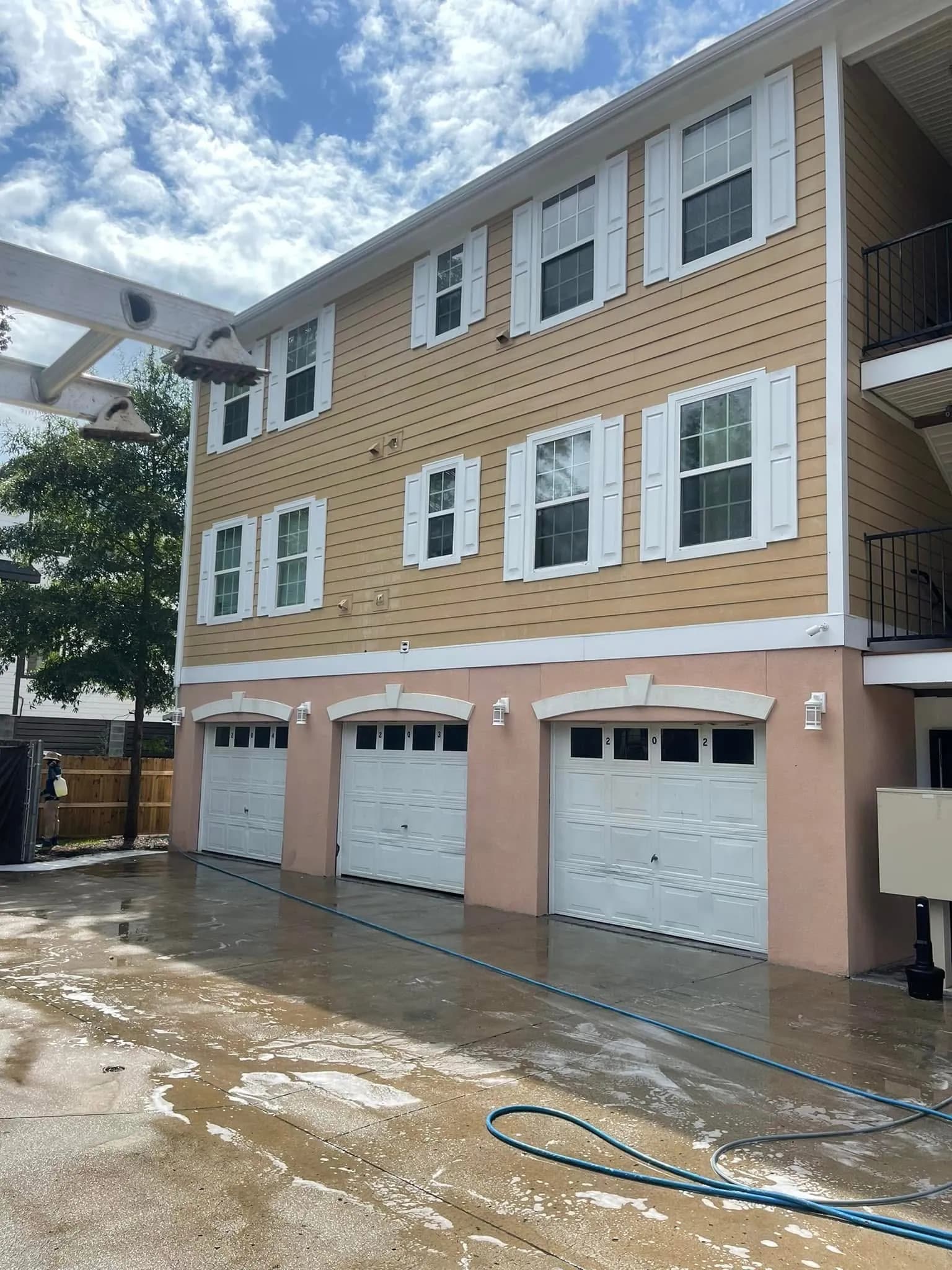
The brick driveways common to Old Village pool standing water after any rain over half an inch. That means mildew at the seams and dark streaks where tire tracks sit. We soft wash those at 800 PSI with a surface cleaner; anything higher chips the mortar joints on pre-1950 pavers.
White trim picks up salt residue near the harbor and shows it in every listing photo. A ten-minute rinse makes it photograph clean again. That's the difference between a showing request and a scroll-past.
Why We Don't Touch Roofs the Week Before a Listing Shoots
We learned this one the hard way. Roof cleaning dislodges granules from architectural shingles, especially on anything over ten years old. The surface looks clean immediately after we're done, but it photographs lighter in patches where the granule loss is heaviest.
Give it three weeks and a couple of rain cycles, and the color evens back out. The roof weathers to a uniform tone again. But if the photographer shows up five days after we clean it, the listing photos make it look like the shingles are failing when they're not.
We've had agents call us back panicking about buyer inspectors flagging roof replacement based on listing photos alone. Now we tell every listing client: roofs get done three weeks out, or we skip them entirely until after closing.
The Re-Shoot Cost No One Budgets For
A second listing photography session runs $300 to $500 in Charleston depending on square footage and drone work. That's more than most basic exterior washes.
Worse, it delays your MLS launch by another week when inventory's already climbing in February and March. We've watched agents push go-live dates back ten days waiting for weather to cooperate, for the photographer's calendar to open again, for the listing presentation deck to get updated. Every delay is a risk in a seasonal market.
The math is simple: spend $200 on soft washing before the first shoot, or spend $400 on a re-shoot plus the opportunity cost of sitting off-market during peak showing season. We schedule most listing washes 48 hours before the photographer arrives. enough time for surfaces to dry fully, not enough time for new pollen to settle.
Frequently asked questions
How many days before the photographer should I schedule exterior cleaning?
Three to five days. Any sooner and Spartina pollen resets overnight; any later and you're gambling the photographer shows up to green streaks we haven't touched yet.
Will pressure washing crack my siding right before I list?
Not if the crew drops PSI on older cedar shake or soft-washes stucco instead of blasting it. We treat pre-listing jobs more cautiously than maintenance washes because there's zero time to fix stripped clapboard or blown caulk.
Do I need to clean the backyard if it won't be in the listing photos?
Only if buyers will walk it during showings. Marshfront decks and brick patios near French doors get foot traffic; the side yard behind the HVAC condenser does not.
Can I just rent a pressure washer and do this myself before listing?
You can, but one stripped section of Hardie plank will cost more to repaint than hiring us outright. Renters do it wrong more often than homeowners because they've never learned what PSI that specific siding tolerates.
Want a quote on your pressure washing? Get a free estimate.