Every pressure washer comes with a handful of small colored tips, and almost nobody explains what they do before you start spraying. Pick the wrong one and you can carve lines into your siding, strip paint off trim, or blast the granules off your roof in a single pass. Pick the right one and the same machine cleans safely.
This is the chart, plus the part most guides leave out: how much pressure each surface can actually take. We have cleaned Charleston homes since 2014, and the damage we get called out to repair almost always traces back to one of two mistakes, the wrong tip or too much pressure on a surface that could not handle it.
What do pressure washer nozzle colors mean?
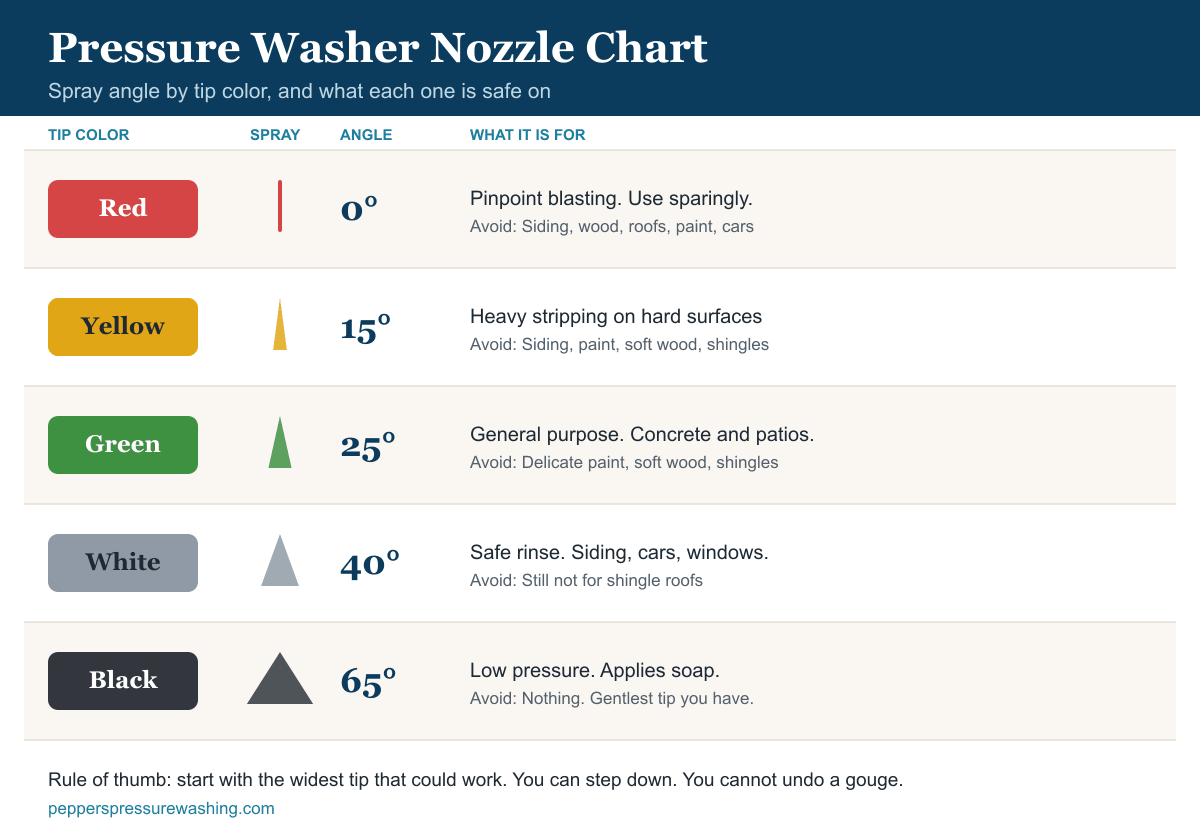
Pressure washer nozzle colors are a universal code for spray angle. Red is 0 degrees, yellow is 15, green is 25, white is 40, and black is a wide low pressure tip for applying soap. The narrower the angle, the more concentrated and forceful the water. The wider the angle, the gentler and more spread out it is.
That is the whole system. Your machine puts out one pressure rating, and the tip you choose decides how much of that force lands on any one spot. A 0 degree tip concentrates the entire output into a pinpoint. A 40 degree tip spreads that same output across a wide fan, which is why it is safe on surfaces the red tip would destroy.
Pressure washer nozzle chart
Here is the full color code, what each tip is for, and what to keep it away from. Save this or print it. If a tip is not color coded, the angle is usually stamped on the side as a number such as 2540, where 25 is the angle and 40 is the orifice size.
Color | Spray angle | Best for | Never use on |
|---|---|---|---|
Red | 0 degrees | Pinpoint blasting of caked-on material, rust spots, and stubborn tar. Use sparingly. | Siding, wood, roofs, paint, glass, vehicles, anything soft |
Yellow | 15 degrees | Heavy stripping on hard surfaces. Paint prep, oxidation, heavy concrete stains. | Siding, painted surfaces, soft wood, shingles |
Green | 25 degrees | The general purpose tip. Concrete, driveways, patios, sidewalks, hard surface cleaning. | Delicate paint, soft wood, asphalt shingles |
White | 40 degrees | The safe rinse tip. Siding, painted surfaces, vehicles, windows, general rinsing. | Rarely damaging, but still not for shingles |
Black | 65 degrees, low pressure | Applying soap and cleaning solution. Drops pressure so the detergent can be drawn in. | Nothing. This is the gentlest tip you have. |
Turbo or rotary | 0 degrees, spinning | Concrete and masonry. Combines 0 degree force with 25 degree coverage by rotating. | Siding, wood, paint, shingles, anything soft |
The one to be careful with is red. A 0 degree tip is the most common cause of homeowner damage we see. It will etch concrete, splinter wood, cut through paint, and put a permanent line across vinyl siding in the time it takes to move your arm. Most jobs never need it.
Safe PSI by surface
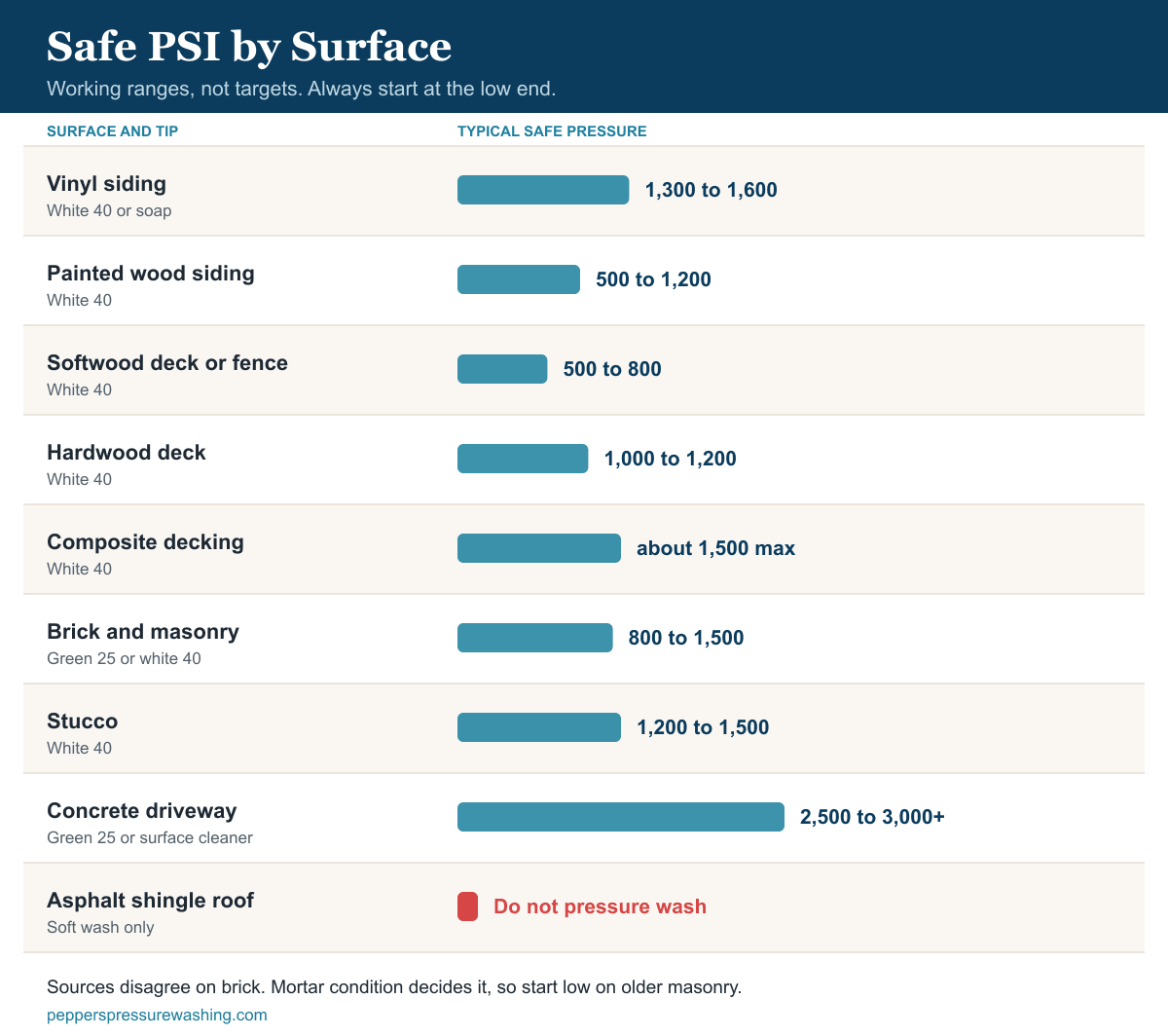
This is the table the other nozzle guides leave out. The tip controls concentration, but total pressure matters just as much. Below are working ranges, not maximums to aim for. Always start at the low end, hold the wand well back, and test a hidden spot before you commit.
Surface | Typical safe PSI | Tip to use | Notes |
|---|---|---|---|
Vinyl siding | 1,300 to 1,600 | White 40 or black soap | Soft washing at low pressure is the better method. Sources vary up to about 2,000, so start low. |
Painted wood siding | 500 to 1,200 | White 40 | High pressure strips paint fast. Chemistry should do the work. |
Softwood deck or fence | 500 to 800 | White 40 | Pine and cedar splinter easily. Keep the wand moving and well back. |
Hardwood deck | 1,000 to 1,200 | White 40 | Denser than softwood but still easy to fuzz the grain. |
Composite decking | about 1,500 max | White 40 | Check the manufacturer. Many warranties cap pressure explicitly. |
Concrete driveway or patio | 2,500 to 3,000+ | Green 25 or surface cleaner | A surface cleaner gives an even finish. A wand leaves stripes. |
Brick and masonry | start near 800, up to about 1,500 | Green 25 or white 40 | Sources disagree widely here. Mortar condition decides it. Old lime mortar needs very little. |
Stucco | 1,200 to 1,500 | White 40 | Easy to pit. Soft washing is usually the safer call. |
Vehicles | 1,200 to 1,900 | White 40 | Keep 2 feet back and never use red or yellow. |
Asphalt shingle roof | Do not pressure wash | Soft wash only | High pressure removes the granules that protect the shingle and can void the warranty. |
That last row is not us being cautious. The Asphalt Roofing Manufacturers Association explicitly calls for low pressure chemical cleaning on shingles and warns against power washing them. If your roof has black streaks or moss, it needs roof soft washing, not pressure.
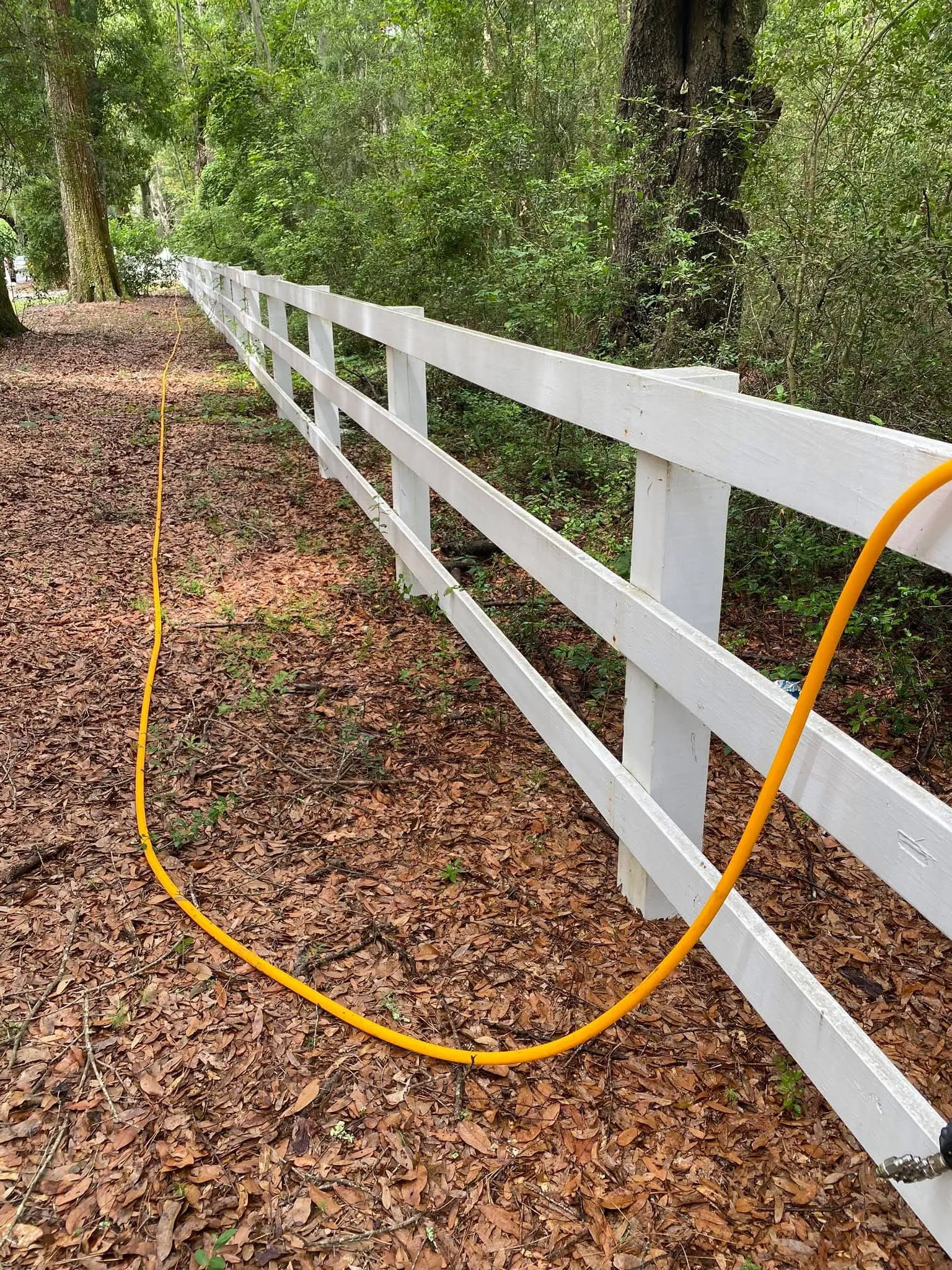
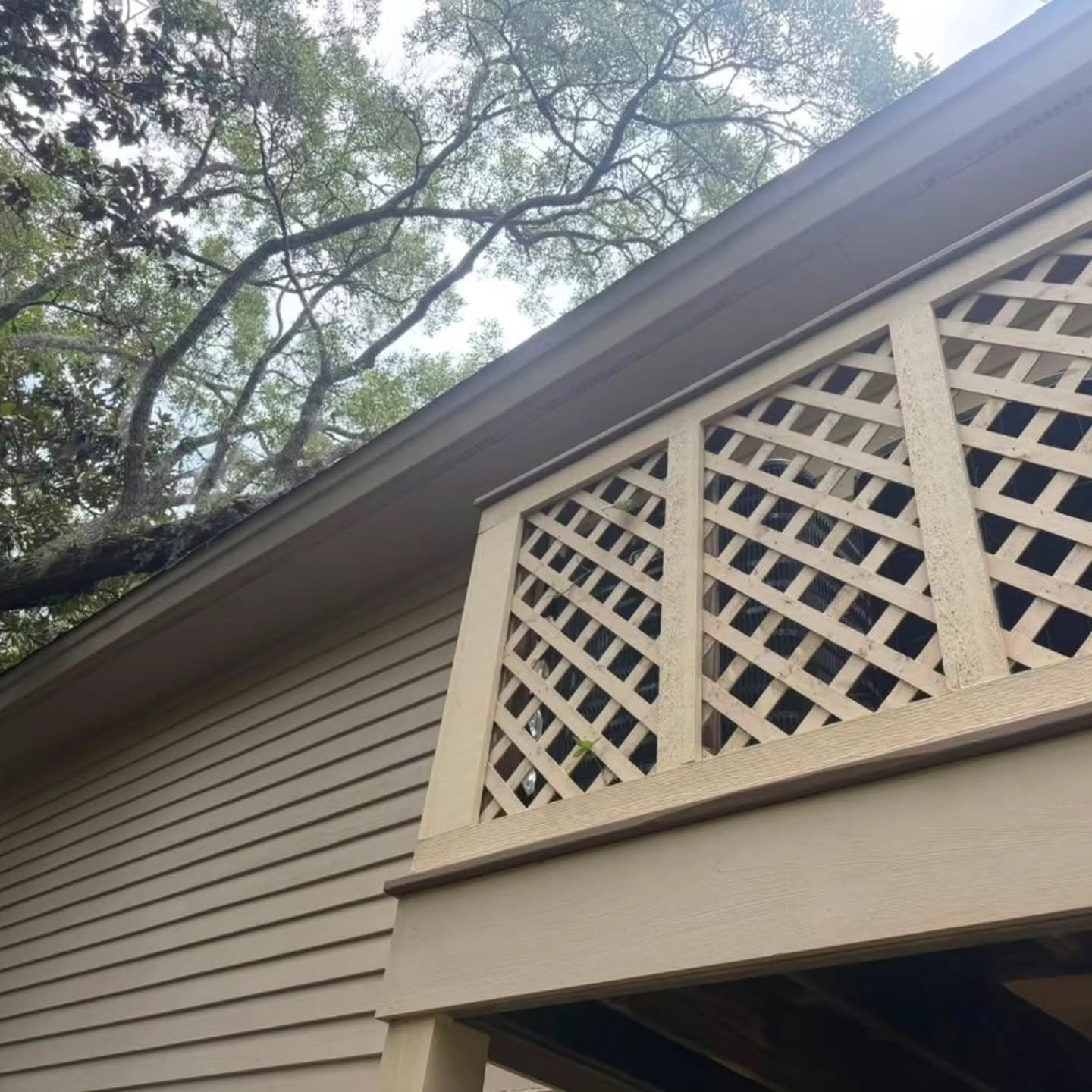
Wood is the surface where the numbers matter most. The fence above was cleaned at the low end of the range with a wide tip. The same fence hit with a yellow 15 degree tip would have come out furry, with raised grain that then needs sanding and resealing before it can be stained.
PSI vs GPM: which actually matters?
PSI is force and GPM is flow, and most people over-value PSI. PSI breaks the dirt loose. GPM, the gallons per minute, carries it away. A machine with high PSI and low flow cleans a small area aggressively and slowly. A machine with moderate PSI and higher flow cleans a large area faster and more gently, which is usually what you want on a house.
This is why professional gear is not just about pressure. Two machines can both read 3,000 PSI, and the one pushing 5 gallons per minute will finish a driveway in a fraction of the time because it is moving far more water. If you are shopping, look at both numbers together. Cleaning units, PSI multiplied by GPM, is the honest way to compare two machines.
How to choose the right nozzle, step by step
When you are standing in front of a surface and not sure what to use, work through this in order. It takes about ten seconds and it prevents nearly every damage scenario.
Identify the surface and how soft it is. Concrete and masonry are hard. Siding, wood, paint, and shingles are soft. When in doubt, treat it as soft.
Start with the widest tip that could work. White 40 for anything soft, green 25 for concrete. You can always step down. You cannot undo a gouge.
Apply soap with the black tip first. Let the chemistry loosen the grime so you need less pressure overall.
Test a hidden area. Pick a spot behind a downspout or low on a back wall and check the result before working across the front of the house.
Start far back and move closer slowly. Begin about 3 feet away and close the distance only until it is cleaning. Distance is a pressure control you already have in your hand.
Keep the wand moving. Holding still in one spot is what creates lines and etching, even with a safe tip.
What pressure damage actually looks like
If a wash has already gone wrong, the pattern usually tells you what happened. Here is how to read it, and whether it is fixable.
What you see | Likely cause | Fixable? |
|---|---|---|
Even vertical stripes on siding, lighter or darker bands | Wand streaking. Overlapping passes at too high a pressure, or an uneven tip. | Often yes. A proper soft wash usually evens it out. |
Chalky or dull patches on vinyl | Oxidation exposed or worsened by aggressive pressure. | Sometimes. May need an oxidation treatment, occasionally paint. |
Fuzzy, raised, or splintered wood grain | Too much pressure or too narrow a tip on softwood. | Needs sanding and resealing. |
Pitted or lined concrete | Red or yellow tip held too close, or a wand instead of a surface cleaner. | Permanent. Concrete does not grow back. |
Shingle granules in the gutters or on the ground | Pressure washing an asphalt roof. | Permanent, and it shortens roof life. |
Water stains inside on walls or ceilings | Water forced up behind siding or under shingles. | Needs a professional look. This is the expensive one. |
Stripes on siding are the single most common call we get, and the honest answer is that it is usually not a pressure problem at all. It is a chemistry problem. If mildew was never killed at the root, it comes back unevenly and reads as streaking. Our guide to the sodium hypochlorite used in soft washing explains why.
When to put the pressure washer down
Some surfaces should never see meaningful pressure, no matter which tip is on the wand. On these, the right method is soft washing, which applies a cleaning solution at roughly garden hose pressure and lets the chemistry do the work.
Asphalt shingle roofs. Pressure strips the protective granules. Soft wash only.
Older or chalking painted surfaces. Pressure lifts the paint along with the dirt.
Aging or brittle vinyl siding. Cracks easily, and water gets behind it.
Historic brick and lime mortar. Soft mortar washes straight out of the joints.
Screens, window seals, and light fixtures. Pressure drives water into places it will sit and rot.
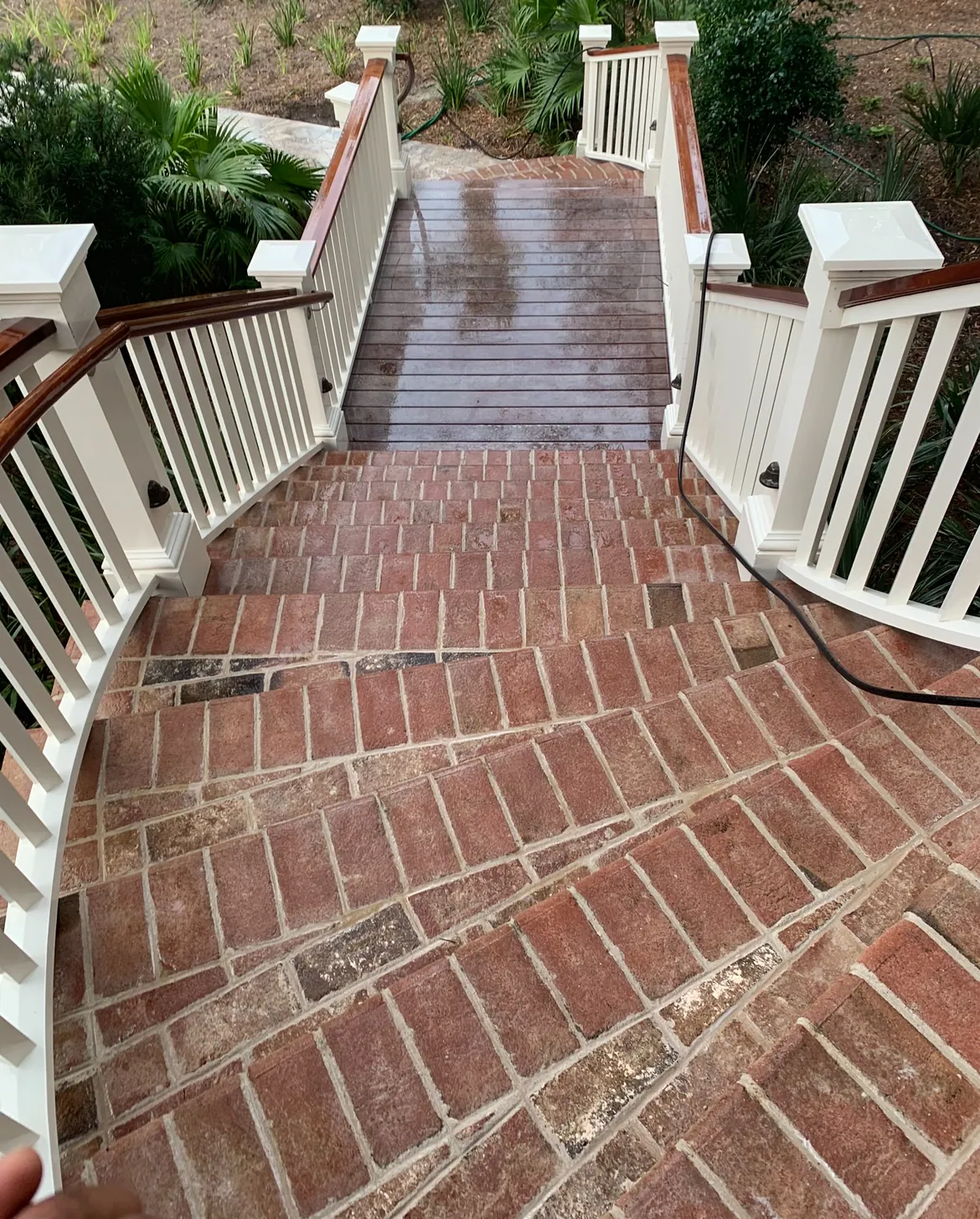
Historic masonry is the clearest example. These brick stairs came clean with chemistry and a gentle rinse. Enough pressure to strip that moss mechanically would have taken the soft lime mortar out of the joints with it, and repointing costs far more than the cleaning did.
For most homes the whole exterior is best handled as a house washing job at low pressure, with real pressure washing reserved for the concrete and the driveway. For the surface by surface method, see our guides to cleaning vinyl siding, removing moss and algae from a roof, and cleaning pavers, where the joint sand changes the rules.
Safety basics
A pressure washer is not a garden hose. The stream from a 0 degree tip can cut skin and cause an injection injury that looks minor and is a medical emergency. Treat the wand like a tool that can hurt you.
Never point the wand at a person or a pet, and never at yourself to test it
Wear eye protection and closed shoes, and skip the ladder when you can reach from the ground
Assume any injury from the spray is serious and get it looked at, even if the skin looks barely broken
Keep the spray away from outlets, meters, light fixtures, and dryer vents
Release the trigger and let pressure out of the line before changing tips
The Consumer Product Safety Commission has issued formal pressure washer warnings covering both the spray itself and electrical shock risk, and injuries are more common than most homeowners expect.
Frequently asked questions
What do the colors on pressure washer nozzles mean?
They indicate spray angle. Red is 0 degrees, yellow is 15, green is 25, white is 40, and black is a wide low pressure soap tip. Narrower angles concentrate more force into a smaller area, so red is the most aggressive and white is the gentlest of the high pressure tips.
Which pressure washer nozzle should I use on my house?
Use the white 40 degree tip, or better yet the black soap tip with a cleaning solution. Siding does not need high pressure and can be damaged by it. Green, yellow, and red are for hard surfaces like concrete, not for the walls of your home.
What is the black pressure washer nozzle for?
The black tip applies soap. It has the widest opening, which drops the pressure at the tip enough for the machine to draw detergent through the siphon. If your soap is not pulling through, the black tip is almost always the missing piece.
Is 3,000 PSI too much for a house?
For siding, yes, if that pressure is landing on the wall. A 3,000 PSI machine can still be used safely on a house by fitting a wide 40 degree or soap tip and keeping distance, because the tip and the standoff spread the force out. The number on the machine matters less than what actually reaches the surface.
What PSI is safe for vinyl siding?
Roughly 1,300 to 1,600 PSI with a wide 40 degree tip is a common working range, and some sources go up to about 2,000. Start at the low end. Better still, soft wash it, which cleans at well under 500 PSI at the surface and kills the mildew instead of just rinsing it.
Can you pressure wash a roof?
Not an asphalt shingle roof. High pressure blasts off the granules that protect the shingle and can void the manufacturer warranty. Roofs should be soft washed with a low pressure cleaning solution instead.
What is a turbo nozzle used for?
A turbo or rotary nozzle spins a 0 degree stream in a circle, so it delivers pinpoint force across a wider path. It is excellent on concrete and masonry and genuinely dangerous on siding, wood, paint, and shingles.
Do I need PSI or GPM?
Both, but GPM is the underrated one. PSI breaks dirt loose and GPM rinses it away. Higher flow cleans large areas faster and more gently. Compare machines using PSI multiplied by GPM rather than PSI alone.
The bottom line
Match the tip to the surface, start wide and far back, let soap do the work, and never put pressure on a shingle roof. White for soft surfaces, green for concrete, black for soap, and leave the red tip in the box unless you have a specific reason to reach for it.
If you would rather not learn this on your own siding, that is fair. We clean homes across Johns Island, Kiawah, Seabrook, and greater Charleston, fully insured, and the estimate is free. Get a free quote and we will tell you honestly whether your house needs pressure or a soft wash.