Vinyl siding gets dirty in a way that fools people. It is rarely just dirt. Most of what dulls a house is living growth, mildew and algae rooted into the texture of the panel, and that changes what actually works. Soap and scrubbing move the surface film. They do not kill what is underneath, which is why the green comes back.
This guide covers the whole job: how to tell what you are looking at, which cleaner to use for it, whether a pressure washer is safe (the honest answer is a qualified yes with one rule that matters more than the rest), and the order of operations that keeps you from streaking the wall.
How do you clean vinyl siding?
Wash vinyl siding with a soft bristle brush and a cleaning solution matched to the problem, working in sections from the bottom up, then rinsing from the top down. Use soapy water for plain dirt and a bleach or oxygen based cleaner for mildew and algae. Let the cleaner dwell a few minutes, never let it dry, and keep pressure low and aimed straight or slightly downward.
Bottom up, then rinse top down, is the part most people get backwards. Cleaner running down a dry wall leaves streaks that are difficult to remove afterward. Wetting from the bottom first means anything running ahead of you lands on already wet siding and rinses away clean.
First work out what is actually on your siding
Four different things dull vinyl siding, and they need different treatment. Diagnosing before you buy anything saves the most time.
What you see | What it is | Comes off with |
|---|---|---|
Green tint or fuzzy patches, worst on the shaded and north side | Algae and mildew, a living growth | A bleach based or oxygen based cleaner. Needs to kill, not just rinse. |
Black speckles or streaks, often near the ground or under eaves | Mold and mildew, sometimes artillery fungus from mulch | Bleach based cleaner with dwell time. Artillery fungus may need scraping. |
Overall dullness and grime, even coverage | Ordinary dirt, pollen, and road film | Soapy water and a soft brush |
Chalky white residue that comes off on your hand | Oxidation, the vinyl surface itself breaking down with age | A cleaner made for oxidation. Severe cases do not fully reverse. |
Rust colored streaks or runs | Iron staining from sprinkler water or metal fixtures | An acidic or oxalic based cleaner, not bleach |
Oxidation is the one to check for first. Rub a hidden section with a dark cloth. If chalky white residue transfers, the siding is oxidizing. Cleaning improves it, but no wash fully restores badly oxidized vinyl, and aggressive scrubbing makes it blotchy. Knowing this before you start prevents disappointment with an otherwise good result.
The best cleaner for vinyl siding
There is no single best cleaner, there is a best cleaner for your problem. Here are the realistic options from gentlest to strongest.
Cleaner | Mix | Best for | Watch out for |
|---|---|---|---|
Dish soap or laundry detergent | A squirt in a bucket of warm water | Plain dirt, pollen, road film, spider webs | Does nothing to mildew or algae |
White vinegar solution | About 30 percent vinegar to 70 percent water | Light mildew, and situations where you want to be gentle on plants | Slow and weak on established growth |
Oxygen bleach (sodium percarbonate) | Per the product label | Mildew when you want to avoid chlorine near plants | Needs longer dwell and more scrubbing than chlorine |
Chlorine bleach solution | Roughly 1 part household bleach to 3 or 4 parts water, plus a little detergent | Established mildew, algae, and black mold. The most reliable killer. | Burns plants, needs rinsing and PPE, never mix with anything |
Commercial house wash concentrate | Per the product label, often hose-end | Whole house jobs with less mixing | Read what is in it, many are just diluted bleach |
Chlorine stable surfactant | Per label, dose rates differ hugely by brand | Added to a bleach mix so it clings to the wall instead of running off | Does nothing on its own. It is a cling agent, not a cleaner. |
Professional soft wash | Low strength sodium hypochlorite with a surfactant | Whole house, heavy growth, two story homes | This is the pro method, not really a DIY bucket mix |
The manufacturers publish their own approved mixes. CertainTeed and the industry association for vinyl siding both list detergent based recipes for grime and note that a plain garden hose handles more than people expect. Their most useful warning is about tools rather than chemicals: avoid stiff bristle brushes and abrasive cleaners, because they change the gloss of the area you scrub and leave the wall looking splotchy in a way that does not wash out.
Named products worth knowing
We do not sell any of these and we get nothing for naming them. They are simply the products homeowners actually encounter, sorted by what they really are, because the label rarely makes that obvious.
Mold Armor E-Z House Wash. A ready to use chlorine based house wash, roughly 5 percent sodium hypochlorite, sold in hose end form. Effective on mildew and algae. It will not touch chalky oxidation, road film, or rust, because those are not biological.
30 Seconds Outdoor Cleaner. Still on the market despite persistent rumors otherwise. Another chlorine based option in the same family.
Simple Green Oxy Solve House and Siding. Peroxide based rather than chlorine. Gentler around landscaping and safe on more surfaces, but slower and weaker against established algae.
Sodium percarbonate (oxygen bleach) powders. Sold for wood and deck cleaning. Good where you cannot risk chlorine near plants or fabric. Mixed solution has a short working life, so mix what you will use.
Chlorine stable surfactants such as Elemonator or Mango Mauler. These are soaps that make a bleach mix cling to a vertical wall. Dose rates vary enormously between brands, so never copy a rate from one product to another. Most come in contractor sizes far larger than a homeowner needs.
Two honest cautions. First, a lemon scent masks the chlorine smell rather than removing the chlorine, so it is easy to underestimate what you are breathing. Second, a surfactant being described as safe on copper describes the soap, not the bleach it is mixed with. SH can still stain or discolor copper, aluminum, and painted metal.
If you want to understand the chemistry behind the bleach based approach that professionals use, including why a surfactant matters, that is covered in depth in our beginner's guide to sodium hypochlorite.
Can you pressure wash vinyl siding?
Yes, carefully. The industry association for vinyl siding permits pressure washing but is specific about technique: hold the wand straight at eye level so the water stays on top of the siding, and never aim upward. Vinyl panels overlap like shingles, so water driven upward goes behind the siding, where it sits in the wall and causes damage you will not see for months.
That one rule matters more than the pressure number. A moderate machine aimed upward under a lap does more harm than a stronger machine aimed straight. Water behind siding leads to trapped moisture, mold in the sheathing, and staining that bleeds back out.
If you do use a pressure washer on siding, these are the guardrails:
Use a wide tip. The white 40 degree tip, or the black soap tip for applying cleaner. Never red or yellow.
Keep pressure modest. Roughly 1,300 to 1,600 PSI is a common working range for vinyl, and lower is fine when chemistry is doing the work.
Stay back and stay level. Two to three feet, wand level or angled slightly down, never up under the laps.
Check your warranty first. Some siding manufacturers limit or discourage pressure washing outright, and a violation can matter on a claim.
Avoid windows, vents, and fixtures. These are the easiest places to force water inside.
Our nozzle and safe PSI guide has the full tip chart and the pressure ranges for every other surface on the house if you are cleaning more than the siding.
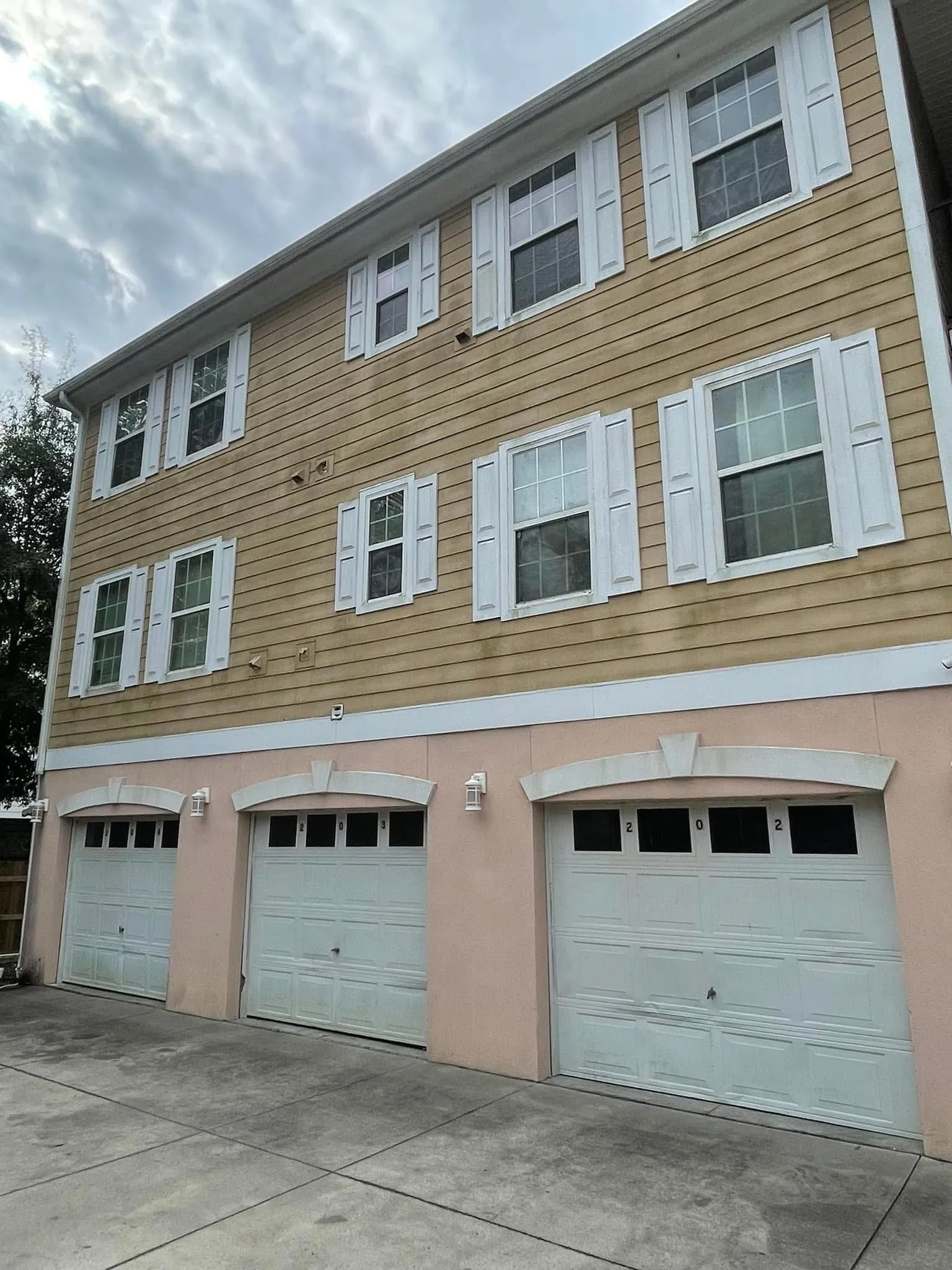
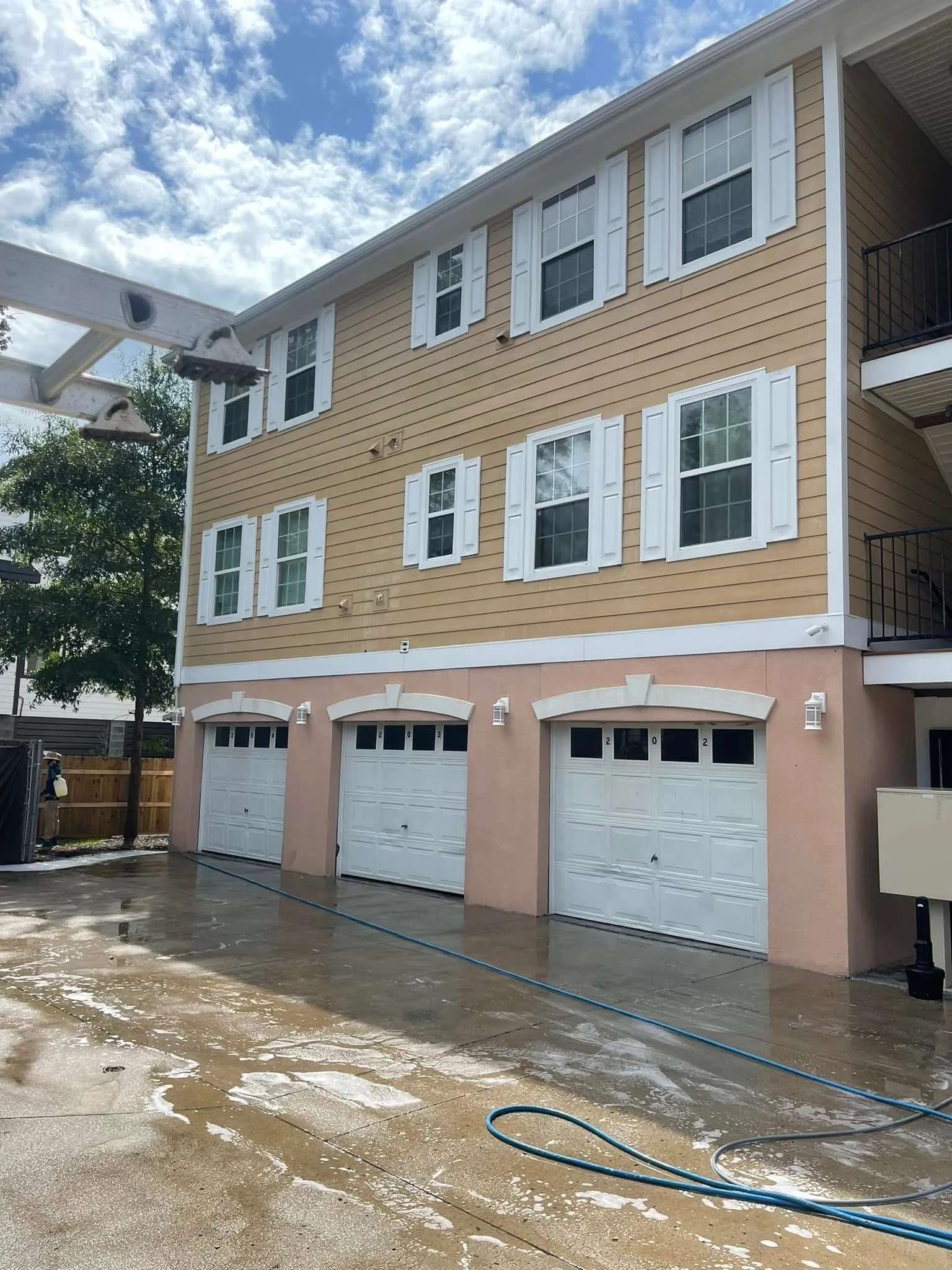
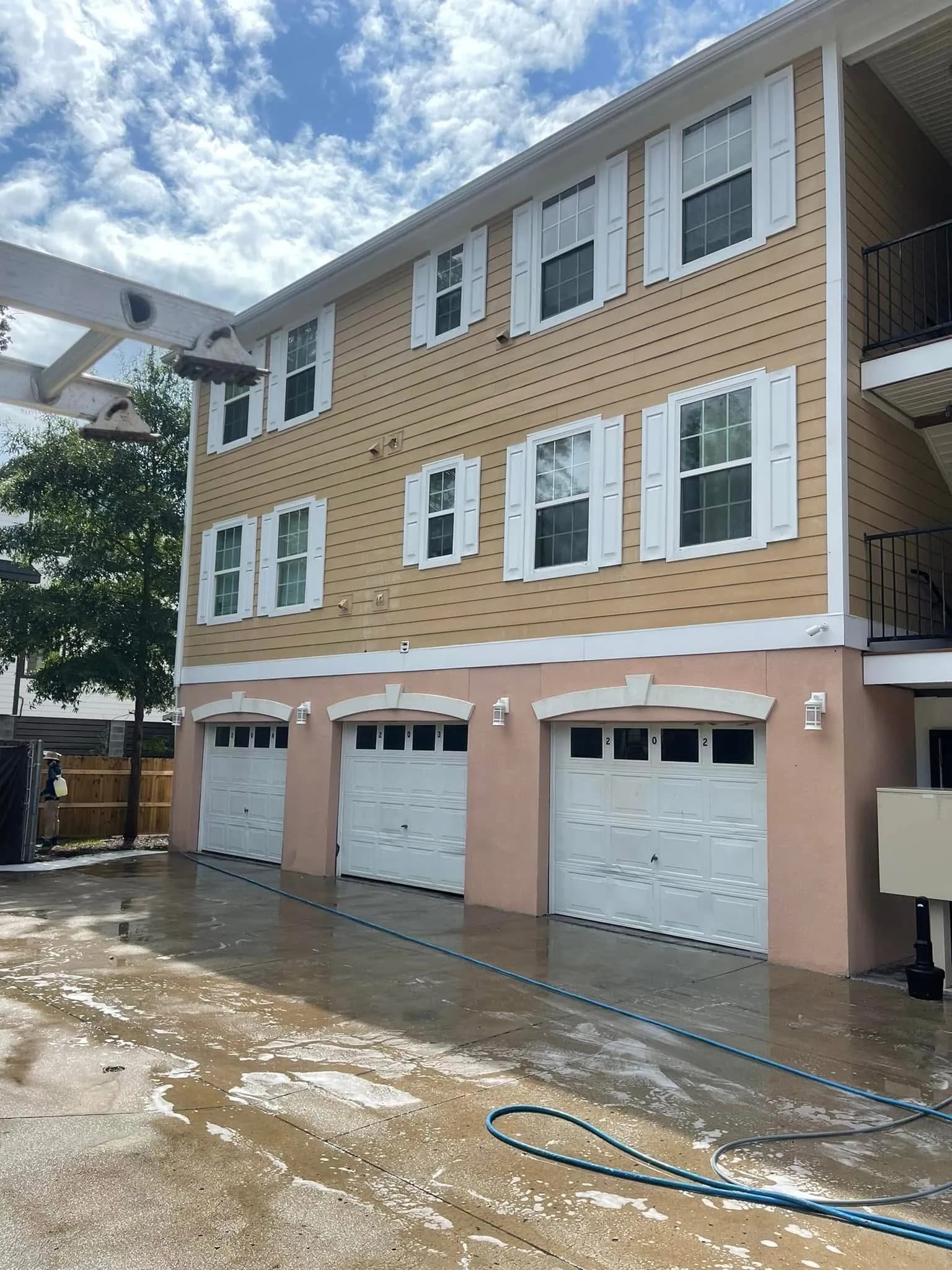
That yellow townhouse is a good example of what people mean when they say their siding faded. It had not faded. It was covered in a film of mildew that flattened the color, and the actual yellow was still underneath the whole time.
How to clean vinyl siding without a pressure washer
You do not need one, and for a single story home a hose and a brush often give a better and safer result. This is the method the siding manufacturers themselves recommend.
Pick your day. Overcast and mild is ideal. Direct sun dries cleaner onto the wall before you can rinse it, which is the main cause of streaking.
Protect the landscaping. Soak plants, shrubs, and grass thoroughly with plain water first and keep them wet. If you are using a bleach mix, cover the most delicate plantings.
Close up the house. Shut windows and doors, and cover or shut off exterior outlets and light fixtures.
Pre rinse with a garden hose. Knock off loose dirt, pollen, and webs from the top down before any cleaner goes on.
Mix your cleaner. Match it to the diagnosis above. Use a bucket, not a sprayer you cannot control.
Work bottom to top in sections. Use a long handled soft bristle brush, roughly a ten foot section at a time, so nothing dries before you finish it.
Let it dwell a few minutes. Give a mildew killer time to actually work, but never let it dry on the surface. Re wet if it starts to.
Rinse top to bottom. Rinse each section thoroughly before moving on, keeping the wall below it wet.
Flush the landscaping again. Give beds, grass, and soil a deep final rinse when the whole wall is done.
A soft bristle brush on an extension pole is the single best tool for this job. It reaches the second story from the ground on most homes, it lets you agitate the growth instead of relying on force, and it costs a fraction of a pressure washer.
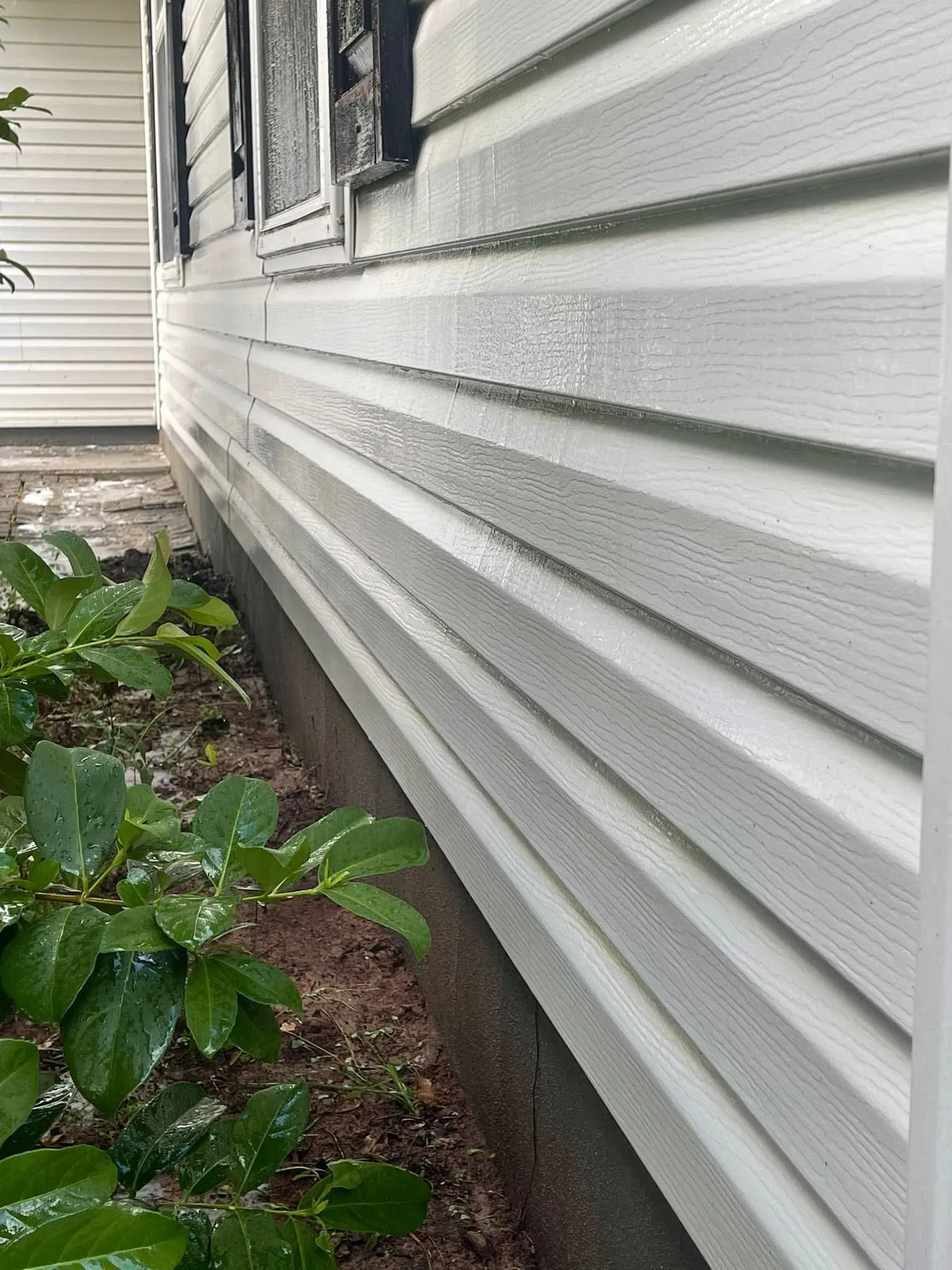
What not to do
Most siding damage we get called out to fix comes from a short list of avoidable mistakes.
Do not aim water upward under the laps. The most damaging and most common mistake.
Do not use stiff or abrasive brushes and scouring powders. They change the gloss and leave permanent splotches.
Do not use undiluted bleach. It burns landscaping and is unnecessary at full strength.
Do not mix cleaners. Bleach with any acid or ammonia product creates toxic gas. Pick one product and use it alone.
Do not let cleaner dry on the wall. Dried cleaner streaks and the streaks are harder to remove than the original dirt.
Do not work in direct midday sun. Everything dries too fast.
Do not use a ladder to reach what a pole can reach. Most homeowner injuries here come from the ladder, not the chemical.
The gas warning is not theoretical. Bleach mixed with an acid or an ammonia based cleaner releases chlorine or chloramine gas, and the chemical safety record for sodium hypochlorite documents why that matters. Use one product at a time.
How often should you clean vinyl siding?
Once a year is the standard recommendation, and it is about right for most homes. Shaded walls, north facing sides, and homes in humid or coastal climates often want it closer to every nine to twelve months. Homes in full sun with little tree cover can sometimes go eighteen months.
The signal to watch is not the calendar, it is the shaded side of the house. Algae always starts there. When the north wall starts to look faintly green, you are at the right time to wash, and catching it then means a much easier job than waiting until it is visibly streaked.
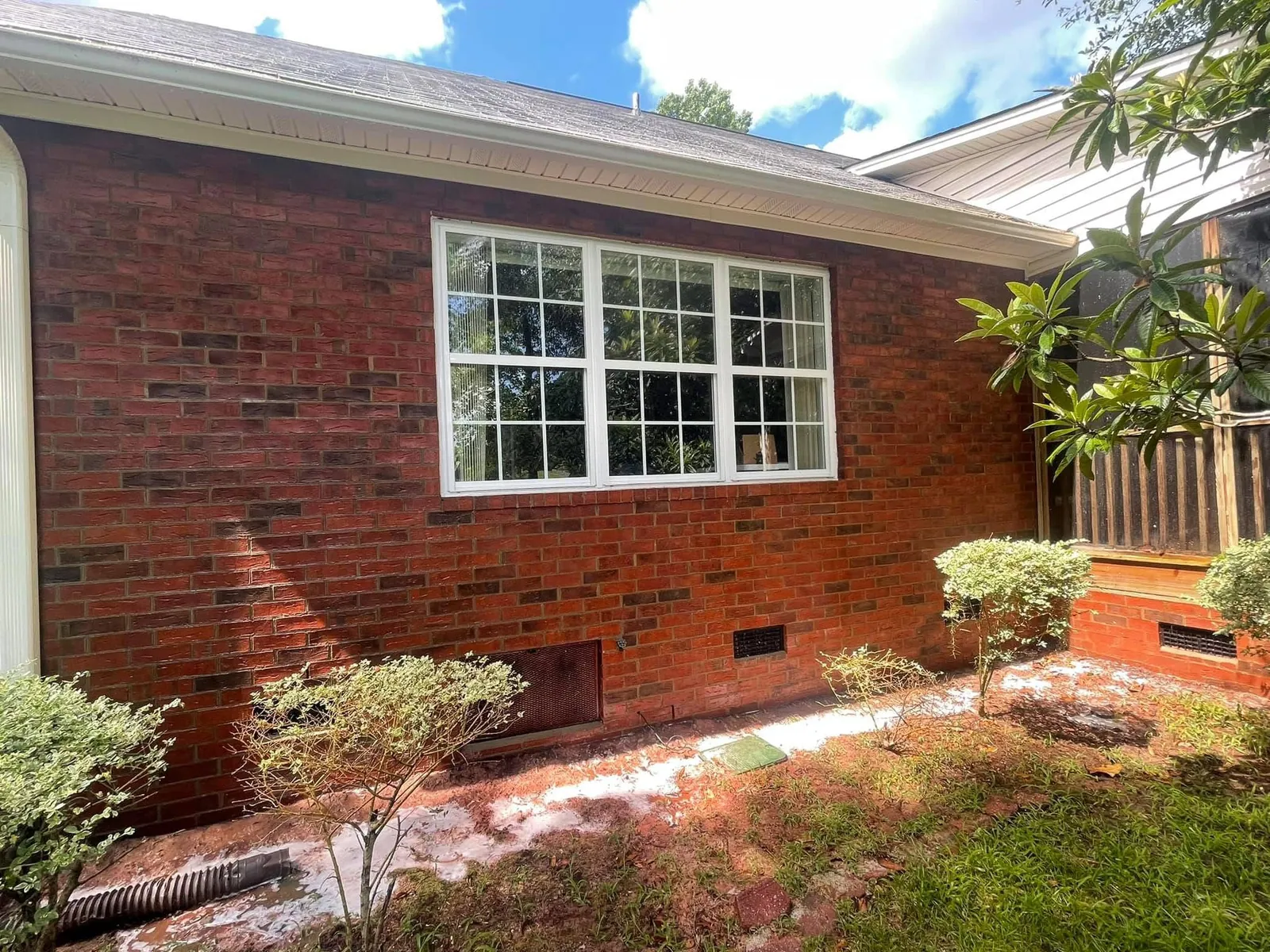
The same approach works on fiber cement plank like the wall above, and on painted wood and stucco, with one adjustment: the more delicate or older the finish, the leaner the mix and the lower the pressure. Painted surfaces in particular want chemistry doing nearly all of the work.
When it is worth hiring someone
A single story home with light growth is a genuinely reasonable weekend job. The calculation changes when any of these apply.
The house is two stories or more, where the ladder risk is the real hazard
Growth is heavy and established rather than a light film
There is mature landscaping right against the foundation that would be expensive to replace
The siding is oxidized and needs a careful hand to avoid blotching
You want it done in a morning rather than a weekend
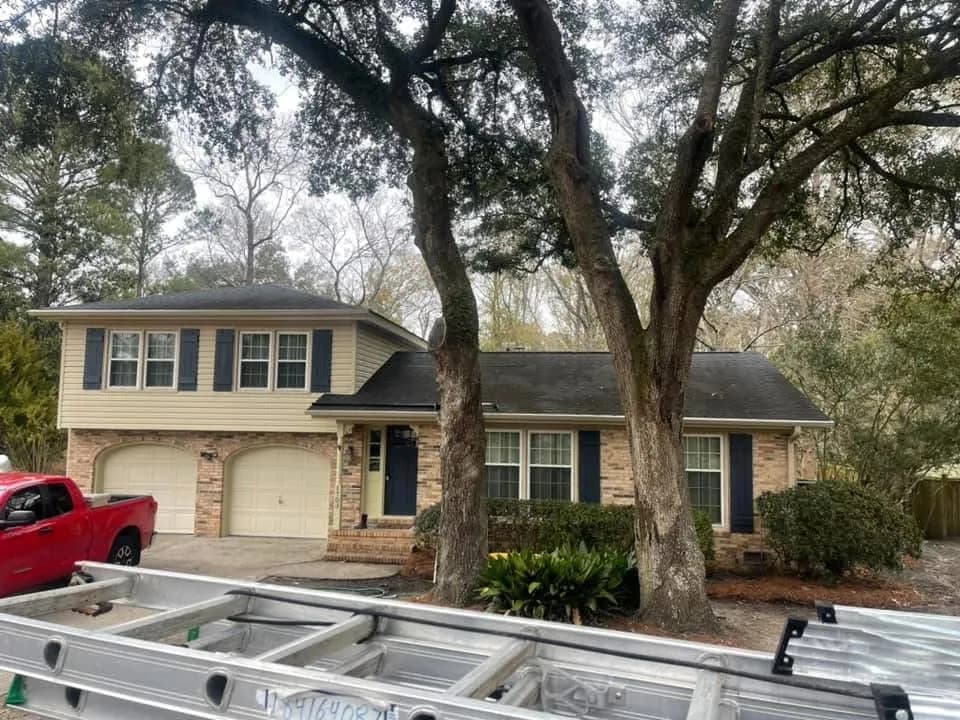
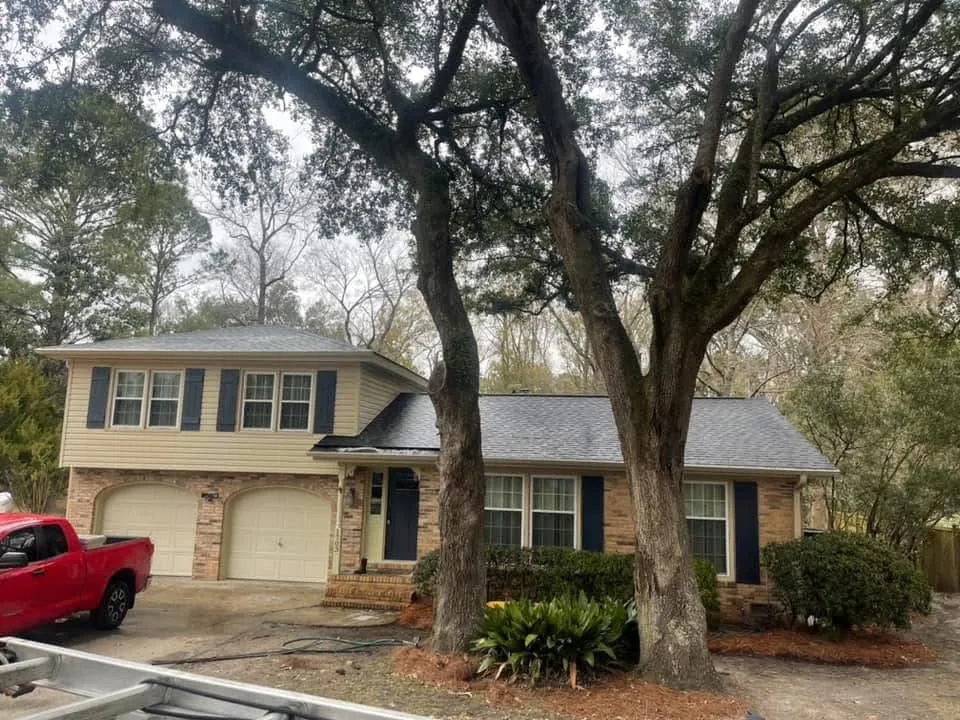
A professional house washing uses a soft wash system that applies the cleaner at low pressure and reaches a second story from the ground, so there is no ladder and no force against the siding. If the roof is streaked too, that is a roof soft washing job and is best done at the same visit so the runoff only has to be managed once.
We clean siding across the Charleston Lowcountry and the estimate is free. Get a free quote and we will tell you honestly whether it is mildew that will clean up beautifully or oxidation that will only improve so far.
Frequently asked questions
What is the best thing to clean vinyl siding with?
For plain dirt, soapy water and a soft bristle brush. For mildew and algae, a bleach based cleaner at roughly 1 part household bleach to 3 or 4 parts water with a little detergent, or an oxygen bleach product if you want to be gentler on plants. Match the cleaner to the problem rather than reaching for the strongest option.
Can you pressure wash vinyl siding?
Yes, with care. The vinyl siding industry allows it but says to hold the wand at eye level and never aim upward, because water driven up under the overlapping panels gets behind the siding. Use a wide 40 degree tip, keep pressure modest, stay a few feet back, and check your warranty first.
Will bleach damage vinyl siding?
Diluted bleach does not damage vinyl siding and is the most reliable way to kill mildew and algae. The risk is to everything around it. It burns plants, harms grass, and can discolor decking, so pre wet and rinse landscaping thoroughly. Never use it undiluted and never mix it with another cleaner.
Why does my siding look chalky?
That is oxidation, the vinyl surface breaking down with sun exposure over years. Rub it with a dark cloth and see if white residue transfers. Cleaning improves the look, but heavy oxidation does not fully reverse, and scrubbing hard makes it blotchy rather than better.
How do you clean siding without a pressure washer?
Use a garden hose and a long handled soft bristle brush on an extension pole. Pre rinse, apply cleaner bottom to top in sections, let it dwell a few minutes without drying, then rinse top to bottom. On most single story homes this gives a better and safer result than a pressure washer.
Why did my siding streak after cleaning?
Almost always because cleaner ran down dry siding or dried on the wall before rinsing. Working bottom to top keeps the wall below you already wet, so runs rinse away instead of setting. Working in shade and in smaller sections prevents the rest.
How often should vinyl siding be cleaned?
About once a year for most homes. Shaded, north facing, humid, and coastal homes often want every nine to twelve months. Watch the shaded side of the house, because algae starts there first and that is your cue.
Does vinegar clean vinyl siding?
A solution of roughly 30 percent white vinegar to 70 percent water handles light mildew and is gentler on landscaping than bleach. It is slower and noticeably weaker on established growth, so it suits maintenance washing more than a house that has gone green.
The bottom line
Diagnose first, match the cleaner to the problem, work bottom to top and rinse top to bottom, and keep water off the underside of the laps. Do that and vinyl siding cleans up dramatically, usually revealing that the color you thought had faded was there the whole time.