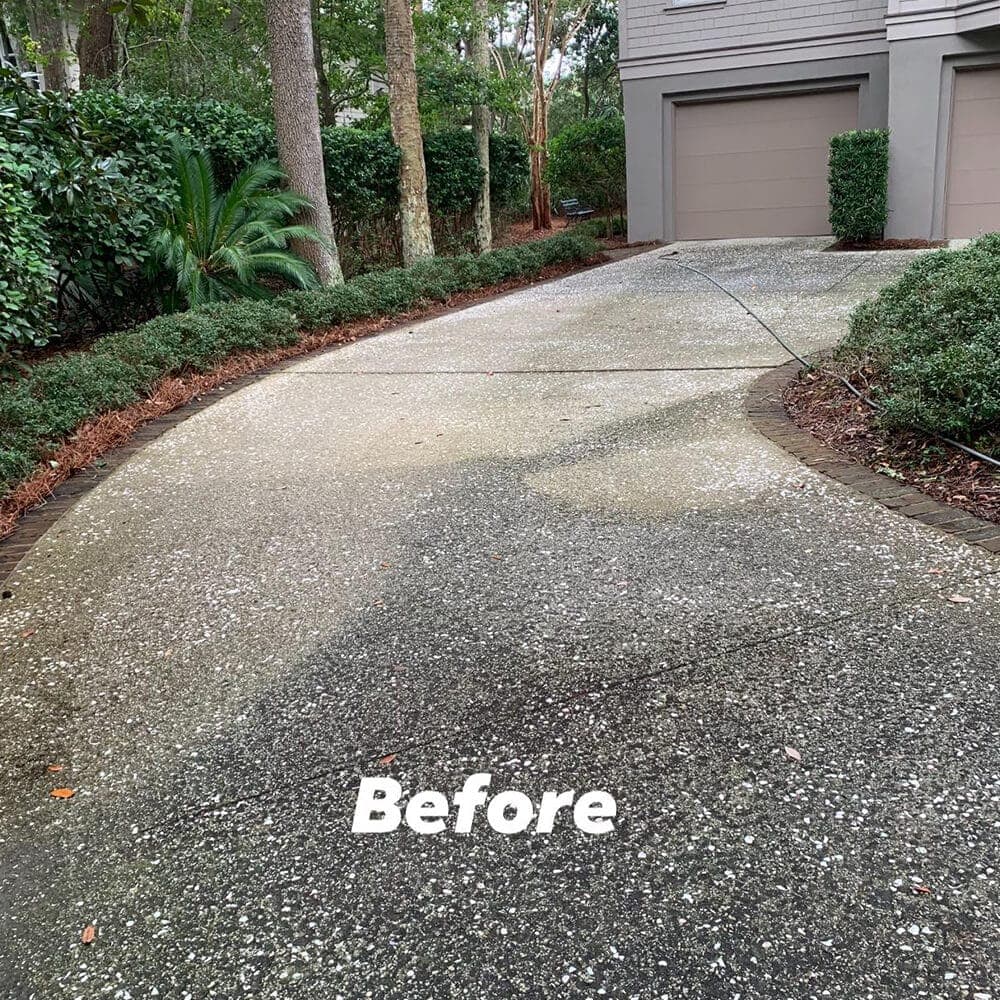
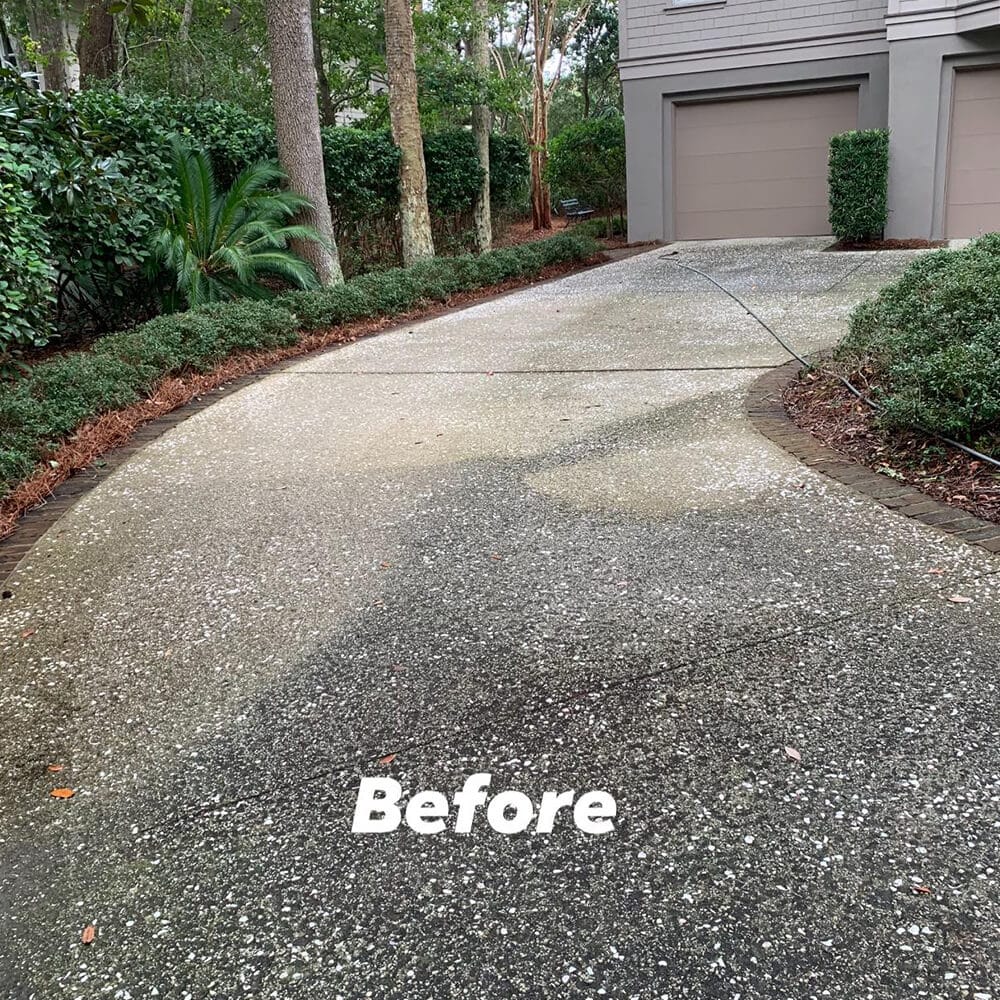
If you live in the Lowcountry, you already know the drill: you get your driveway pressure washed, it looks incredible for about four months, and then the green comes back. Sometimes it comes back in a matter of weeks after a stretch of rain. Charleston homeowners didn't imagine this. Our concrete genuinely turns green faster than almost anywhere else in the country. Here's why, and what actually fixes it long-term.
What the Green Stuff Actually Is
The green you see on Lowcountry driveways, patios, and walkways is almost always one of three things: algae, moss, or lichen. Algae is the most common culprit. It's a simple plant that feeds on moisture, sunlight, and the microscopic organic debris that settles on concrete. Moss prefers shadier, constantly damp spots. Lichen is the most stubborn, a fungus-algae hybrid that literally bonds to the concrete surface.
Why the Lowcountry Is the Perfect Storm
Charleston gets hit from every direction. Four environmental factors combine to make our driveways a buffet for algae:
Humidity. Average humidity in Charleston hovers around 75% year-round. Concrete stays damp almost continuously. Even on sunny days, the morning dew gives algae a 3-hour head start.
Tree canopy. Live oaks and pines drop spores, needles, and organic matter constantly. That becomes food. Shaded driveways get the worst of it because they dry slower.
Warm temperatures year-round. Algae growth effectively stops below 50°F. In Charleston, we have fewer than 30 days per year below that threshold. Meaning algae grows 335 days a year here.
Frequent rain. Our summer afternoon storms and fall tropical systems mean concrete rarely gets more than 3 days between rinses. Algae loves this.
Charleston's combination of 75% humidity, dense tree canopy, and 335+ days above 50°F means your driveway is a near-perfect algae habitat for 11 months out of the year.
Why Basic Pressure Washing Isn't Enough
Here's the frustrating truth: a plain pressure wash doesn't actually kill algae. It just blasts the visible surface off. The algae lives in the pores of the concrete, and within days of a power wash those same spores are multiplying again. If you've wondered why your driveway looks great at Week 1 and green again by Week 8, this is why.
What Actually Works Long-Term
The fix is a two-step process:
Step 1: kill the biology. A proper sodium-hypochlorite-based cleaning solution applied before or during the pressure wash kills algae, moss, and lichen at the root. This is the step most contractors skip. Without it, you're just rinsing.
Step 2: seal the pores. After the concrete is clean and dry, a penetrating concrete sealer closes the tiny pores where algae spores settle in, and a sealed driveway stays clean noticeably longer than an unsealed one. We do not seal, so this is work to arrange separately, but it is worth knowing about if you want the clean to last.
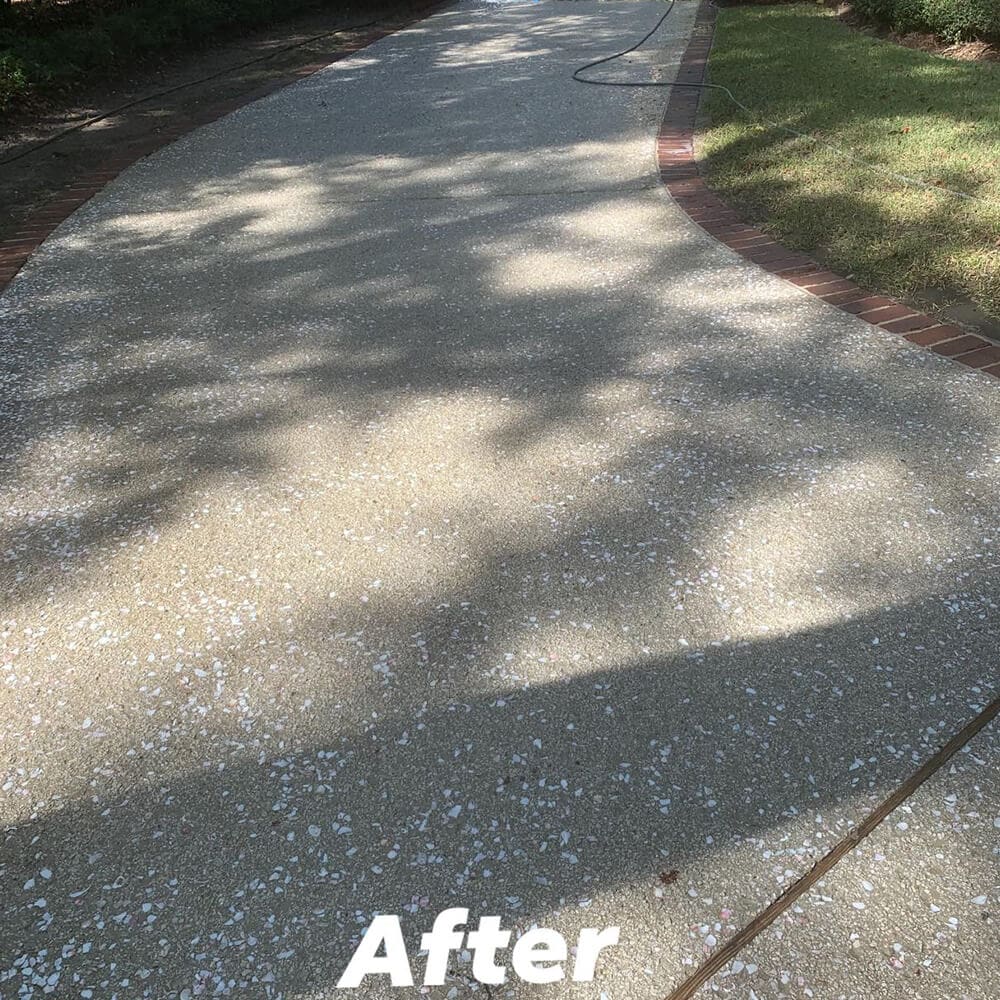
A proper concrete cleaning typically runs $275 to $525 for a two-car driveway in Charleston, and the result lasts 18 to 30 months instead of 3 to 4.
DIY vs. Hiring a Pro
Homeowner rental pressure washers top out at about 2,700 PSI with a narrow fan nozzle. Good for small patios if you're careful. The problem: without the proper chemistry, even professional-grade pressure alone only gets you 2 to 3 months of cleanliness in the Lowcountry. The chemistry makes the difference. Most homeowners also tend to etch or streak the concrete by overlapping wand passes.
Maintenance Tips to Stretch the Time Between Cleanings
Sweep or blow leaves weekly. Organic debris is the #1 food source for algae.
Trim tree branches. Even 2 extra hours of sun per day on a driveway cuts algae growth by 40%.
Fix low spots where water pools. Standing water is where moss and algae establish first.
Rinse with a hose after heavy pollen. Simple, but effective at stopping the early biofilm.
Ready to get started?
We've cleaned thousands of driveways across the Lowcountry, and our process is built for exactly this climate. Get a free driveway estimate and we'll send you a price for the cleaning.