Every Charleston homeowner knows the feeling: a tropical system rolls through, it's over in 8 hours, and then you wake up to windows that look like they went through a mud bath. Post-storm window cleaning isn't just cosmetic in the Lowcountry. Salt spray, tree debris, and silt-laden rain can actually damage glass if they sit too long. Here's what Charleston homeowners need to know about cleaning windows after a storm, and why faster is always better.
What Storms Leave Behind in Charleston
A typical Lowcountry storm, even a minor one, coats windows with a cocktail of substances:
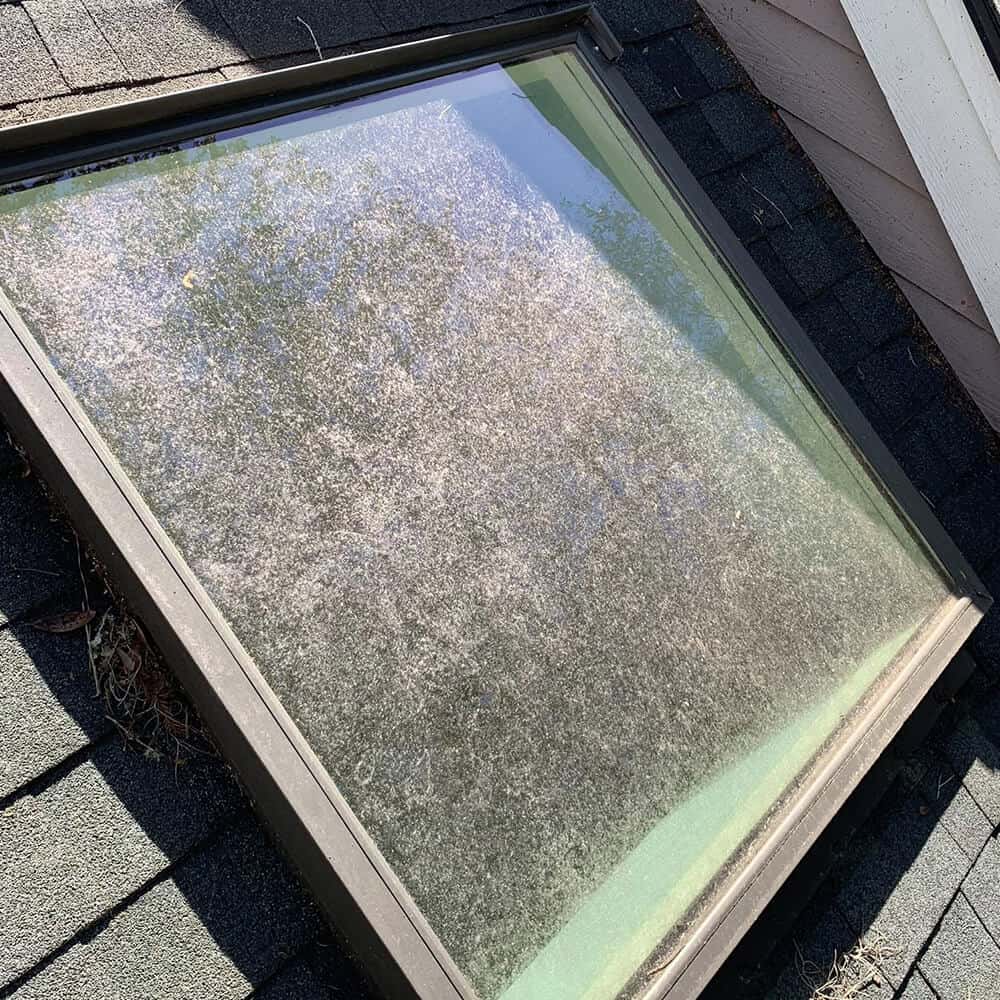
Salt residue. Hurricane and tropical-storm systems carry Atlantic salt spray miles inland. Salt is corrosive to window seals and glass coatings.
Silt and pollen. Charleston rain picks up particulates and deposits them in thin, hard-to-remove layers.
Tree sap, resin, and organic debris. Storms shake loose sap, leaves, and sticky oak pollen.
Mineral-rich rain spots. When rain dries on glass, mineral content leaves spots that cumulatively etch the surface.
Why You Shouldn't Wait
Most homeowners figure they'll 'get to it eventually.' In Charleston, that's expensive. Within 72 hours of a storm, salt can begin to microscopically etch into glass and corrode window frames. Within 2 weeks, silt-and-pollen films bond chemically with the glass and become much harder to remove without professional chemistry. What was a 2-hour job becomes a 6-hour job, or a window replacement.
Salt spray can begin etching glass and corroding window seals within 72 hours of a Charleston storm. The faster windows are cleaned, the cheaper the job stays.
Should You DIY It or Call a Pro?
Light post-storm haze on first-floor windows? DIY is fine. Use distilled water, a squeegee, and a micro-fiber cloth. Go in straight horizontal passes. Don't use standard dish soap. It leaves a film that actually attracts more debris.

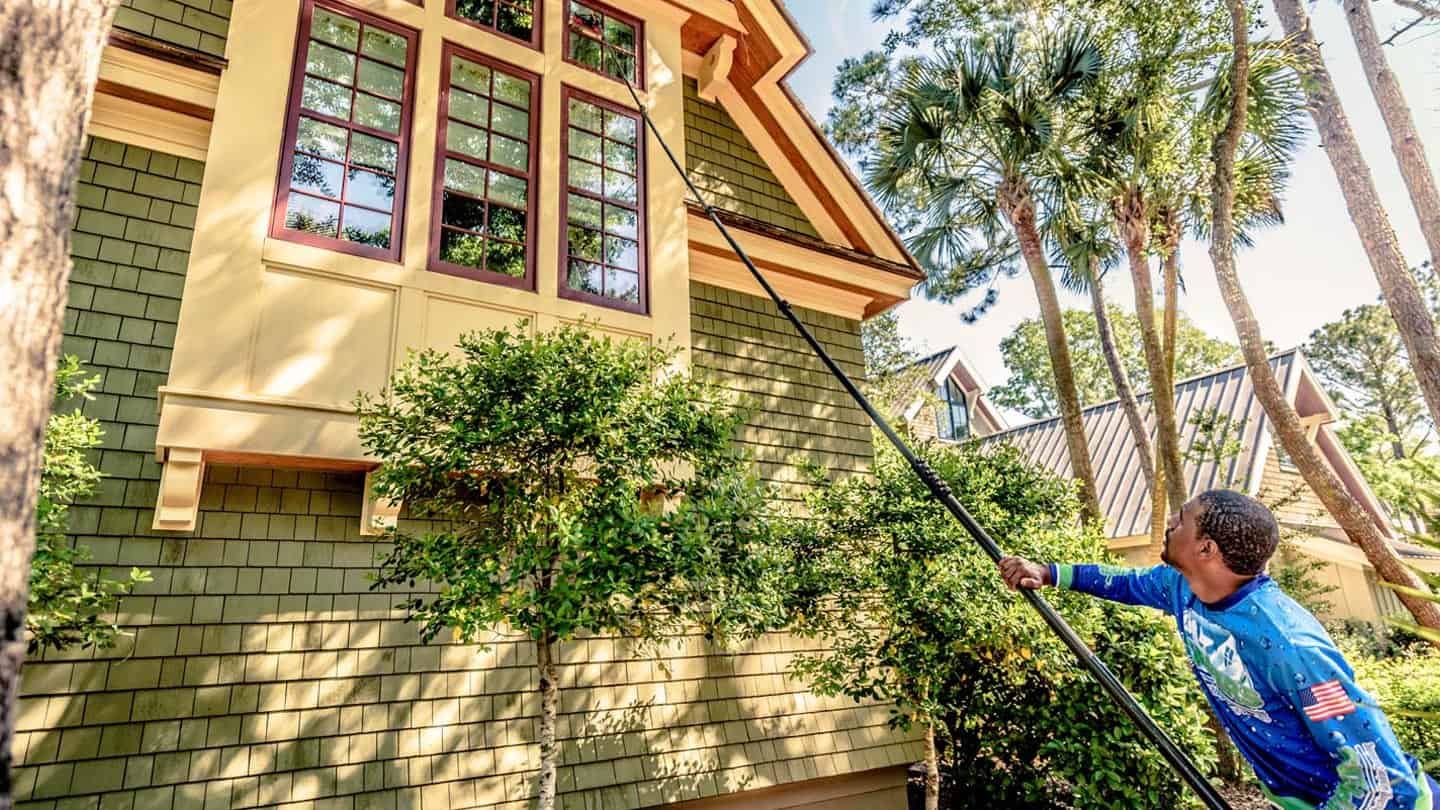
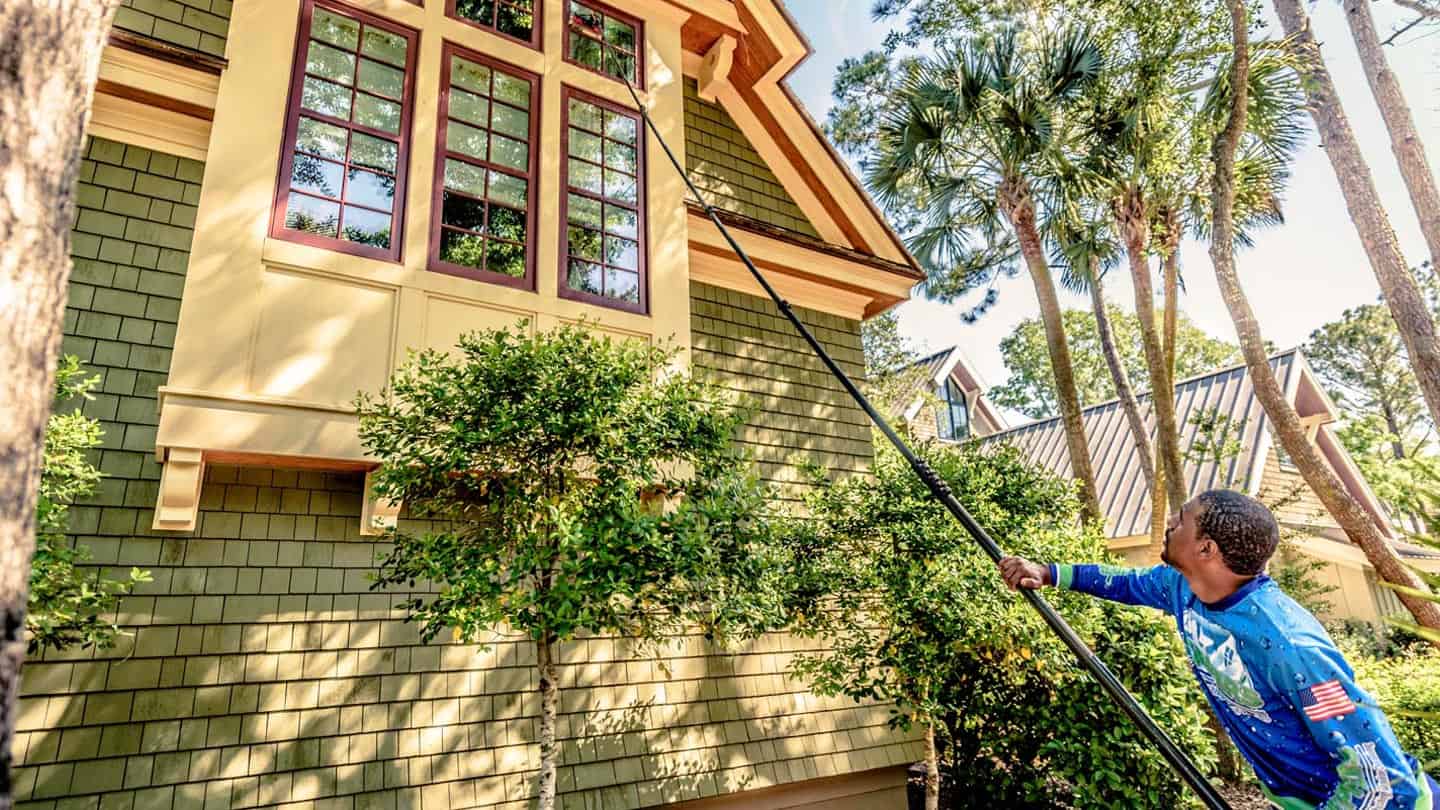
For second-story windows, heavy salt coating, or if you see white mineral spotting that's already bonded to the glass, call a pro. Professional window cleaning uses a soft-bristle water-fed pole, sealant-safe detergents, and the right reach equipment. For Charleston homes on Isle of Palms, Sullivan's Island, Folly Beach, and direct-ICW properties, we highly recommend professional cleaning within a week of any tropical system.
What a Professional Clean Includes
Soft-bristle scrub and rinse on all exterior glass
Hard water and salt spot treatment, available as an add-on
Exterior track cleaning along with the exterior glass
Screen removal and re-installation (screen cleaning is an add-on)
Glass-coating-safe chemistry (won't damage Low-E or tint)
Wipe-down of patio doors and glass exterior fixtures
A full-house post-storm window cleaning typically runs $225 to $485 depending on pane count and whether it's one- or two-story. Well worth it if salt and silt are already on the glass.
What About the Screens?
Storm screens take the brunt of the wind-driven debris. They'll be caked with leaves, pollen, and sometimes bits of mulch or small branches. Hose them off gently (don't pressure-wash them) and let them dry fully before re-installing. A pro will typically pull, wash, and re-seat all screens as part of the window-cleaning service.
Post-Storm Full-House Bundle
Most Charleston homeowners find it makes sense to bundle post-storm cleanup into a single visit: windows + a rinse of the house siding + concrete cleanup. Tropical system debris gets into siding joints and on driveways just as much as on glass, and a single appointment is cheaper than three separate ones.
Ready to get started?
Just rode out a storm? Don't wait. We typically have openings within 72 hours of any major system (post-Francine, post-Helene, post-Debby we ran 7-day turnarounds for emergency cleanings). Get a free post-storm quote and we'll respond the same business day.