Most concrete stain advice fails for one reason: it treats every stain the same. It is not. An orange sprinkler stain, a black oil drip, and a green shaded patch are three completely different problems that need three completely different chemicals. Use the wrong one and you will scrub for an hour and change nothing.
This guide sorts it out. You will learn how to tell which stain you actually have, the exact chemical family that removes each one, how to mix and apply it, and how to stop the stain from coming back. We clean concrete across the Charleston Lowcountry, and rust from irrigation water is one of the most common calls we get.
How do you remove rust stains from concrete?
Rust stains come out of concrete with an acid, most commonly oxalic acid. Mix roughly 1 pound of oxalic acid powder per gallon of water, apply it to the wet stain, let it dwell 30 minutes to a few hours, scrub with a stiff brush, then rinse and neutralize the area with a baking soda solution. Pressure and bleach will not remove rust, because rust is iron oxide bonded into the pores.
That 1 pound per gallon ratio comes from the Portland Cement Association guidance that most concrete professionals work from. Start weaker than you think you need, test a hidden corner, and step up only if the stain resists.
First, identify which stain you actually have
Concrete stains fall into three families, and the color tells you almost everything. Match your stain to the row below before you buy anything.
What you see | Stain family | Usual cause | What removes it | What does nothing |
|---|---|---|---|---|
Green, black, or gray patches, worse in shade | Organic growth | Algae, mildew, moss, and lichen feeding on moisture and debris | Sodium hypochlorite (bleach) with a surfactant, low pressure | Acid, degreaser, plain pressure |
Orange, rust brown, or reddish streaks and rings | Iron and rust | Sprinkler water with iron, fertilizer, rebar, metal furniture, tools left out | Acid, usually oxalic acid | Bleach, degreaser, pressure alone |
Dark gray or black blotches with a defined edge | Oil and grease | Engine drips, transmission fluid, cooking grease, hydraulic fluid | Alkaline degreaser, then a poultice for what soaked in | Bleach, acid, pressure alone |
The most useful thing on that page is the last column. Almost every failed DIY attempt we get called after was the right effort applied with the wrong chemical family.
Why bleach does not remove rust or oil
Bleach is the default reach for a lot of homeowners, and on organic growth it is exactly right. On rust and oil it is the wrong tool, and it is worth understanding why so you do not waste an afternoon.
Bleach works by oxidizing and decolorizing. On concrete it also cannot penetrate far, because concrete is porous and the solution sits mostly in the top layer. So on a rust stain, bleach bleaches the surface film and the iron underneath is untouched. The stain often looks slightly better for a day and then reads just as orange, sometimes brighter, once the surface dries and the lightened top layer contrasts against the iron still sitting in the pores.
On oil it is worse. Oil is not a pigment to be lifted, it is a liquid that has soaked down into the concrete. Bleach does not dissolve it and does not draw it up. You need a degreaser to break it apart and, for anything older than a few days, a poultice to pull it back out of the pores.
Bleach is the correct answer for the green and black organic staining that covers most Lowcountry concrete, and we explain that chemistry in depth in our beginner's guide to sodium hypochlorite. Just do not expect it to touch iron or oil.
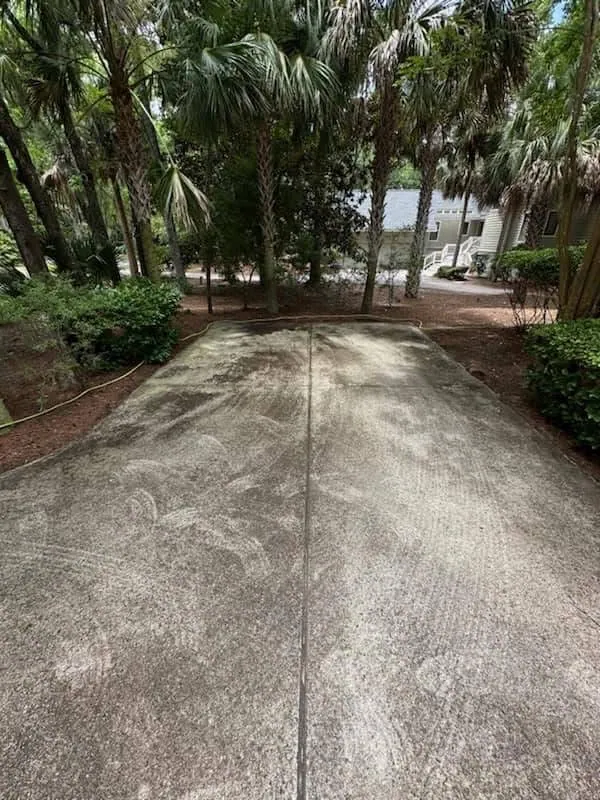
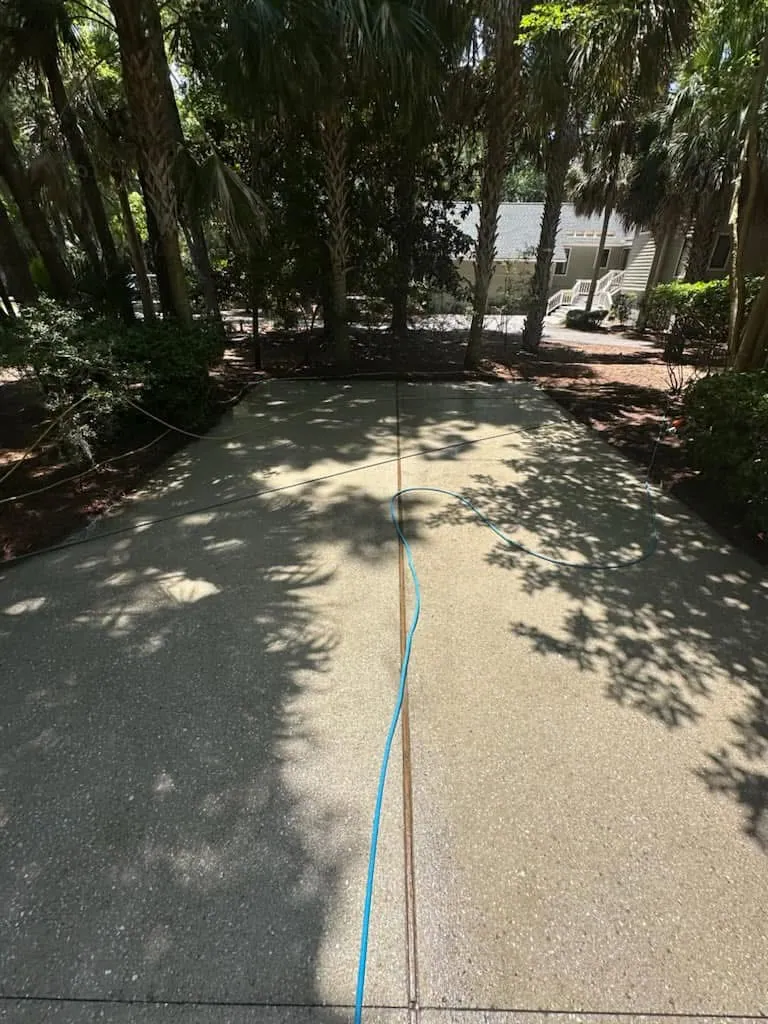
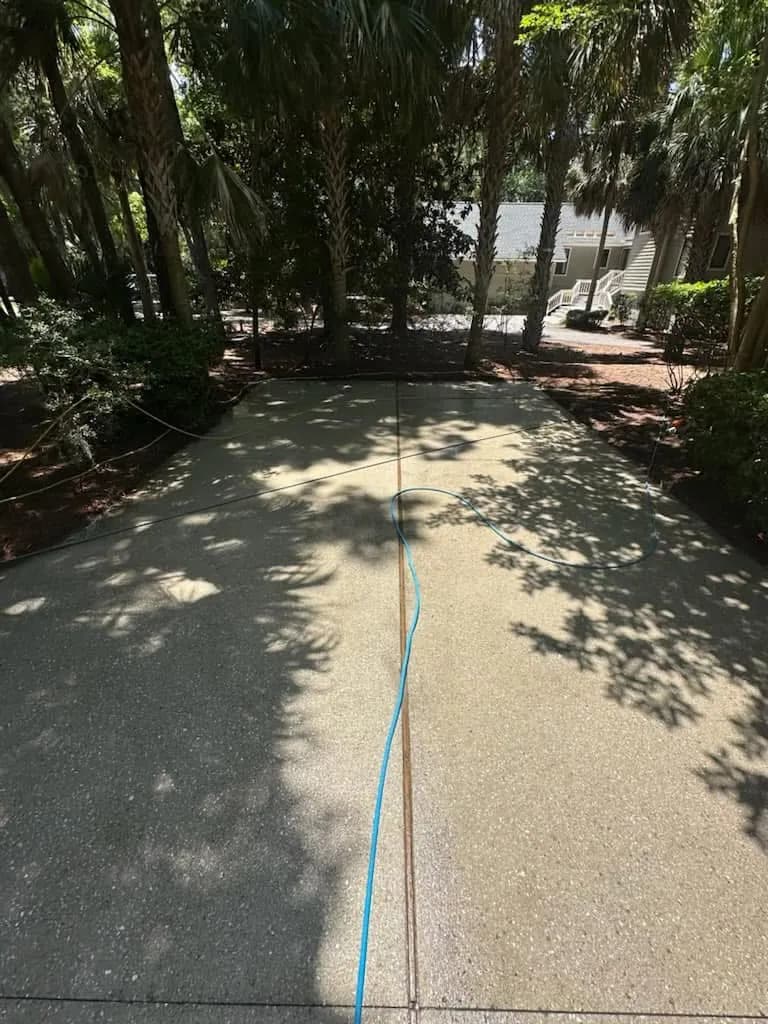
That is the same driveway before and after. Note what the chemistry did versus what pressure did: the organic darkening and the tire marks lifted, and the concrete came back to an even color rather than a patchwork of clean stripes where a wand passed.
How to remove rust stains with oxalic acid
Oxalic acid is the standard choice for rust on concrete because it dissolves iron oxide without attacking the cement paste as aggressively as stronger acids. It is sold as a powder, often labeled as wood bleach. Work outdoors, and read the safety section below before you start.
Sweep and pre wet the area. Clear debris, then dampen the concrete. Wetting first stops the acid from soaking straight down and helps it work across the stain instead.
Protect everything nearby. Soak surrounding plants and grass thoroughly and keep them wet. Oxalic acid burns vegetation. Cover metal fixtures and anything you do not want etched.
Mix about 1 pound of powder per gallon of water. Always add the powder to the water, never water to powder. Use a plastic bucket, not metal.
Apply to the stain and let it dwell. Keep the surface wet with the solution for 30 minutes up to two or three hours on a stubborn stain. Do not let it dry on the concrete.
Scrub with a stiff bristle brush. Work the solution into the pores. Do not use a wire brush, which leaves metal behind that becomes its own rust stain.
Rinse thoroughly. Flush the area and the surrounding landscaping with plenty of water.
Neutralize with baking soda. Mix baking soda into water, apply it over the treated area, then rinse again. This stops the acid and helps prevent flash rusting.
Repeat if needed. A deep stain often takes two or three lighter passes. That is safer than one aggressive application that etches the surface.
A word on muriatic acid. You will see it recommended for stubborn rust. It works, and it also etches concrete, dulls the finish, and is considerably more dangerous to handle. We do not recommend it for homeowners. If oxalic acid at a reasonable strength is not moving the stain after a few passes, that is the point to call somebody, not the point to escalate to a stronger acid.
Oxalic acid safety
Oxalic acid is genuinely hazardous, not a household cleaner. It is toxic if swallowed and corrosive to skin and eyes. The New Jersey hazardous substance fact sheet is a good one page summary, and the PubChem record carries the full toxicity data.
Wear chemical resistant gloves and wrap around goggles, not just safety glasses
Work outdoors or with strong ventilation, and avoid breathing the dry powder while mixing
Never mix it with bleach or any other cleaning chemical
Keep it off your lawn and planting beds, and keep pets and children away until everything is rinsed
Store the powder sealed, dry, and labeled, well out of reach
How to remove oil and grease stains from concrete
Oil needs a completely different approach. The goal is not to bleach the color out, it is to break the oil down and physically pull it back out of the concrete. How you do that depends entirely on how long it has been there.
Fresh spills, still wet
Cover the spill with an absorbent right away. Cat litter, sawdust, or a commercial oil absorbent all work. Grind it in underfoot, leave it a few hours, sweep it up, then wash the area with a strong alkaline degreaser and hot water. Anything you soak up now is oil you never have to pull out later.
Set in stains, days to years old
Once oil has soaked into the pores, a surface wash will not reach it. This is where a poultice comes in. A poultice is an absorbent material mixed with a solvent into a paste that sits on the stain and draws the oil upward as it dries.
Degrease the surface first. Apply an alkaline degreaser, agitate it with a stiff brush, and rinse. This removes everything sitting on top so the poultice only has to deal with what soaked in.
Mix the poultice. Combine an absorbent such as diatomaceous earth, powdered clay, or even flour with a solvent or degreaser until it is about the consistency of peanut butter.
Spread it thick and wide. Apply about a quarter to a half inch thick, extending at least an inch past the edge of the stain in every direction.
Cover and seal it. Lay plastic sheeting over the poultice and tape down the edges so it does not dry out too fast. Poke a few small holes so it can breathe.
Wait. Sources vary here, from about 8 hours to a full 48. Give it at least overnight, and longer for a deep old stain. The paste needs to dry out to pull the oil up with it.
Scrape and rinse. Remove the dried material with a stiff brush or plastic scraper, then wash the area. Repeat for stains that have been there for years, which often take two or three rounds.
Be realistic about old oil. A five year old stain under a parked car may never come back to matching concrete. You can usually lighten it substantially. Anyone who promises a perfect match on deeply saturated concrete is overselling.
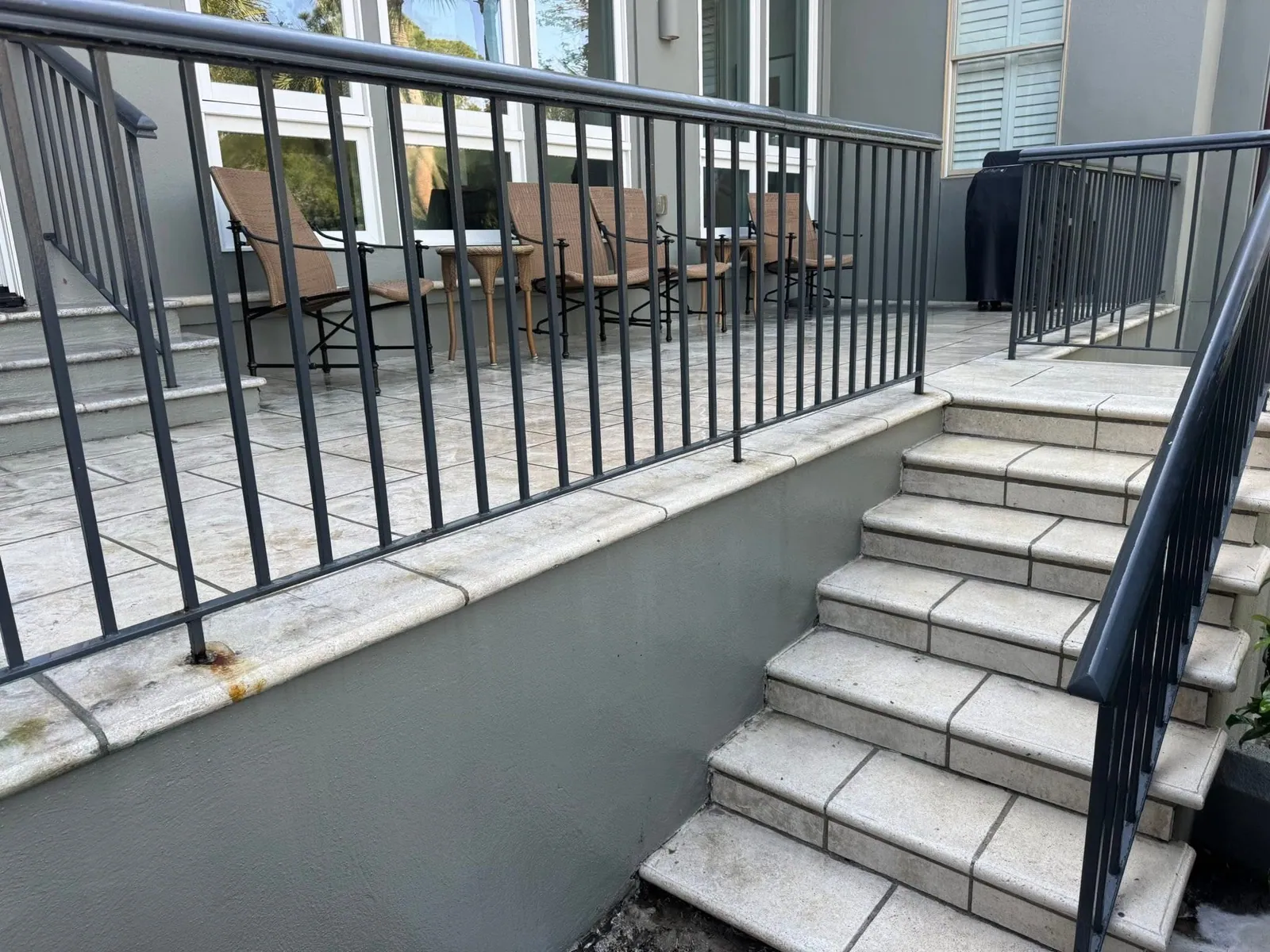
One more stain worth naming, because it gets misread as rust constantly. Leaf and bark tannin leaves a brown stain that looks like iron but is organic, so it responds to an oxidizing cleaner rather than an acid. If the brown appeared under a tree or where leaves sat wet, try the organic route before you reach for acid.
Where pressure washing fits in
Pressure does the mechanical part of the job and none of the chemical part. It rinses away what the chemistry has already broken loose, and on organic growth combined with the right cleaner it does a lot of the work. On rust and oil it removes the surface layer and leaves the stain sitting in the pores.
There is also a real risk in leaning on pressure alone. Chasing a stubborn stain with a narrow tip held close will etch a visible clean patch or a set of lines into the concrete that looks worse than the stain did. That damage is permanent. Our nozzle and safe PSI guide covers the right tip and pressure for concrete, and a surface cleaner attachment is what gives an even finish instead of wand stripes.
If the whole slab is dingy rather than spot stained, that is a concrete cleaning job, and for the approach and the apron the driveway cleaning process is what evens everything out.
How to stop rust stains from coming back
Removing the stain is only half the job. If the source is still there, the orange comes back in a season. This is the part most guides skip entirely, and it is the part that actually saves you money.
Source | How to tell | The fix |
|---|---|---|
Irrigation water with iron | Fan shaped orange arcs that match your sprinkler spray pattern | Reposition or shield the heads, add a sequestering agent to the system, or filter the water |
Well water | Orange staining anywhere the water reaches, often with staining on siding too | An iron filter or water treatment at the source is the only real fix |
Fertilizer | Scattered orange specks appearing after spreading season | Sweep granules off concrete before watering and use a drop spreader near the driveway |
Metal furniture and planters | Rings or feet shaped marks | Add plastic or rubber feet, and bring pieces in during long wet spells |
Rebar or embedded metal | Stains that keep returning in the same spot from within the slab | Needs a concrete professional, this is a structural issue not a cleaning one |
Tools and equipment left out | A stain shaped like the object | Store metal off the concrete, especially through humid stretches |
In the Lowcountry the irrigation cause is the most common by a wide margin. If your sprinklers run on well water, expect recurring orange and plan on treating the water rather than treating the driveway every year.
Sealing the concrete after cleaning also helps a great deal. A penetrating sealer closes the pores so future spills sit on top where they can be wiped up, instead of soaking in. It will not stop a determined iron sprinkler, but it buys you time on everything else, and it makes the green growth covered in why driveways turn green much slower to take hold.
When to call a professional
Handle it yourself when the stain is small, recent, and you have identified the family with confidence. Call somebody when any of these are true.
The stain covers a large area and you want an even result across the whole slab
It is a deep oil stain under a vehicle that has been there for years
The rust keeps returning, which usually means a water source problem rather than a cleaning problem
You are considering muriatic acid, which is the point to stop
The concrete is stamped, colored, or sealed, where the wrong chemical strips the finish permanently
The surface is pavers, where aggressive treatment blows out the joint sand and the repair is worse than the stain
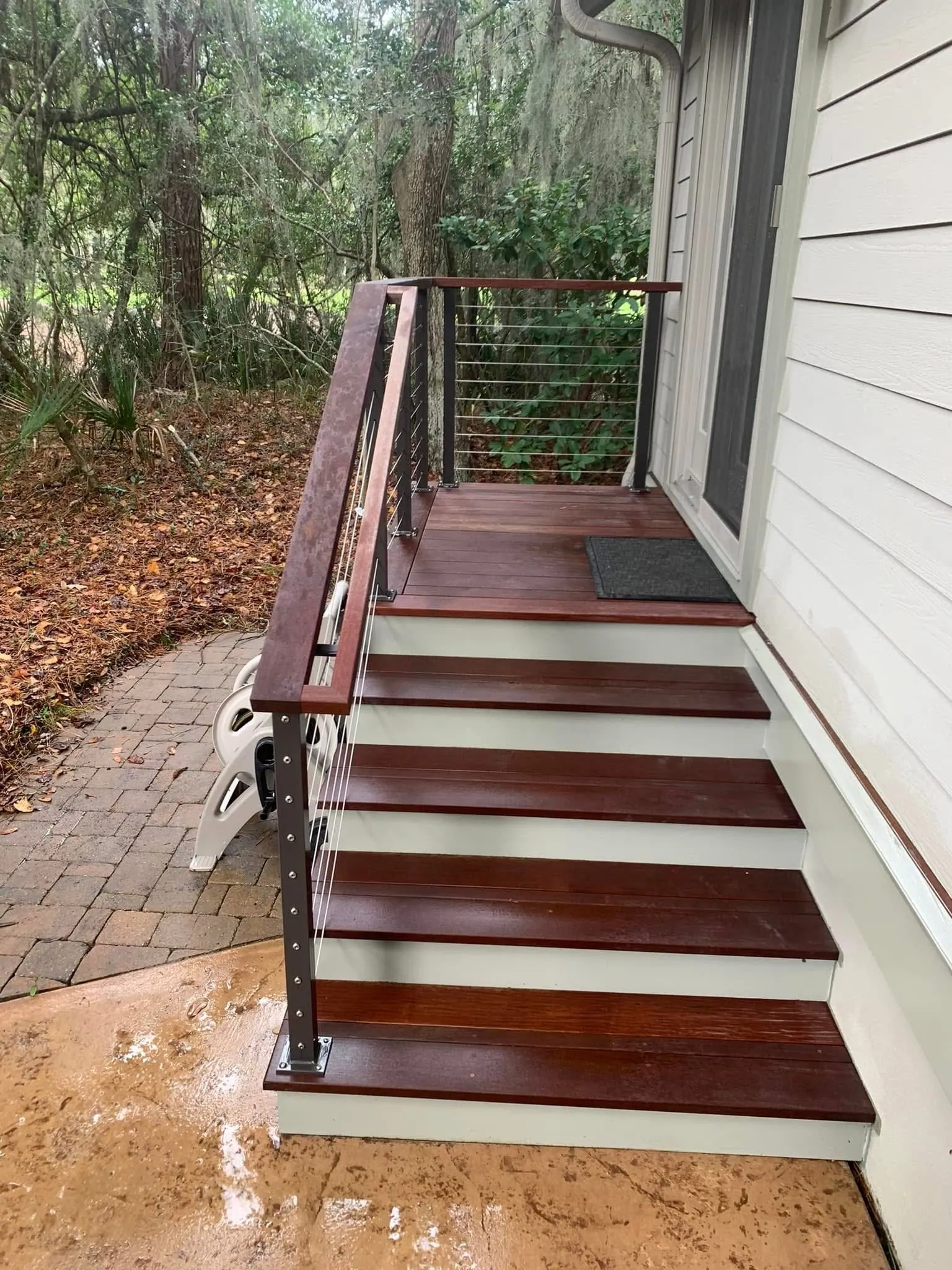
We handle rust and organic staining across Johns Island, Kiawah, Seabrook, and greater Charleston, with the equipment to clean concrete evenly. Get a free quote and we will tell you honestly what will come out and what will only lighten.
Frequently asked questions
Does bleach remove rust stains from concrete?
No. Bleach decolorizes the surface but cannot penetrate far into porous concrete, so the iron sitting in the pores is untouched. The stain often looks slightly better while wet and then reads just as orange once it dries. Rust needs an acid such as oxalic acid.
What is the best rust remover for concrete?
Oxalic acid is the standard choice, sold as a powder and often labeled wood bleach. Mix roughly 1 pound per gallon of water. Commercial rust removers built on oxalic or phosphoric acid work on the same principle. Muriatic acid also works but etches the concrete and is not worth the risk for most homeowners.
How long do you leave oxalic acid on concrete?
Usually 30 minutes for a light stain and up to two or three hours for a deep one. Keep the surface wet with the solution the entire time and never let it dry on the concrete. Two or three lighter passes beat one aggressive application.
Do I need to neutralize the acid afterward?
Yes. After rinsing, apply a baking soda and water solution over the treated area and rinse again. This stops the acid from continuing to work on the cement paste and helps prevent flash rusting from the iron you just dissolved.
Will pressure washing remove rust or oil stains?
On its own, no. Pressure removes what is loose on the surface and cannot reach iron or oil bound into the pores. Chasing the stain with high pressure and a narrow tip will etch a permanent clean patch or striping into the concrete. Chemistry has to do the work first.
How do you get old oil stains out of a driveway?
Degrease the surface first, then use a poultice. Mix an absorbent such as diatomaceous earth or clay with a solvent to a peanut butter consistency, spread it a quarter to a half inch thick past the stain edges, cover with plastic, and leave it overnight or longer. Repeat for old stains. Very old saturated oil may lighten substantially rather than disappear.
Why does my driveway keep getting orange stains?
Almost always irrigation. If the arcs match your sprinkler pattern, the water carries iron, which is common on well water. Treating the water with a sequestering agent or an iron filter, or repositioning the heads, is the only way to stop it. Cleaning alone means doing it again every year.
Can rust stains be removed from stamped or colored concrete?
Sometimes, but carefully. Acids can strip sealer and lighten integral color, so a decorative surface needs a test in a hidden spot first and a much gentler approach. This is the situation where a professional is genuinely worth it, because the mistake is permanent.
The bottom line
Identify the family before you buy anything. Green and black means bleach and a surfactant. Orange means an acid. Dark blotches mean a degreaser and a poultice. Match the chemical to the stain, give it dwell time, protect your plants, and neutralize afterward, and most concrete stains come out without ever reaching for damaging pressure.
And if the orange keeps coming back, stop treating the driveway and start treating the water. That one shift saves Lowcountry homeowners a cleaning every single year.