Patio Cleaning in Charleston: Get Your Outdoor Space Ready for Summer Entertaining
Patio cleaning in Charleston hits different than most places because you're not just dealing with dirt. You're scrubbing off three months of oak pollen that turned your pavers yellow, salt haze that blew in from Folly, and that sticky magnolia sap that glued itself to every horizontal surface. If you're hosting Memorial Day or just want to grill without your feet sticking to the concrete, this is the walkthrough.
Read more about our concrete cleaning service.
Why Charleston Patios Need More Than a Garden Hose
Your patio collects more than dirt. Spartina pollen blows in from the marsh. Oak tannins leach into concrete every time it rains. Salt creep shows up on pavers if you're anywhere near the water (Shem Creek properties get hit twice as hard). And mildew? Charleston dew points average above 70°F from mid-June through mid-September (NOAA). Surfaces stay wet overnight. That's why pressure washing alone rarely lasts past 90 days in summer.
Here's the part most people get wrong: turning up the PSI doesn't kill mildew. It just blasts the black off for a week. We've seen homeowners strip the cream layer off pavers trying to scrub Mount Pleasant leaf tannins with 3,000 PSI and no surfactant. The stain comes back darker because now it's soaking into raw porous concrete instead of sitting on the factory finish.
Cleaning outdoor surfaces here is chemistry first, pressure second. You need the right mix for what actually grew.
Cleaning Patio Furniture Without Destroying the Finish
Most homeowners either scrub too gently or blast furniture with enough pressure to strip powder coat off aluminum frames. I've seen both. The sweet spot depends entirely on what your furniture is made of.
Aluminum and powder-coated wrought iron get soft-washed. We apply surfactant, let it sit three minutes, then rinse at 500 800 PSI with a wide fan tip. Anything above 1,200 PSI starts chipping the finish, especially on older frames where UV has already broken down the top layer. Resin wicker is similar but more forgiving you can bump to 1,000 PSI if mildew has really colonized the weave.
Teak is different. No surfactant unless you want to strip the oils. We brush with a mild oxalic acid solution if the wood has gone gray, rinse at 600 PSI max, then let it dry for 48 hours before the homeowner re-oils. Skip the oil and teak turns chalky by October.
For cushions, pull them off before we spray anything. Outdoor fabric mildew needs laundry detergent and a scrub brush, not bleach. I've watched homeowners hose down Sunbrella with the same mix we use on concrete, then wonder why the color faded to pink.
Outdoor Kitchen Cleaning: Counters, Grills, and Built-In Equipment
Granite counters tolerate a dilute degreaser and low-pressure rinse. We use 400 600 PSI max because anything higher can force water under the sealant and into the porous stone. If the granite hasn't been resealed in three years, water soaks in instead of beading up. That's when homeowners call us about dark spots that won't dry.
Stainless steel grills get wiped down with degreaser and a microfiber cloth before we rinse. No pressure washing the grill itself unless you want water pooling in the burner tubes. We rinse the exterior hood and side shelves at 800 PSI, but the grates come out and get scrubbed by hand. Grease doesn't respond to pressure; it needs surfactant contact time.
Tile backsplashes depend on the grout. If it's sealed, we can use a mild alkaline cleaner and rinse at 1,000 PSI without issue. Unsealed grout absorbs whatever you spray on it. I've seen Daniel Island outdoor kitchens where someone hit travertine tile with bleach trying to kill mildew in the grout lines the stone turned chalky white and stayed that way. Bleach etches natural stone. Use an enzyme cleaner or call someone who knows the difference.
Concrete, Pavers, and Travertine: The Foundation of Your Patio
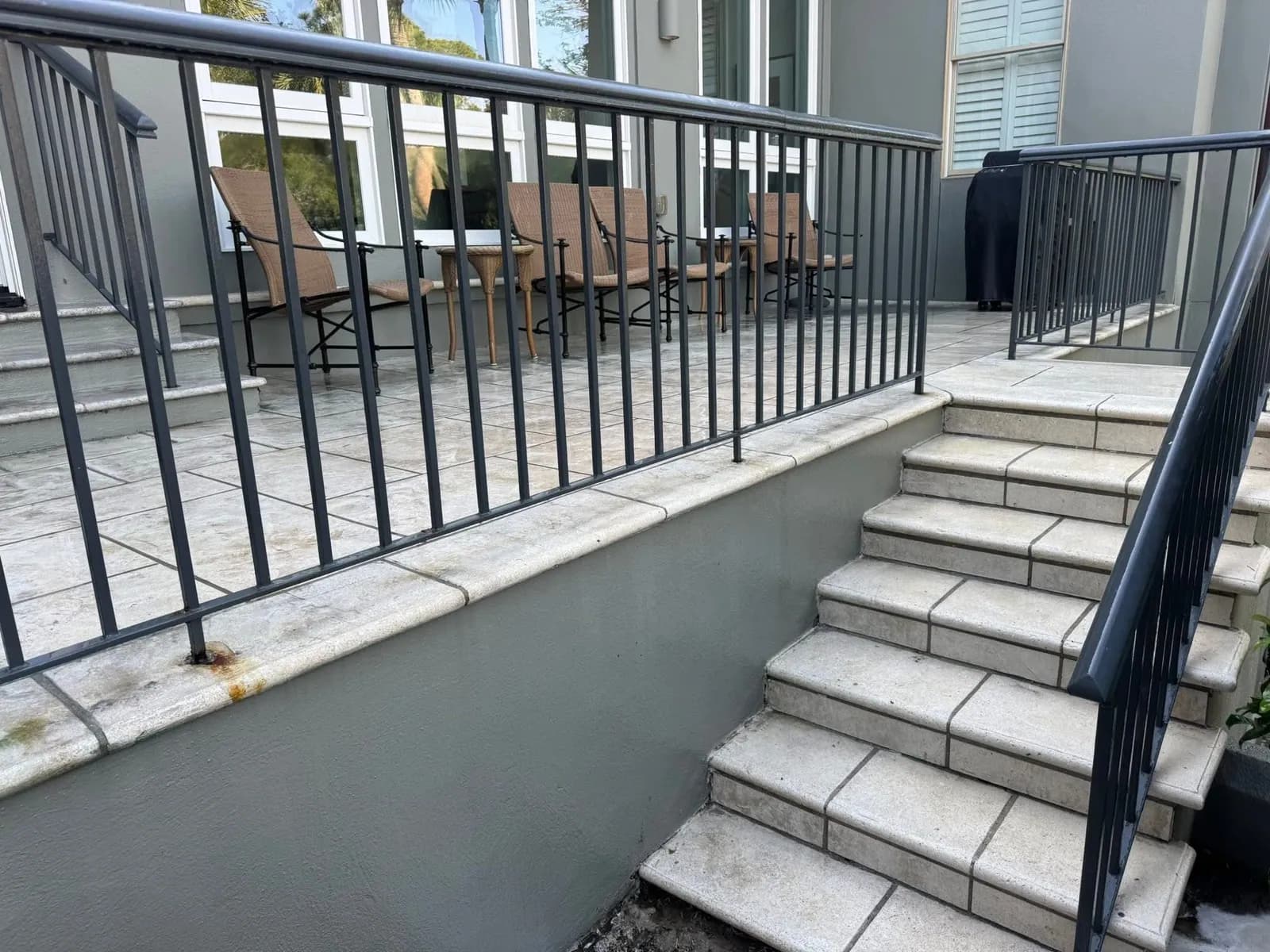
Your patio floor shows dirt first and holds it longest. Stamped concrete, pavers, and travertine all need different approaches or you'll etch the surface trying to clean it.
Stamped concrete tolerates 2,500 3,000 PSI if the sealant is intact. We pre-wet, apply a mild alkaline cleaner, let it sit two minutes, then rinse at 2,800 PSI with a 25-degree tip held twelve inches back. If the sealant has worn through (usually in the traffic lanes), we drop to 1,500 PSI to avoid pitting the surface. Concrete pavers get the same treatment but we stay at 2,000 PSI max because the joints between pavers can blow out if you hit them straight-on.
Travertine is softer. We use 800 1,200 PSI and an enzyme cleaner instead of alkaline. I've cleaned patios in Mount Pleasant where someone hit travertine with 3,000 PSI trying to remove leaf tannin the stone surface went from smooth to pockmarked and water pooled in the new divots every time it rained.
Sealing after cleaning extends the result by six to twelve months depending on sun exposure. Unsealed concrete in full shade around Daniel Island stays clean maybe ninety days before algae reappears. Sealed, that same patio goes eighteen months before we come back.
Cushions, Umbrellas, and Fabric: When to Replace vs Clean
If mildew smells musty even after cleaning, the spores are living inside the foam. No amount of surface washing will fix it. Toss those cushions.
Surface stains on Sunbrella or similar acrylic fabrics usually come out with a soft brush, water, and a quarter-cup of dish soap per gallon. Scrub gently, rinse twice, and let them dry in full sun. Do not use bleach unless the fabric tag explicitly says you can; most outdoor fabrics will fade or weaken. We've seen Kiawah clients bleach a green stripe pattern into pale gray because they soaked it too long.
Umbrellas with black mildew spots along the seams almost never recover. The thread holds moisture and the fabric around it is already compromised. If you're spending an hour scrubbing and the stains come back in two weeks, new cushions cost less than your time.
Timing Your Patio Cleaning Before Summer Guests Arrive
Schedule professional pressure washing in April or early May. That gives you three weeks of margin before Memorial Day parties start and you're not competing with everyone else who waits until the week before.
The week before guests arrive, hose down furniture and shake out cushions. Wipe railings with a damp rag. Sweep corners where pollen collects. That's usually enough if the hard surfaces were cleaned a month prior.
Once summer entertaining kicks off, rinse the patio with a garden hose every two weeks. Charleston dew points average above 70°F from mid-June through mid-September, so surfaces stay wet overnight and mildew grows fast (NOAA). A quick rinse buys you another month before you need real cleaning again.
If you skip the April wash and wait until July, you're cleaning actively stained surfaces in ninety-degree heat with house guests arriving in forty-eight hours. Do it early and summer runs smoother.
Frequently asked questions
How much does patio cleaning cost in Charleston?
Most residential patios with furniture run between $300 and $600 depending on square footage and material. Outdoor kitchens with built-ins add another $150 to $300.
Can I pressure wash my own patio without damaging it?
You can if you rent the right machine and use a wide fan tip. Most rental units spit out 3000+ PSI, which will blast mortar out of pavers or pit travertine if you hold the wand too close.
Will pressure washing damage my travertine or natural stone patio?
Not if you use around 1500 PSI with a wide fan tip and keep the wand moving. Too much pressure or a zero-degree nozzle will pit the stone or strip sand out of joints.
What's the best time of year to seal a patio in Charleston?
Late spring after you've cleaned it and before the daily afternoon thunderstorms start. You need 24 to 48 hours of dry weather for sealer to cure properly.
How often should I deep clean my outdoor kitchen?
Once a year before summer entertaining season. Wipe down counters and the grill every few uses so grease doesn't build up and attract palmetto bugs.
Want a quote on your concrete cleaning? Get a free estimate.