Quick note before you read further: this guide covers composite, pressure-treated pine, and tropical hardwood decks generally. If you specifically have an IPE (Brazilian walnut) deck, the cleaning process is fundamentally different from the methods below. IPE requires maximum 400 PSI and an oxygenated cleaner-plus-brightener pass, never chlorine bleach. See our dedicated IPE deck cleaning page for the full process and gray-out restoration.
Charleston decks weather faster than almost anywhere else in the country. Year-round humidity, salt aerosol off the Atlantic, live oak tannin drip, and spring pollen all conspire to turn even the nicest deck dark, slippery, and uninviting within a single season. The right cleaning approach depends entirely on what your deck is made of, and using the wrong technique can permanently damage thousands of dollars of decking.
The three deck materials we see in Charleston
Composite decking (Trex, TimberTech, AZEK)
Composite has dominated new Charleston construction for the past 15 years, particularly in subdivisions like Park West, Daniel Island, and Cane Bay. It's low-maintenance, doesn't splinter, and lasts 25-30 years. But it's not maintenance-free. Composite develops a slick film of mildew, algae, and tannin that builds up in the embossed grain pattern. Standard pressure washing at high PSI can permanently etch composite, leaving streaks that never come out.
Pressure-treated pine (the standard contractor deck)
The yellow-brown pressure-treated pine deck is on countless Charleston-area homes built between 1990 and 2015. Affordable, structurally sound, but soft. The wood fibers raise easily under high pressure, leaving a fuzzy texture that holds dirt and biological growth even worse than before. Wrong cleaning makes it look worse, not better.
Hardwood decks (ipe, cedar, mahogany)
Premium hardwood decks appear on Kiawah, Seabrook, Daniel Island, and downtown Charleston historic homes. Ipe and cedar are dense and weather to a beautiful silver-grey, but the same density makes them susceptible to surface burn marks from improper pressure washer technique. Mahogany is even more delicate.
What Charleston deck conditions look like
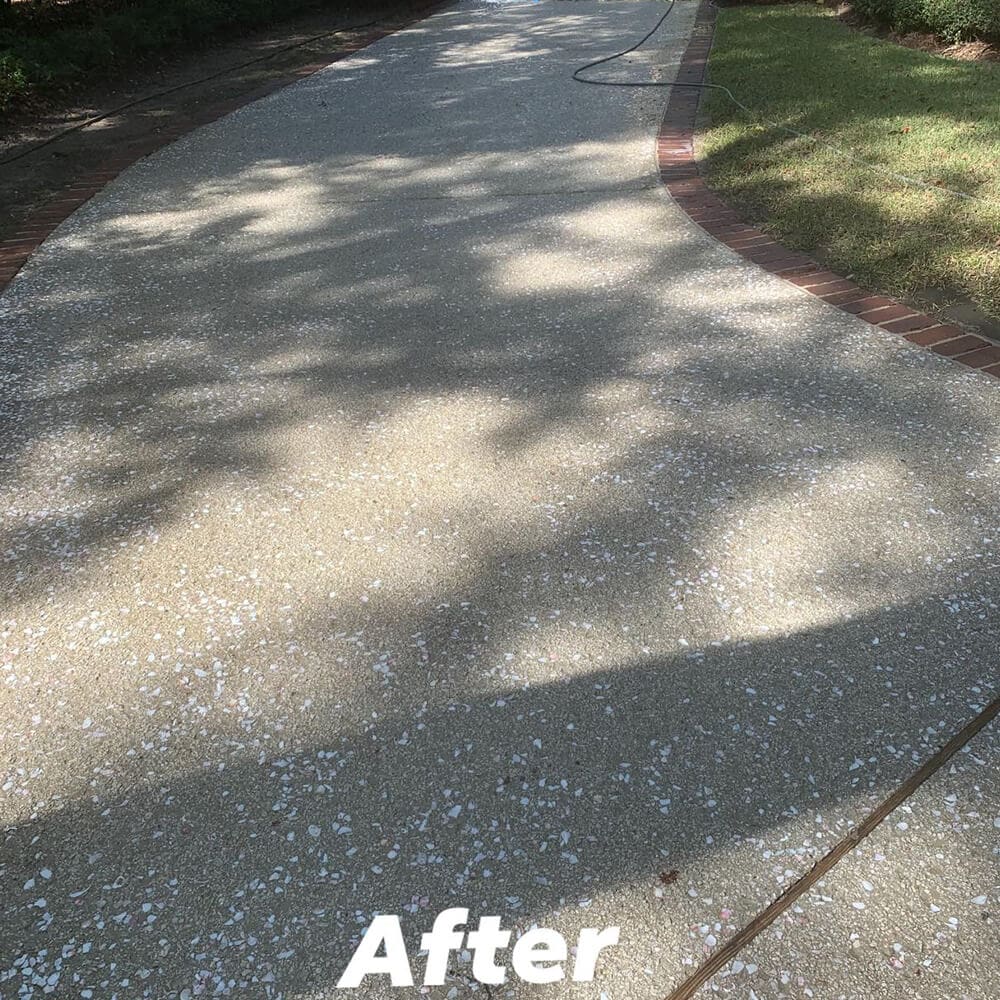
Three things happen to Charleston decks consistently:
Black/grey discoloration: biological growth (algae and mildew) feeding on humidity and trapped organic debris. Worst on shaded sections.
Tannin staining: dark brown vertical streaks from live oak leaf drop. Charleston's mature oak canopy makes this nearly universal.
Slippery surface film: invisible biological growth that makes the deck dangerous when wet, especially around pool surrounds.
How to clean each deck type
Composite decking: soft wash only
Composite must be cleaned with low pressure (under 1,500 PSI) and a deck-specific surfactant. The cleaning chemistry does the work, not the pressure. Apply, dwell 5-10 minutes, agitate with a soft deck brush in the embossed grain direction, then rinse with clean water. Manufacturers like Trex specifically void warranties for damage caused by pressure washing above 3,100 PSI, and many contractors blow past that without realizing.
Pressure-treated pine: medium pressure with grain awareness
Pressure-treated wood can handle 1,500-2,500 PSI, but ALWAYS in the direction of the grain, never across it, and never closer than 12 inches from the surface. The wand must keep moving. Pausing in one spot for even a few seconds creates a permanent stripe. After cleaning, pressure-treated wood benefits from a brightener treatment to neutralize the alkaline residue from cleaning chemistry, then a fresh coat of stain or sealer to lock in the result.
Hardwood (ipe, cedar, mahogany): soft wash + chemistry
Hardwood decks are surprisingly delicate despite the density. Use under 1,200 PSI and never closer than 18 inches. Most hardwood cleaning is best done with a dedicated hardwood cleaner (oxalic acid based) applied by hand, allowed to dwell, and rinsed gently. Then a UV-protective oil to maintain the color or accelerate the silver-grey patina depending on your preference.
What deck cleaning costs in Charleston
Pricing depends on deck size, material, and whether sealing/staining is included:
Small composite deck (under 200 sq ft): $200-$350
Mid-size pressure-treated wood deck (200-500 sq ft): $300-$550
Large composite or hardwood deck (500-1,000 sq ft): $500-$950
Add brightener + sealer/stain on wood decks: $300-$800 depending on size and product
For full pricing across all our services, see our 2026 Charleston pressure washing cost guide.
How often should you clean a deck in Charleston?
For a typical Charleston deck:
Composite: annual cleaning is sufficient for most homes. Heavy oak canopy or pool surround may need twice a year.
Pressure-treated wood: annual cleaning + sealing/staining every 2-3 years.
Hardwood: annual cleaning + oil treatment every 1-2 years if you're maintaining the original color.
Bundle deck cleaning with your annual house wash and pool deck cleaning for the best pricing. Most Charleston pros (us included) discount multi-service spring cleanings.
What NOT to do with your Charleston deck
Don't use bleach straight from the bottle. It strips the protective coating from composite and bleaches wood unevenly.
Don't pressure wash perpendicular to the wood grain. The fibers raise and trap more dirt next time.
Don't skip the brightener step on pressure-treated wood. The alkaline residue from cleaners darkens the wood over time.
Don't reseal/restain a wood deck the same day you clean it. Wait at least 48 hours of dry weather.
Get your deck looking new again
We've cleaned thousands of Charleston-area decks since 2016: composite in Daniel Island and Mount Pleasant, pressure-treated wood in West Ashley and Summerville, ipe and cedar on Kiawah and downtown. Every job starts with a walk-through where we identify what you have and recommend the right approach. Call 843-480-8113 for a quote, or try our free property assessment to get started.