Most Charleston, SC homeowners use the terms power washing and pressure washing interchangeably, and to be fair, in most casual conversation it doesn't matter. But there is an actual technical difference between the two, and depending on what's growing on your driveway or siding here in the Lowcountry, the right choice can save you a lot of money and hassle. Here's the straight answer.
The Technical Difference: Heat
The single difference between power washing and pressure washing is heat. A power washer heats the water before it sprays, typically 180 to 311°F at the nozzle. A pressure washer uses ambient water at the same high pressure, but no heat. That's it. Same machine in concept, same PSI ranges, same nozzles. The only variable is whether the water is hot or cold.
It sounds minor. In practice, heat changes what each method is good at, and what it can damage.
When Power Washing Is Better
Hot water dissolves grease, oil, and stuck-on grime far faster than cold. That makes power washing ideal for:
Commercial kitchens and restaurant exteriors. Grease-trap residue, dumpster pads, and back-of-house concrete.
Heavy oil stains on driveways. Engine drips, transmission fluid, and tar that pressure alone can't dislodge.
Industrial equipment. Construction machinery, fleet vehicles, and warehouse floors.
Chewing gum and sticky residue removal. Sidewalks in front of restaurants and storefronts.
Notice the pattern? Almost every power washing application is commercial or industrial. That's not a coincidence: power washers are heavier, more expensive to buy and maintain, and use more fuel because they have to heat the water.
When Pressure Washing Is Better
For 95%+ of residential cleaning in Charleston, pressure washing (or its gentler sibling, soft washing) is the right tool. Cold water at the right pressure paired with the right cleaning chemistry handles everything a typical home needs:
House siding. Hardie, vinyl, stucco, painted brick: all done with low-pressure soft washing, not heat.
Driveways and walkways. Concrete, brick pavers, and stamped concrete clean cleanly with cold water and the right surfactant.
Roofs. Always soft washed. Heat doesn't help; chemistry does the killing.
Decks, fences, and outdoor furniture. Wood expands and warps under hot water. Cold water is safer.
Pool decks and patios. Painted or coated concrete can blister under heat. Cold water + chemistry is the safe answer.
Heat actually causes problems on most residential surfaces in Charleston. Wood warps, paint lifts, vinyl softens, and roof shingles lose granules faster. Cold water + the right chemistry is almost always the right answer at home.
What's Best for Your Charleston Home
Charleston's specific climate makes the choice easier. The thing growing on your siding, your roof, and your driveway here is biological: algae, mildew, and Gloeocapsa magma. You don't need heat to kill biology. You need the right chemistry, the right dwell time, and the right rinse pressure. Heat doesn't speed it up; it just creates new risks for your siding, paint, and shingles.
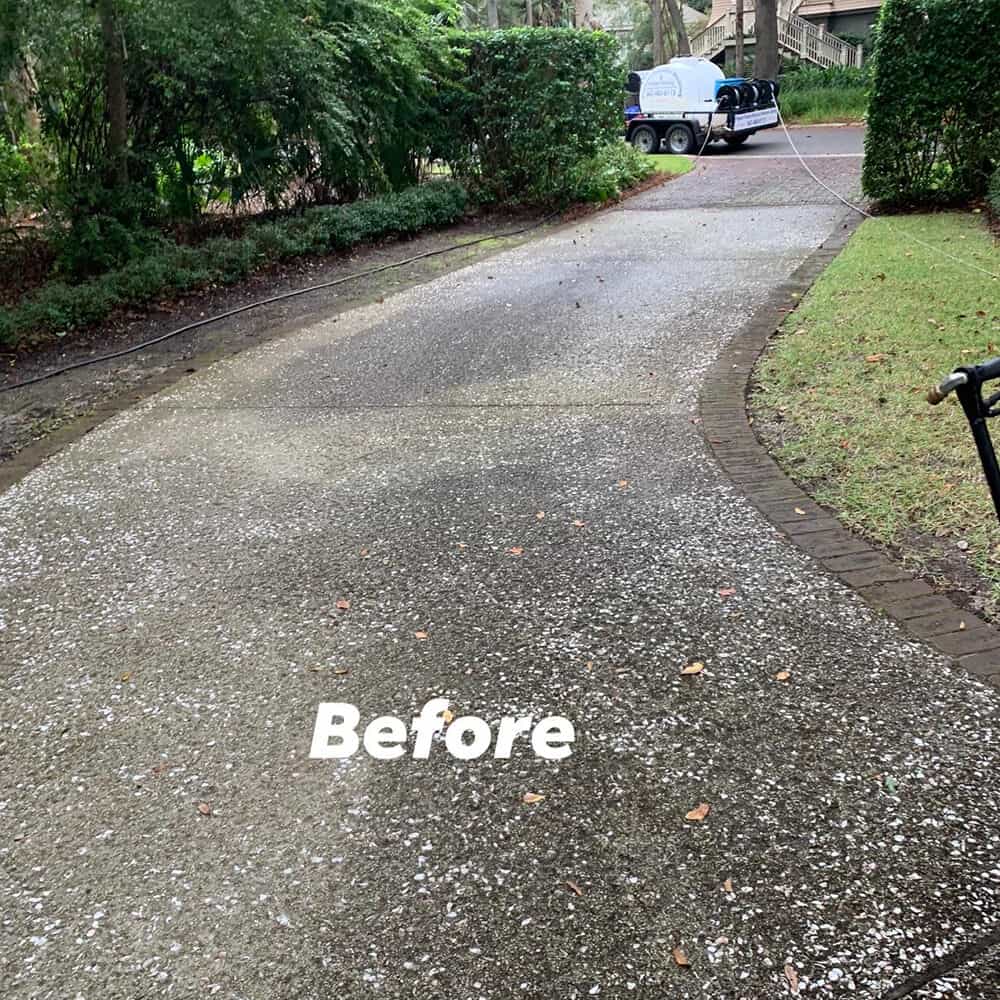
That's why almost every reputable residential pressure washing service in the Lowcountry uses cold water, paired with a sodium-hypochlorite soft wash blend that actually kills the organism causing the discoloration. Spray, dwell, rinse. No heat needed.
What Peppers Uses (and Why)
Our trucks carry both, but for residential work in Charleston, we use cold-water pressure washing 99% of the time. The 1% exception is heavy commercial work: dumpster pads, grease-stained loading docks, and similar industrial applications. For your home, you'll see us spraying ambient-temperature water paired with the right cleaning solution for whatever surface we're on.
If a contractor pitches you on 'hot water power washing for your home' and the price is double what cold-water pressure washing costs, the upcharge is rarely justified for typical residential surfaces.
Is 'Soft Washing' a Third Option?
Yes, and it's the most important one to know. Soft washing uses very low pressure (under 500 PSI, less than your garden hose) combined with biodegradable cleaning solutions to clean by chemistry, not force. It's what every reputable Charleston contractor uses on siding, roofs, and any surface where high pressure could cause damage. Pressure washing is reserved for hard surfaces (concrete, brick, stone) where blasting is appropriate. Power washing, with heat, is mostly a commercial tool.
The right roof clean in Charleston, for example, is always a soft wash, never a power wash and never a high-pressure cold rinse. Heat or pressure on asphalt shingles voids the manufacturer's warranty.
Ready to get started?
Whether you call it power washing or pressure washing, the only thing that matters is that the right method is matched to the right surface in the right Charleston conditions. We'll walk your property and tell you exactly what we'd do, and why, before any chemistry hits the house. Request a free quote and we'll respond the same business day.