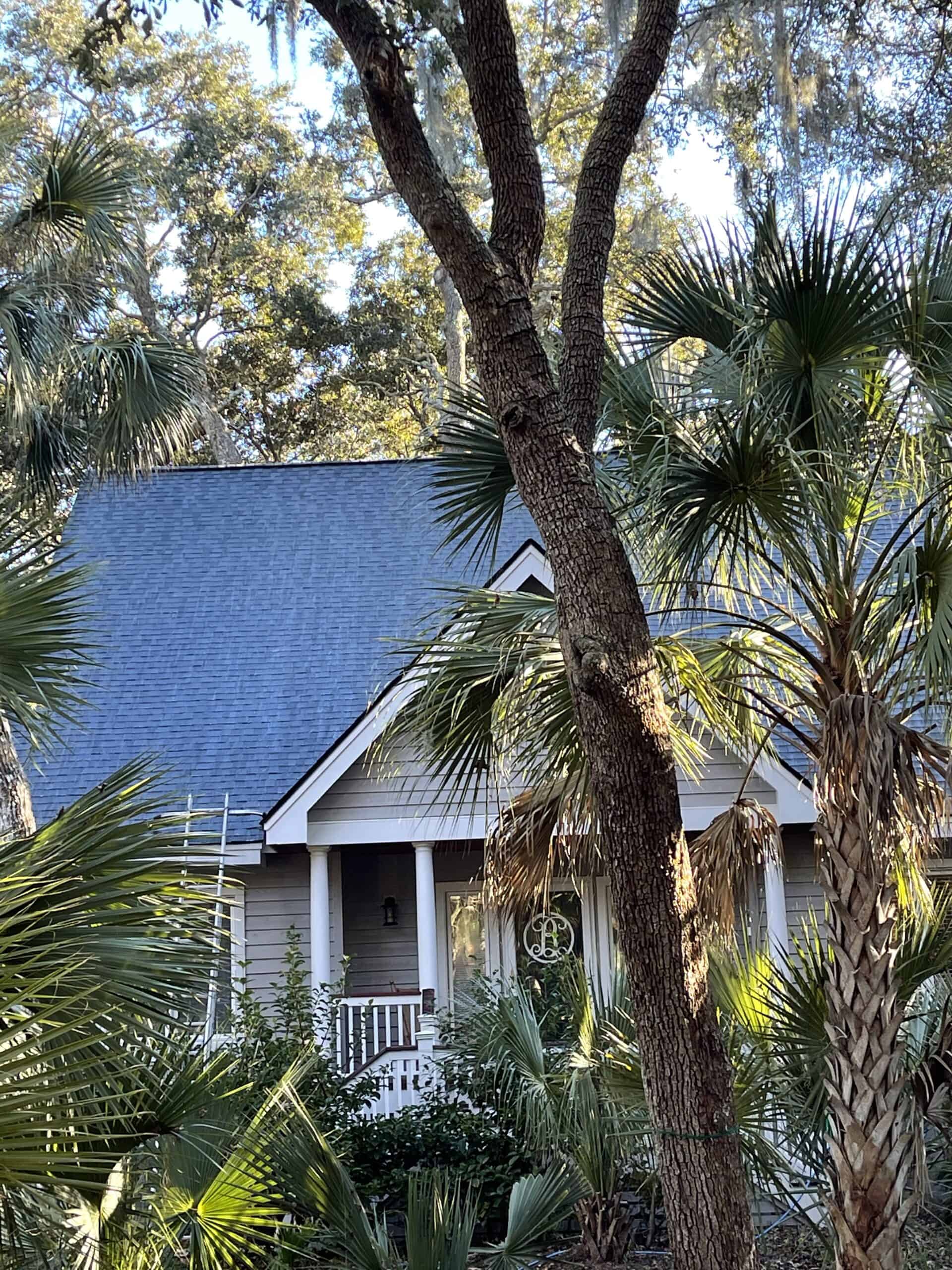
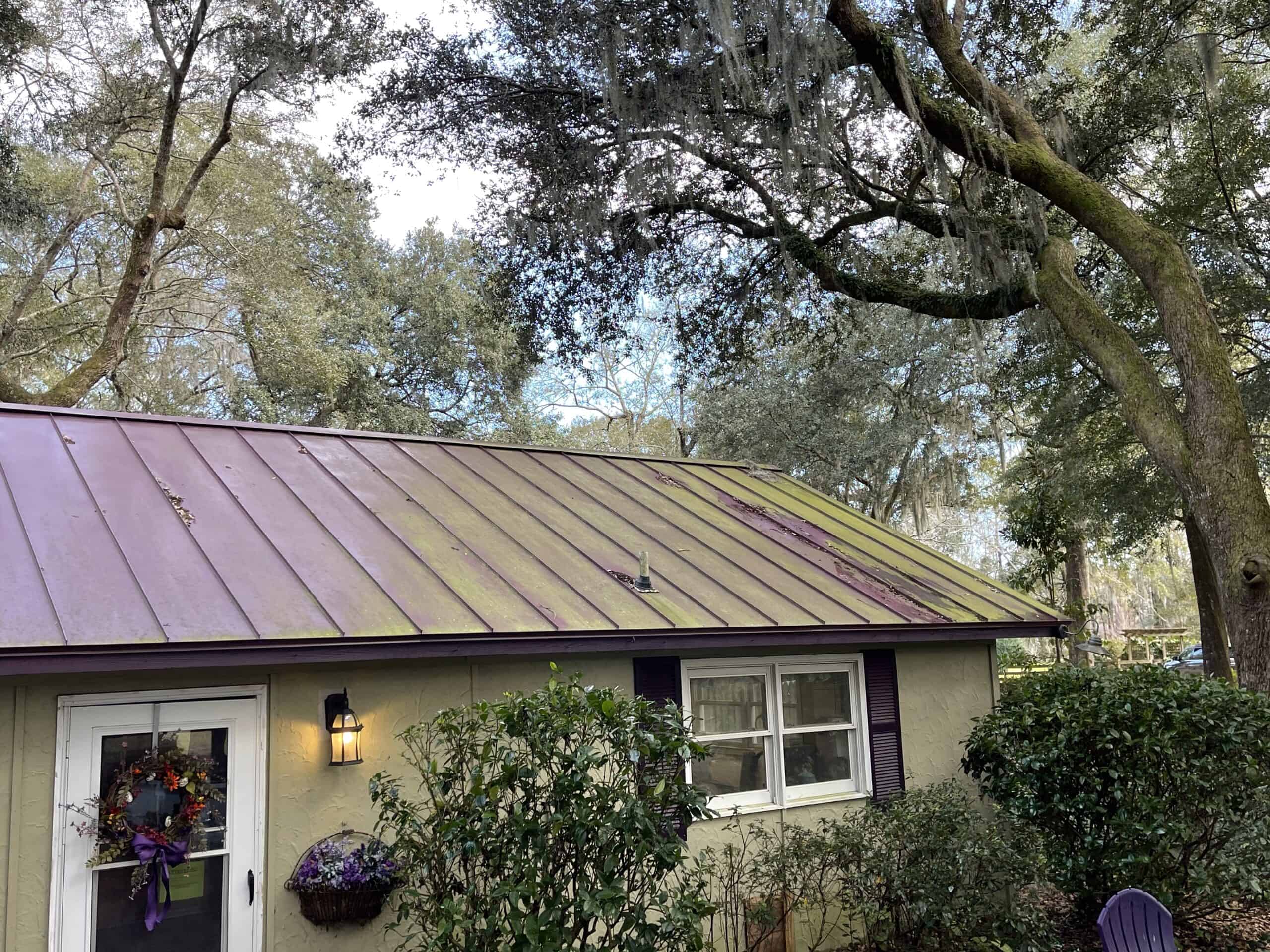
Three different things grow on a roof, they look different, and they matter to very different degrees. Black streaks are mostly a cosmetic problem. Moss is an actual structural one. Lichen sits in between and is the hardest of the three to get off without doing damage.
Knowing which you have changes the urgency and the method. This guide covers how to tell them apart, how to remove each safely, the one thing you must never do to a shingle roof, and how to keep growth from coming back.
How do you remove moss from a roof?
Apply a 50/50 mix of household bleach and water with a low pressure sprayer, let it dwell 15 to 20 minutes while keeping the surface wet, then rinse gently from the top down with a garden hose. Do not scrub, scrape, or pressure wash. Dead moss releases over the following weeks and washes off with rain.
Patience is the part people skip. The moss will not vanish while you are standing there. It dies, loses its grip, and comes away over the next few weeks. Trying to speed that up with a brush or a pressure washer is what takes the granules off your shingles and turns a cleaning job into a roofing bill. The Asphalt Roofing Manufacturers Association is explicit about this: clean chemically at low pressure, and do not power wash.
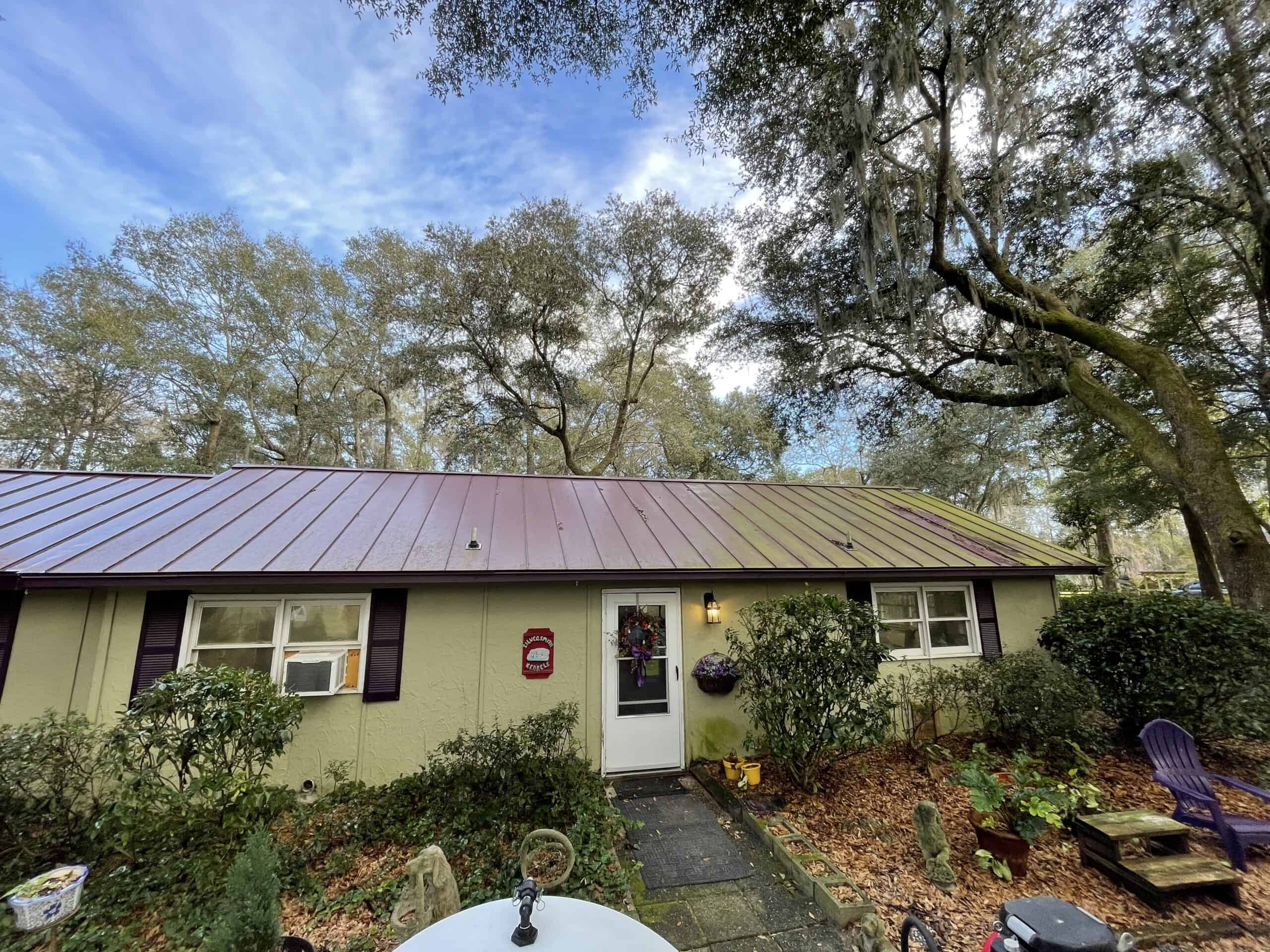
Moss, algae, or lichen? How to tell
Look at texture and shape rather than color. That is what separates them, and it decides how worried you should be.
What you see | What it is | How urgent | Why it matters |
|---|---|---|---|
Flat dark streaks running down the roof, no thickness | Algae, usually the cyanobacteria Gloeocapsa magma | Low. Cosmetic first, slow damage over years. | It feeds on the limestone filler in shingles and reduces reflectivity, so the roof runs hotter. |
Green, spongy, three dimensional clumps you could grab | Moss, a true plant with shallow roots | High. Address this one. | It holds water against the shingle, lifts edges as it thickens, and lets moisture under the course. |
Crusty circular gray green patches, bonded flat to the shingle | Lichen, an algae and fungus together | Medium, but the most stubborn | It roots into the shingle mat. Pulling it off takes granules with it, so it must be killed and left to weather away. |
Dark patches only in shaded or north facing areas | Usually early algae, sometimes mildew | Low, but it spreads | Shade and retained moisture are the conditions the other two need to take hold. |
The practical read: if it is flat, you have a cosmetic problem with a slow burn. If it is thick enough to grab, you have a moisture problem sitting on your roof and it is worth handling this season.
Never pressure wash a shingle roof
This is the one hard rule. Asphalt shingles are protected by a layer of mineral granules embedded in the surface. Those granules shield the asphalt from UV and are most of what determines how long the roof lasts. High pressure strips them off, and they do not grow back.
There are three separate failure modes, and a pressure washer causes all of them at once. It removes granules, which shortens roof life. It drives water up under the shingle course, because shingles are designed to shed water downward only. And it can break the sealant strips that hold each course down against wind uplift.
It is also a warranty problem. Manufacturers are direct about this, and roofing bodies like ARMA and manufacturers such as Malarkey call for low pressure chemical cleaning specifically. Damage from power washing is commonly excluded from coverage, so a cheap cleaning can cost you a claim later.
We wrote a full breakdown of the two methods in soft wash vs pressure wash for a roof if you want the side by side. The short version is that chemistry does the work and water only rinses.
How to clean a roof safely
Before anything else, be honest about whether you should be on the roof at all. Falls are the real danger here, well ahead of the chemicals. If the roof is steep, wet, more than one story, or you do not have proper footwear and a stable way up, this is a job to hire out. Many treatments can be applied from a ladder at the edge or from the ground with the right sprayer.
Pick an overcast, still day. Direct sun dries the solution before it can work, and wind blows it onto plants and onto you.
Protect the landscaping. Soak everything below the roofline with plain water before you start, keep it wet, and cover the most delicate plantings with tarps.
Clear loose debris. Blow or brush off leaves and branches gently, working downward. Do not gouge at moss clumps.
Mix your solution. A 50/50 mix of household bleach and water is the standard homeowner formula and is what the roofing industry references.
Apply low pressure, working top down. Use a pump or garden sprayer. Saturate evenly rather than blasting. Never a pressure washer.
Let it dwell 15 to 20 minutes. Keep the surface visibly wet the whole time and re apply if it starts to dry.
Rinse gently from the top down. A garden hose is enough. Rinsing downward keeps water flowing the way the shingles are designed to shed it.
Flush the landscaping thoroughly. Give beds, grass, and soil a deep final soak once you are done.
Leave the dead growth alone. Moss and lichen release over the following weeks and wash away with rain. Resist the urge to scrape.
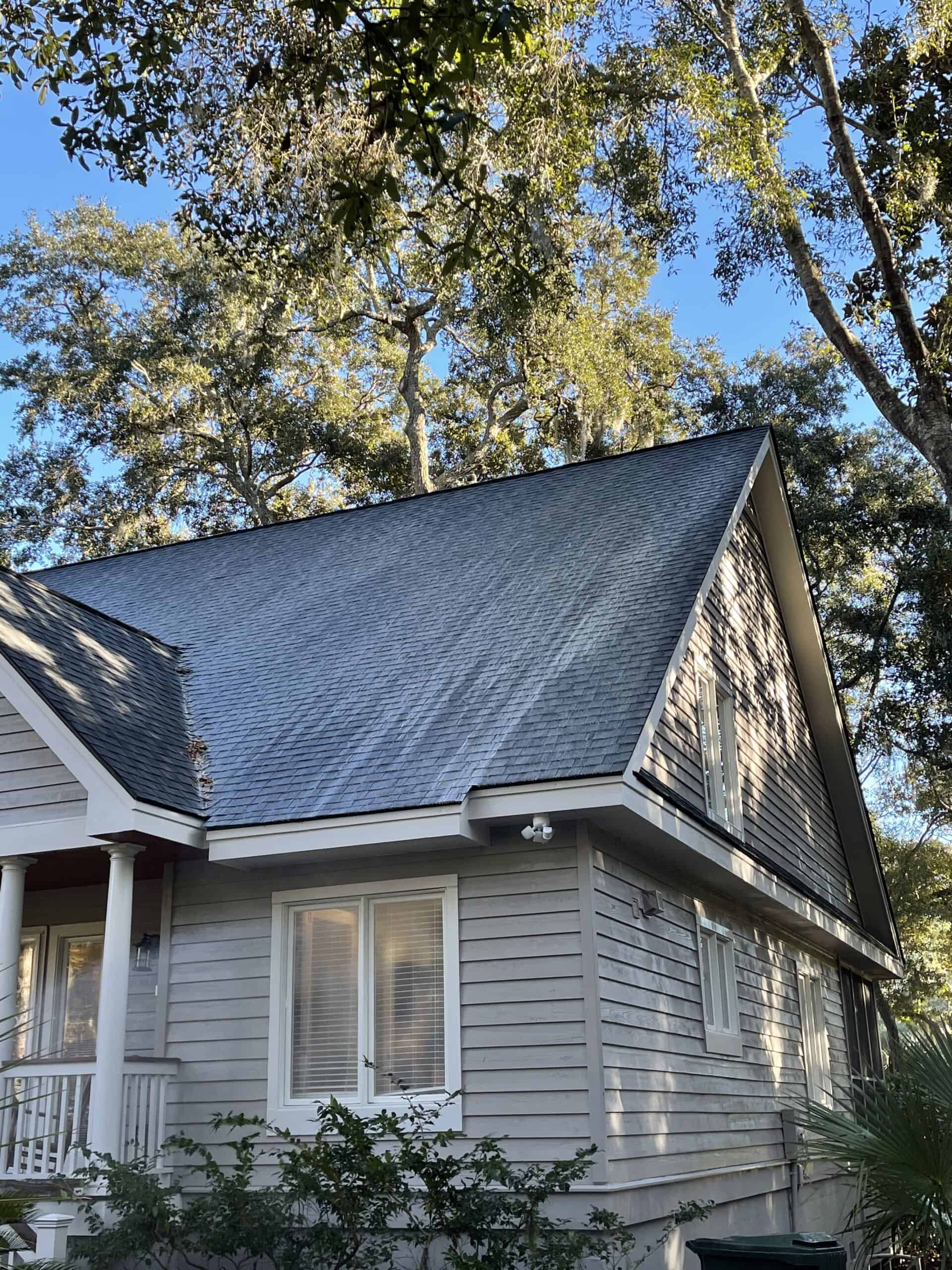
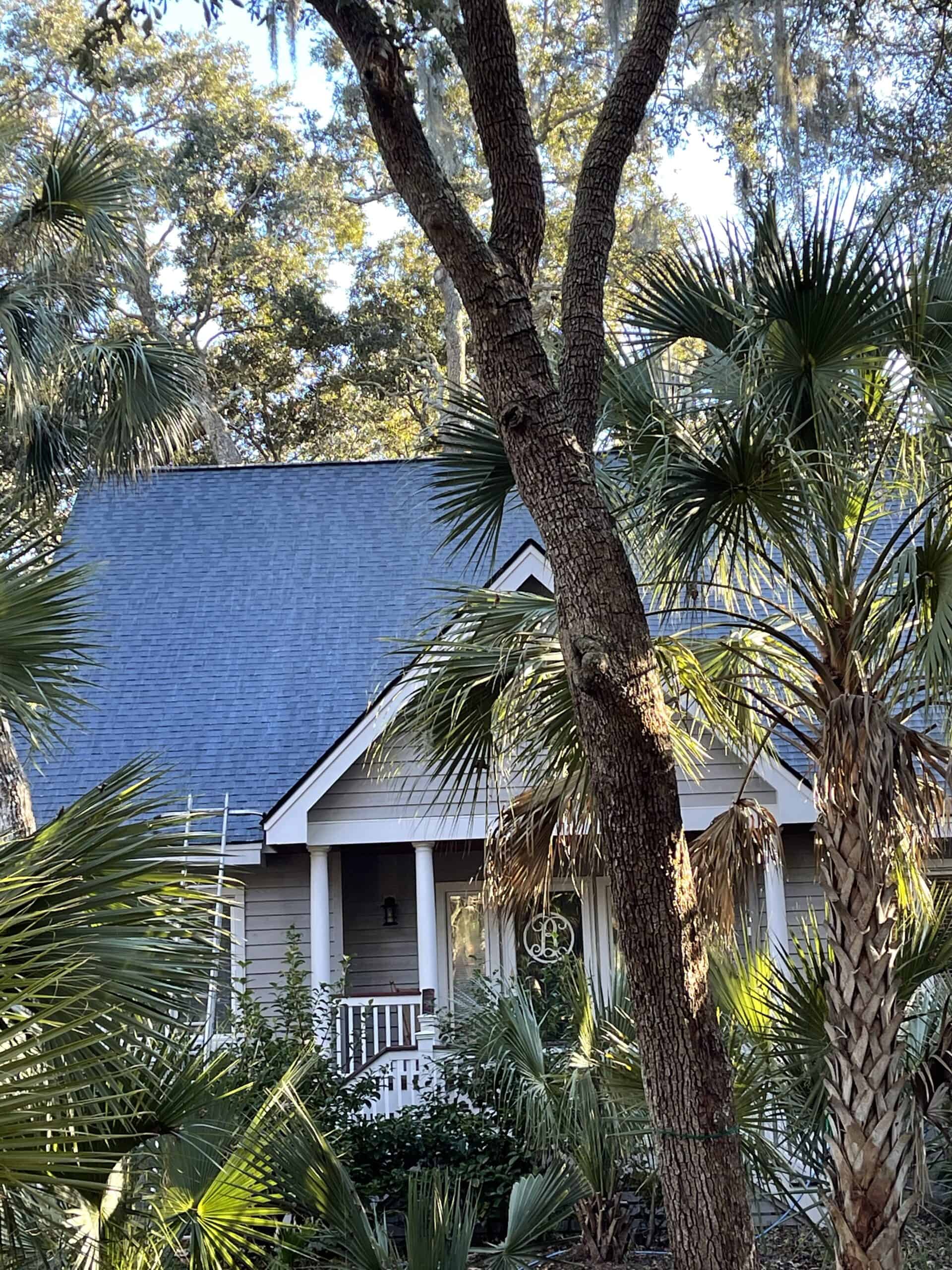
Those black streaks are the most common roof complaint and also the most satisfying to fix, because the shingles underneath are usually in fine shape. What looks like an old roof is very often a dirty one.
What to use, and what to avoid
There are three realistic chemical options for a roof, plus a few things that get recommended online and should not be.
Option | Mix | Notes |
|---|---|---|
Chlorine bleach solution | Roughly 50/50 bleach and water | The industry standard homeowner method. Fast, reliable, kills all three growths. Hard on plants, so rinse well. |
Professional soft wash mix | Sodium hypochlorite around 2 to 4 percent on the surface, with a surfactant | What contractors use. The surfactant makes it cling to a slope instead of running off. |
Oxygen bleach (sodium percarbonate) | Per the product label | Gentler on landscaping. Slower, needs longer dwell, and generally less effective on established lichen. |
Vinegar solution | Equal parts vinegar and water | Mild option for light moss. Weak on established growth. Skip recipes that add salt, which is corrosive to metal flashing and fasteners. |
Pressure washing | Not applicable | Never on asphalt shingles. Strips granules and voids warranties. |
Wire brushing or scraping | Not applicable | Takes granules with the growth. Kill it and let it weather off instead. |
If you want to understand the chemistry that underpins the bleach based approach, including strengths and why professionals add a surfactant, that is covered in our beginner's guide to sodium hypochlorite.
How to keep it from coming back
Growth returns because the conditions that caused it are still there: shade, retained moisture, and organic debris. Removing the moss without changing any of that buys you a couple of years at most.
Fix the conditions first
Trim overhanging branches. More sun and airflow on the roof is the single most effective change you can make, and it costs nothing but a Saturday.
Keep the roof and gutters clear of debris. Leaf litter holds moisture and gives moss something to root into.
Check for poor drainage. Valleys and low spots that stay damp are where growth always starts.
Zinc and copper strips, honestly
Installing zinc or copper strips near the ridge is the classic prevention trick. When it rains, metal ions wash down the roof and inhibit growth. It genuinely works, and it comes with real caveats that most articles skip.
The protected band is limited. Coverage extends only so far down from the strip, so tall roof slopes often need more than one run.
Installation can mean lifting shingles. Strips are usually slid under a course and nailed. Done badly, you have created leak points to solve an algae problem.
There is an environmental tradeoff. Zinc runoff is toxic to fish and aquatic life, which is a genuine concern near water, and some roofers decline to install it for that reason.
It prevents, it does not remove. Strips will not clear growth you already have. Clean first, then prevent.
Algae resistant shingles
If you are already replacing the roof, choose algae resistant shingles. They embed copper containing granules in the surface that release slowly over years. It is by far the easiest form of prevention because it requires nothing from you afterward, and the price difference at the time of a re roof is small.
Other roof types
Asphalt shingles get the most attention because most homes have them, but the same growth appears on other roofing and the rules shift a little.
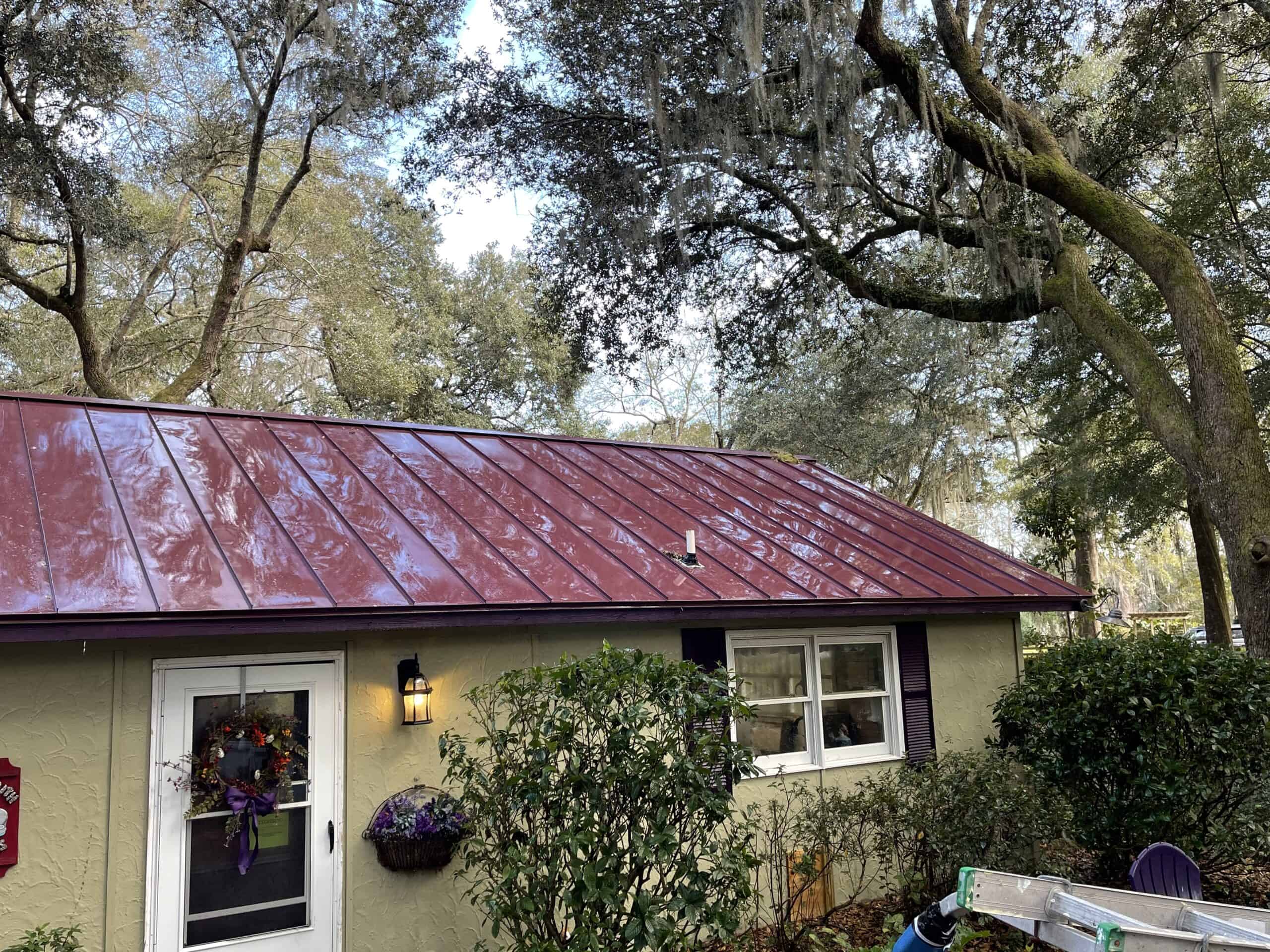
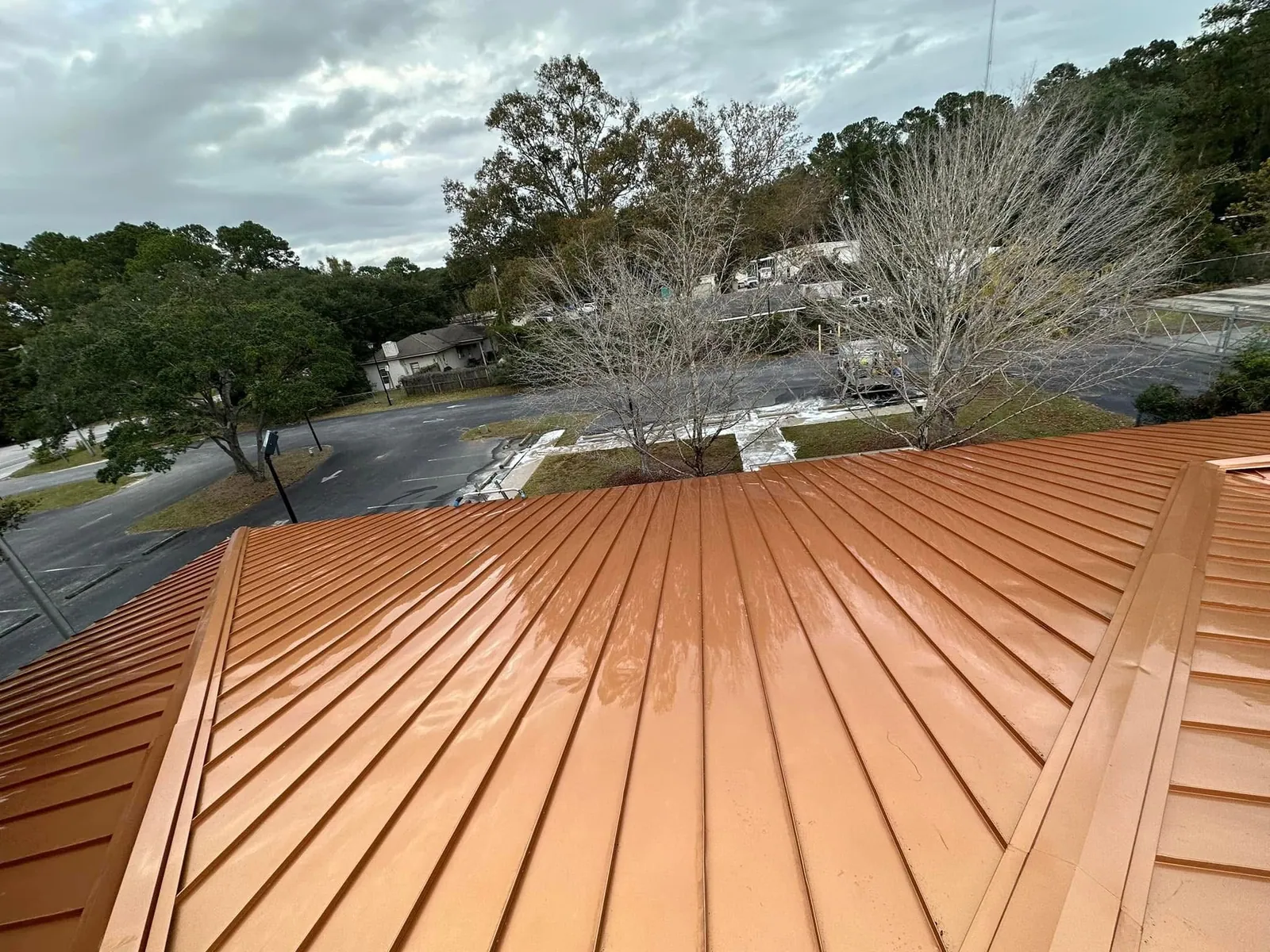
Metal. Durable and easy to clean, but harsh chemicals can affect the finish and it becomes lethally slippery when wet. Use a gentle mix and work from a ladder or the ground.
Tile and slate. The material tolerates more than asphalt, but the tiles crack under foot traffic and the cost per tile is high. This is nearly always a job for someone with roof experience.
Cedar shake. Very sensitive. Chlorine can lighten the wood and aggressive cleaning damages the fibers. Use a gentler product and expect to reseal afterward.
If you are cleaning the rest of the house in the same visit, the pressure and tip change with every surface. Our nozzle chart and safe PSI guide covers that, and the vinyl siding guide walks through the walls specifically.
When to hire someone
Roof cleaning is one of the jobs where the honest advice tips toward hiring out more often than not, and the reason is height rather than difficulty.
The roof is steep, two stories, or you would need to walk on it to reach the growth
You have thick moss, which means moisture has been sitting there and the deck should be looked at
The roof is tile, slate, or cedar shake, where the material itself is the risk
There is heavy landscaping directly below that would be costly to replace
You want it done without spending the day on a ladder
A professional roof soft washing applies the solution at low pressure with enough reach to cover a slope from the edge or the ground, so nobody is walking on your shingles. If the siding is streaked too, pairing it with a house washing in the same visit means the landscaping only has to be protected and rinsed once.
We soft wash roofs across the Charleston Lowcountry and the estimate is free. Get a free quote and we will tell you whether you are looking at a cosmetic algae job or moss that needs attention now.
Frequently asked questions
How do you get moss off a roof?
Spray a 50/50 mix of household bleach and water at low pressure, let it dwell 15 to 20 minutes while keeping the surface wet, then rinse gently from the top down. Do not scrape or pressure wash. The dead moss loosens and washes away over the following weeks.
What causes black streaks on a roof?
A cyanobacteria called Gloeocapsa magma. It feeds on the limestone filler in asphalt shingles and spreads in humid, shaded conditions, streaking downward as rain carries it along the slope. It is mostly cosmetic in the short term but reduces reflectivity and slowly degrades the shingle.
Can you pressure wash a roof?
Not an asphalt shingle roof. High pressure strips the protective granules, drives water up under the shingles, and can break the sealant strips holding each course down. It also commonly voids the manufacturer warranty. Roofs should be cleaned chemically at low pressure.
Does moss damage a roof?
Yes, more than algae does. Moss holds water against the shingle, and as clumps thicken they lift shingle edges and let moisture under the course. That is the path to a rotted deck. Flat algae staining is mostly cosmetic, but thick moss is worth handling promptly.
Do zinc strips really work for roof moss?
They do, within limits. Rain carries zinc ions down from the strip and inhibits growth, but only for a band below it, so tall slopes need more than one run. They prevent rather than remove, installation can mean lifting shingles, and zinc runoff is toxic to aquatic life, which matters near water.
How long does it take for moss to come off after treatment?
Usually a few weeks. The treatment kills it, then weather does the rest as the dead growth loses its grip and rain washes it away. Roofs treated for flat algae staining often look noticeably better within days, while thick moss takes longer.
Will bleach damage my shingles?
Diluted bleach at the standard 50/50 mix is the method the roofing industry itself references and does not damage asphalt shingles. The greater risk is to the landscaping below, so pre wet plants, keep them wet, and rinse thoroughly afterward.
How often should a roof be cleaned?
Every few years for most homes, and more often in humid or heavily shaded conditions. A better trigger than the calendar is the shaded side of the roof. When streaking or green becomes visible there, it is time, and catching it early makes the job far easier.
The bottom line
Identify what is growing before you treat it. Flat streaks are algae and mostly cosmetic. Thick green clumps are moss and are holding water against your roof. Crusty patches are lichen and need to be killed and left alone rather than pulled off.
Then treat it the same way in every case: low pressure, the right chemistry, dwell time, a gentle top down rinse, and patience while the dead growth weathers away. Never a pressure washer, never a scraper, and never a walk on a wet roof.